How to Fix a Jammed Garage Door: A Step-by-Step Guide
Urgent, practical guide to diagnose and fix a jammed garage door. Learn safe, step-by-step troubleshooting, common causes, and when to call a professional.


Jammed garage door usually means a track obstruction, worn components, or a misadjusted opener. Start by a quick safety check and basic testing: power, limits, and visual scan. Then follow a simple 3-step flow to clear obstructions, inspect springs and rollers, and reset the opener settings. If the door remains stuck, call a pro.
Understanding Why a Jam Occurs
A jammed garage door is typically the result of a mechanical binding, track obstruction, worn rollers, or a misadjusted opener. According to GarageDoorAdjust, most jams start with debris in the tracks or a misalignment that prevents the door from moving smoothly. In this section we unpack the most common failure modes and how they interact with the door's moving parts. By recognizing the signs early, you can choose the safest, most effective corrective actions and avoid risking injury or additional damage.
When a door jams, it can feel instantaneous, but the failure is usually the result of accumulated wear or a single misalignment. Tracks can bend from impact, rollers can degrade, and springs or cables can wear out long before a visible break occurs. Safety sensors can misread the door's position, triggering a reverse that makes the door appear stuck. Understanding these factors helps homeowners target the right fix without overreacting.
Immediate Safety Checks You Should Perform Now
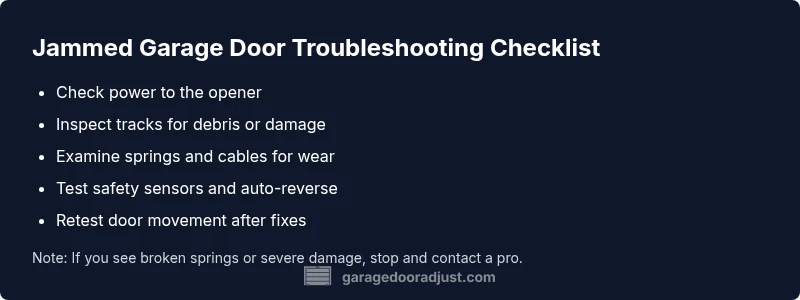
Before you touch any hardware, perform quick safety checks. Disconnect the opener from power, and use the door's manual release to confirm you can move the door by hand if it is safe to do so. Clear any visible debris from the tracks and near the rollers. Check the door is not held up by broken springs or cables. If you see exposed wires, frayed cables, or a bowed track, stop and call a pro. These steps reduce risk and help you diagnose accurately. Safety matters: never attempt to adjust torsion springs yourself unless you are trained and equipped for high-risk repair.
Diagnostic Flow: Symptom → Diagnosis → Solutions
Starting from the symptom “the door is jammed halfway or won’t move,” follow a simple decision tree. First rule out an obstruction in the tracks or on the rollers. If the path is clear but the door still won’t travel, inspect the springs and cables for wear or breakage. If the opener settings look off or the safety sensors trigger incorrectly, reset or recalibrate the system. Each diagnosis leads to a targeted fix, reducing guesswork and hazards. This flow helps you decide when a DIY fix is appropriate and when to call a professional.
Common Causes and Quick Fixes
The most frequent causes of a jammed garage door include: track or pulley obstructions that block movement; bent or misaligned tracks that keep rollers from seating properly; worn rollers or bearings that cause binding; and damaged torsion springs or broken cables that stop lifting. Quick fixes are simple when safe: remove debris, realign the track, lubricate rails and rollers, and reset the opener limits. If you suspect a spring or cable issue, treat it as a high-risk repair and contact a professional. Regular maintenance reduces these problems and extends the life of your system.
Step-By-Step: Fix a Track Obstruction (Overview)
This section outlines a practical, safety-first approach to resolving track obstructions, the most common jam source. You’ll learn how to power down safely, inspect the track for bends, remove debris, and test movement after realignment. The goal is to restore smooth travel without compromising safety. For the more dangerous components, like torsion springs, refer to the dedicated STEP-BY-STEP guide or contact a licensed technician.
Safety Protocols and When to Hire a Pro
Dealing with garage door components can be hazardous, especially near torsion springs and cables. Always prioritize safety: disconnect power, keep hands clear of moving parts, and wear eye protection. If you notice broken springs, frayed cables, a severely bent track, or misfiring safety sensors, stop immediately and call a professional. A pro will assess structural integrity, spring tension, and rail alignment with specialized tools and training. Prompt professional help prevents injuries and further damage.
Prevention and Maintenance to Avoid Jams
Prevention beats repair. Schedule a monthly quick check of the door balance, track alignment, and hardware lubrication. Clean the tracks, replace worn rollers before they fail, and test the safety reversing mechanism monthly. Keep the area around your door clear of debris and weather-stripping damage. A little proactive care reduces the chance of jams and extends the life of the opener and door system.
Steps
Estimated time: 45-60 minutes
- 1
Power down and secure area
Unplug the opener or switch off the circuit breaker. Keep people and pets away from the door while you inspect. If you must use the manual release, do so only with the door secured and supported.
Tip: Always confirm power is off before touching springs or cables. - 2
Open manually (if safe)
Gently attempt to raise the door by hand to gauge resistance. If it feels extremely heavy or binds in several spots, stop and call a pro. Do not force movement; damage could worsen and injuries could occur.
Tip: Have a second person assist if you need to move the door more than a few inches. - 3
Inspect the tracks
Look for dents, bends, or objects in the rails. Remove debris with a non-marring tool and ensure the track sits flat against its mounts. Realign any misaligned sections carefully.
Tip: Work from the bottom up to avoid re-bending an aligned section. - 4
Check rollers and hardware
Examine rollers for heavy wear, flat spots, or binding. Lubricate metal-on-metal contact points with a silicone-based lubricant. Avoid over-lubricating, which can attract dust.
Tip: If you see cracked or wobbly rollers, replace them rather than lubing them. - 5
Test opener limits
Reconnect power and test the opener on the lowest setting. Watch the door as it travels to open and close. If it pauses or reverses unexpectedly, adjust the travel limits as per the manual.
Tip: Make small limit adjustments; test after each change to avoid overshoot. - 6
Safety sensor calibration
Place an object in the sensor path and confirm the door reverses. Clean the photo-eye lenses if needed and re-align any mispointed sensors. Retest until the door stops correctly at fully open and closed.
Tip: Always test after any sensor adjustment to ensure reliable operation.
Diagnosis: Garage door won't move or is jammed mid-travel
Possible Causes
- highTrack obstruction or debris in the track
- highBent/misaligned track or damaged rollers
- highWorn or broken torsion spring or cable
- mediumOpener misadjustment or faulty safety sensors
Fixes
- easyClear obstructions from tracks and test movement safely
- mediumRealign tracks and replace worn rollers if needed
- hardInspect/reseat torsion springs only with professional help
- easyReset opener limits and calibrate safety sensors
Got Questions?
What should I do first if my garage door won’t move at all?
First ensure power to the opener is on and try the manual release only if safe. Inspect tracks for debris and test movement by hand. If movement is still blocked, stop and seek professional help.
First, check power and try the manual release safely. Look for debris and test movement; if it’s still stuck, contact a pro.
Can a jammed door be fixed without a professional?
Some jams caused by track obstructions or misalignment can be addressed with basic safety steps and maintenance. However, issues involving springs, cables, or damaged tracks should be handled by a professional to prevent injury.
Some jams you can fix safely, but springs or damaged tracks require a pro.
How often should I lubricate garage door components?
Lubricate moving parts at least every 6 months, or more often if you notice squeaks or uneven movement. Use a silicone-based lubricant on tracks, rollers, and hinges.
Lubricate every six months to keep things moving smoothly.
What are signs I should replace the springs?
Look for visible wear, cracking, or a door that feels very heavy. Springs under high tension can fail suddenly and require a professional replacement.
Visible wear or heavy door weight means call a pro for spring replacement.
Is it safe to adjust the opener limits myself?
Yes, small adjustments to the travel limits are safe if you follow the manual and test carefully. If the door still hesitates or reverses after adjustments, stop and seek professional help.
You can adjust limits carefully, but if issues persist, get a pro.
How can I prevent jams in the future?
Schedule monthly inspections of tracks and hardware, keep tracks clean, replace worn rollers, and test safety features regularly. A proactive maintenance routine dramatically reduces jam risk.
Keep up with monthly inspections and safety tests to prevent jams.
Watch Video
Quick Summary
- Identify jams by obstruction, balance, and sensor issues
- Prioritize safety; unplug and use manual release only when safe
- Differentiate quick fixes from high-risk repairs
- Call a pro for springs, cables, and structural concerns
- Maintain a monthly check to prevent future jams