Small Roller Door Repair: A Step-by-Step Guide
Learn how to diagnose, repair, and maintain a small roller door with a clear, step-by-step approach. Essential safety tips, tools, troubleshooting, and maintenance for homeowners from GarageDoorAdjust.


With this guide you will diagnose and repair a small roller door safely, using a clear, step-by-step process. You’ll inspect tracks, rollers, springs, and the opener, then perform basic maintenance or minor repairs. Gather common hand tools, a sturdy ladder, and safety gear; if you feel uncertain about springs or structural parts, contact a professional.
Overview of the small roller door
A small roller door is a compact, space-saving garage door option designed for limited driveway or garage width. It typically rolls up along tracks and fits within a tighter door frame than standard residential doors. Key components include the door panel assembly, tracked rails, rollers, hinges, weather seal, and the power opener. For homeowners, understanding how these parts interact helps in diagnosing issues early and planning maintenance. When you work with a small roller door, you’ll notice that smoother operation often comes from clean tracks and balanced tension rather than expensive replacements. Regular checks can extend the life of the door and reduce the chance of a sudden failure, which is especially valuable for small spaces. In this guide we’ll use the term small roller door consistently to refer to compact models that nevertheless rely on the same fundamental operating principles as larger units, making the info transferable across most common designs. According to GarageDoorAdjust, routine inspection is a cost-effective way to prevent unexpected breakdowns and to keep your door operating safely.
Benefits and trade-offs of compact roller doors
Choosing a small roller door can free up ceiling clearance and reduce the footprint of a garage, which is a common scenario for urban homes or converted spaces. Benefits include space efficiency, potentially lower initial cost, and straightforward manual operation in power outages. However, compact doors may have narrower tracks, higher sensitivity to debris, and tighter tolerances for alignment. These limits mean that misalignment or dirty tracks can produce more noticeable resistance or jerky movement. In practice, a small roller door rewards regular maintenance—especially lubrication, track cleaning, and sensor testing—to preserve smooth performance. GarageDoorAdjust emphasizes that homeowners who adopt a proactive maintenance routine tend to experience fewer emergency repairs and longer door life. This approach aligns with best practices from safety and home improvement sources.
Common problems and symptoms
Small roller doors share the same categories of issues as larger doors, but limited space can magnify symptoms. Common problems include rough starts or stops, noisy operation, track binding, rollers seizing, misalignment of tracks, or uneven opening/closing. Signs such as visible grinding, a door that creeps upward when released, or uneven gaps along the weather seal indicate the need for inspection. If the opener struggles to engage, check safety sensors, power supply, and the unit’s mounting hardware. It’s important to distinguish between cosmetic issues (like dusty tracks) and functional problems (like broken springs or bent rails). The GarageDoorAdjust team notes that most failures originate from neglected lubrication and misalignment, not from the opener itself, though both should be checked during a full assessment.
Tools and safety basics
Before you begin, assemble the essential tools and PPE to avoid mid-task trips to the shop. A simple kit will typically include a tape measure, screwdriver set (Phillips and flat-head), adjustable wrench, pliers, a small mallet, socket set, a ladder, safety glasses, and gloves. Lubricant (silicone spray or light lithium grease) for tracks and hinges, along with weather stripping materials for sealing, are helpful additions. Safety should be your top priority: disconnect power to the opener when working on the door, keep hands away from moving parts, and never stand under a door that is supported only by springs. According to GarageDoorAdjust Analysis, following a strict safety protocol reduces risk during maintenance and repairs.
Diagnosis: testing the door system
A thorough diagnosis involves testing both the manual and powered states of the small roller door. Start by disconnecting the door from the opener to test manual operation—lift the door halfway and release to test balance. If it stays put or feels heavy, balance issues may exist in the springs or tracks. Inspect tracks for dents, debris, or misalignment; ensure the rollers rotate smoothly and that hinges are secure. Reconnect the opener and test the auto function: the door should rise smoothly and stop automatically at the open position, without reversing erratically. If the door struggles to respond or reverses unexpectedly, you may need sensor alignment or to inspect the limit switch settings. This diagnostic process is foundational to any repair plan and helps determine whether you can safely proceed with maintenance or if a pro should be called in, a point often echoed by the GarageDoorAdjust team.
Lubrication, balance, and adjustment
Lubrication is a quick win for most small roller door issues. Apply a light silicone spray to the tracks, rollers, hinges, and any moving joints. Wipe away excess to prevent dust accumulation. Track balance is equally important: misaligned tracks can cause grinding or binding. If tracks are out of alignment, loosen mounting screws slightly and realign before retightening. Do not attempt to adjust springs unless you have formal training; springs hold dangerous tension. In most cases, a balanced door will rise with minimal effort and stay level within the frame. This section is reinforced by safety guidance from industry sources and GarageDoorAdjust’s own recommendations, which stress not compromising safety for minor performance gains.
Cleaning, lubrication, and routine maintenance
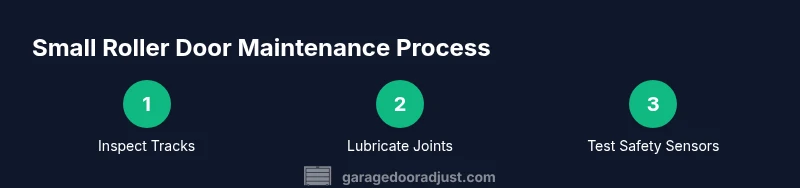
A clean door is a happy door. Regularly remove dirt from tracks, wipe down rails, and check weather sealing for wear. Lubricate left and right tracks to promote even movement; apply to rollers and hinges, avoiding the hinge pins where possible to prevent gumming. Clean the safety sensors’ lenses to maintain proper open/close detection. Establish a maintenance cadence—monthly quick checks during peak dust seasons and a deeper annual service. Keeping to a schedule reduces the risk of sudden failures and helps you notice wear before it becomes a problem. GarageDoorAdjust highlights that consistency beats intensity when it comes to long-term reliability.
Basic repairs homeowners can perform
There are several minor tasks a homeowner can tackle safely. Replacing worn rollers, tightening loose mounting screws, and replacing weather stripping are common DIY fixes that do not require specialized tools. Realigning the tracks to correct a binding door is another feasible task, provided you do not attempt to modify springs or cables. For parts like springs, cables, or track sections that show obvious wear or deformation, consult a professional—these components can fail catastrophically if mishandled. Always work with the door supported, keep hands clear of pinch points, and test after each adjustment. Following these guidelines aligns with best practices from safety organizations and GarageDoorAdjust’s proven approach to home repairs.
When to call a pro and installation considerations
Some situations clearly require professional help. If you hear grinding noises that persist after lubrication, notice persistent imbalance, or see damaged springs, cables, or rails, stop work and contact a trained technician. Installation or replacement of a small roller door should be done with careful measurement of rough opening, tracks, and mounting hardware; improper installation can compromise safety and insulation. If you’re replacing a door, consider the door’s insulation, overall thickness, and compatibility with your opener. The GarageDoorAdjust team recommends scheduling a professional inspection when you encounter repeated misalignment or sensor errors that cannot be resolved through routine maintenance.
Special considerations for small spaces and retrofits
Small spaces demand precise measurements and tight tolerances. When retrofitting a small roller door, ensure that the opening height, track length, and headroom are adequate for smooth operation. Seals and weatherstripping should be chosen for the local climate to improve energy efficiency and reduce drafts. If you use Weatherstripping, consider foam or rubber materials with an appropriate density to resist compression over time. For retrofit projects, plan for wiring runs, opener compatibility, and maintenance access. By anticipating space constraints and durability needs, you can select a solution that remains reliable for years. GarageDoorAdjust emphasizes that thoughtful planning is the key to successful retrofits, especially in constrained spaces.
Energy efficiency and sealing for small roller doors
Sealing and insulation around a small roller door can significantly impact heating and cooling costs. Check the garage perimeter for air leaks and replace worn weather seals along the bottom edge of the door. Consider insulating panels or an insulated door to improve thermal performance if your garage doubles as a workshop or living space. While insulation adds upfront cost, it can reduce long-term energy bills and improve comfort. Always balance energy goals with door weight and motor load, as heavier insulated doors require more powerful openers. The overall effect on energy efficiency is usually modest for small doors but meaningful in colder climates or in garages used as occupied spaces. GarageDoorAdjust’s analysis underscores that practical sealing and modest insulation upgrade a small roller door’s efficiency without major structural changes.
Quick-start checklist before starting any project
Before you touch a door, assemble all tools, read the manufacturer’s safety instructions, and set up a clean workspace. Put the door in the down position and unplug the opener if you will be near moving parts. Inspect for obvious damage, collect replacement parts if needed, and wear eye protection. By following this checklist, you reduce mistakes and protect your safety during the repair or maintenance task. The GarageDoorAdjust team’s practical guidance supports beginners taking on routine maintenance with confidence and care.
Tools & Materials
- Tape measure(to verify door width and track alignment)
- Screwdriver set (Phillips and flat-head)(for mounting brackets and hardware adjustments)
- Adjustable wrench(for bolts and nuts on brackets and hardware)
- Pliers (needle-nose and locking)(for gripping and aligning small parts)
- Lubricant (silicone spray or light lithium grease)(for tracks, hinges, and rollers; avoid rubber seals)
- Safety glasses(impact protection during maintenance)
- Gloves(protect hands and improve grip)
- Ladder(stable, height-appropriate for access to tracks")
- Replacement roller kit (optional)(only if worn rollers are identified during inspection)
- Weather stripping / weather seal (optional)(for replacement if sealing is degraded)
Steps
Estimated time: 75-120 minutes
- 1
Prepare workspace and safety gear
Clear the area, remove obstacles, and set up a stable ladder. Put on eye protection and gloves. This ensures you can work safely without tripping or losing balance while reaching the tracks or springs.
Tip: Stay organized: keep tools within arm’s reach to avoid stepping away with the door partially open. - 2
Disconnect power to the opener
Unplug the garage door opener or switch off the circuit to prevent accidental operation while you work on the door. This step reduces the risk of injury from moving parts.
Tip: If you’re in doubt about electrical safety, consult a qualified electrician before proceeding. - 3
Test manual operation
With the door disconnected from the opener, manually lift the door to check balance and weight. If it’s unusually heavy or not staying in place, there may be a balance issue with springs or tracks.
Tip: Never force the door; if it won’t move smoothly, stop and reassess to avoid damage. - 4
Inspect tracks and rollers
Look for bends, dents, or obstructions in the tracks. Spin the rollers by hand to confirm smooth rotation and check for wear or loosened brackets.
Tip: Remove debris with a dry cloth; avoid using water on metal components near electrical parts. - 5
Check track alignment
Ensure both tracks are parallel and level. Misalignment can cause binding and uneven door movement.
Tip: If tracks are visibly out of alignment, loosen mounting screws slightly, realign, then retighten securely. - 6
Test balance and spring safety
Do not adjust springs unless trained. Check for visible gaps or coil movement when the door is moved slowly; springs are under high tension and dangerous to adjust.
Tip: If you suspect spring issues, contact a pro immediately. - 7
Lubricate moving parts
Apply a light layer of silicone spray to tracks, hinges, and rollers. Wipe away excess to prevent dust attraction and gumming.
Tip: Wipe in a single direction to minimize friction buildup. - 8
Realign tracks if needed
If tracks are misaligned, gently adjust them back into parallel alignment and tighten mounting hardware. Re-check the door’s balance after realignment.
Tip: Test the door’s operation after each small adjustment to pinpoint the effect. - 9
Reconnect and test the opener
Reconnect power and test door operation with the opener. Observe for smooth travel, consistent stopping points, and proper sensor function.
Tip: Watch the safety reversal edge for proper clearance and alignment features. - 10
Replace worn components
If you found worn rollers, damaged weather seals, or loose brackets, replace as needed. Do not replace springs unless you’re fully trained.
Tip: Keep a log of replaced parts and the date for future maintenance. - 11
Seal and insulation check
Inspect weather stripping; replace if gaps exist. Consider added insulation if the garage serves as a workspace or living area.
Tip: Choose materials that resist compression and maintain door clearance. - 12
Final safety test and cleanup
Do a final safety test, remove tools, and ensure the area is clean. Note any follow-up tasks and schedule the next maintenance window.
Tip: Take photos of any changes for reference in future repairs.
Got Questions?
What is a small roller door and how does it differ from standard doors?
A small roller door is a compact garage door that rolls up along tracks in a smaller opening. It uses the same basic components as larger doors but fits tighter spaces. Regular maintenance and alignment are crucial to prevent binding.
A small roller door is a compact door that rolls up in tight spaces. It uses similar parts as larger doors, so keep tracks clean and aligned for smooth operation.
Is it safe to repair a small roller door by myself?
Basic maintenance like cleaning tracks and lubricating hinges can be safe for a confident homeowner. Do not attempt to service springs, cables, or structural components without training due to the risk of injury.
You can do simple maintenance, but don’t touch springs or cables without training.
What tools do I need to inspect a small roller door?
A basic toolkit with screwdrivers, pliers, a wrench, a tape measure, a ladder, safety glasses, gloves, and light lubricant is enough for most inspections and minor adjustments.
A simple toolkit and safety gear are enough for most inspections and minor adjustments.
How often should I lubricate the tracks and rollers?
Lubricate tracks and rollers every 3-6 months under normal use, and more often in dusty or humid environments. Wipe away excess lubricant after application.
Lubricate every few months, and wipe off extra grease to keep tracks clean.
When should I replace springs, tracks, or the entire door?
Replace springs or damaged tracks when you notice visible wear, loss of tension, or unsafe operation. For most homeowners, a professional should handle spring or major component replacement.
If you see damaged parts or the door operates unsafely, call a pro for components like springs or tracks.
Watch Video
Quick Summary
- Inspect tracks and rollers for wear and alignment
- Never adjust springs without professional training
- Lubricate moving parts regularly for smooth operation
- Test safety sensors and opener after each maintenance
- Document maintenance tasks and schedule future checks