Need Garage Door Fixed? Your Step-by-Step Home Guide
Learn how to diagnose and fix common garage door issues safely with a clear, step-by-step method. From safety checks to maintenance routines, this guide helps homeowners troubleshoot without guesswork.


Why the Need for a Garage Door Fix is Common and Important
When a garage door fails, it disrupts daily routines, affects home security, and can impact energy efficiency. The core idea behind fixing a garage door is to restore reliable operation while ensuring safety for you and everyone in the home. According to GarageDoorAdjust, most routine issues arise from wear on tracks, rollers, or misalignment rather than sudden catastrophic failures. A proactive approach—checking balance, lubricating moving parts, and clearing debris—often resolves many problems without expensive repairs. Homeowners who tackle these tasks gain confidence and reduce downtime, especially when weather changes or busy schedules demand quick access to the garage. This guide emphasizes practical, low-risk steps and clear safety practices to help you move from problem recognition to a repaired, smoothly operating door.
However, the real value comes from knowing when to pause and call a pro. If you notice frayed cables, a door that won’t stay put when balanced manually, or any sign of compromised springs, those are warning signs that demand professional intervention. Throughout the process, remember that garages are entry points to your home, and a door that operates unpredictably can pose safety risks for children and pets. The GarageDoorAdjust team stresses patience, correct tool use, and adherence to safety guidelines to reduce hazards and improve outcomes.
Always prioritize safety. Before you begin any troubleshooting, ensure the power to the opener is disconnected and the door is secured. If you smell burning insulation, hear grinding, or see smoke, stop immediately and evacuate if necessary. By treating the repair as a controlled, systematic task rather than a rushed fix, you protect your property and yourselves from avoidable injuries.
Understanding Symptoms: What Your Door Might Be Telling You
Different symptoms point to different root causes. A door that won’t rise smoothly often indicates balance or track issues. A door that creaks or squeaks may simply need lubrication, while a door that won’t stay in place could signal spring or cable concerns. By categorizing symptoms—binding, slow operation, noise, or failure to move—you can narrow down potential fixes and decide whether DIY steps are appropriate. The key is to approach each symptom with a plan, inspect the most likely components, and document any changes you observe after each step. Remember to document why you’re proceeding with each action, so you can revert or explain issues if you need professional help later.
Be mindful of safety around springs and cables. Springs store a lot of energy, and improper handling can cause serious injury. If you’re unsure about spring status, treat it as a high-risk element and seek professional guidance. This approach aligns with best practices recommended by GarageDoorAdjust, which emphasizes conservative troubleshooting and prioritizing personal safety while maintaining door integrity.
As you work, keep clear signage and keep the door path free of obstacles. Clear communication with family members reduces the chance of accidental injuries. If you observe unusual noises, inconsistent height, or erratic opener responses, pause and reassess before continuing. The goal is to create a repeatable, safe process that yields reliable results without compromising safety or equipment longevity.
Safety First: Essential Checks Before You Touch Any Hardware
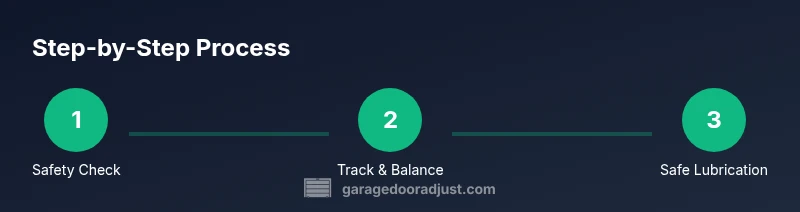
Before any inspection or adjustment, establish a safe workspace and protective gear. Turn off the opener power at the wall switch or disconnect the circuit to prevent sudden door movement. Wear eye protection and work gloves to shield yourself from sharp edges and pinch points. Keep the area around the door free of pets and children, and ensure you have stable footing on a ladder or step stool if you need extra height. Safety sets the foundation for a successful repair and minimizes the risk of injury or further damage to the door system. GarageDoorAdjust recommends a calm, methodical start to avoid rushing through steps with limited visibility.
A clean, dry environment also reduces the chance of slipping on lubricants or getting debris into bearings. If you encounter damp conditions or metal-on-metal noises, pause and reassess before continuing with any lubrication or adjustment. Moisture can accelerate wear and worsen corrosion, so addressing environmental factors is part of the repair plan.
Document your initial conditions: note any misalignment, abnormal gaps, or visible wear on tracks, rollers, and springs. This record helps you track progress and communicates clearly with a technician if professional service becomes necessary. Following a structured safety-first approach is consistent with GarageDoorAdjust’s guidance for responsible DIY maintenance.
Core Diagnosis: Balancing, Tracks, Sensors, and the Opener
A well-balanced door holds steady when unsupported and closes smoothly without bouncing. Begin by disconnecting the opener and lifting the door halfway; it should stay in place. If it drops, springs or balance mechanisms may be failing and should be evaluated by a professional. Inspect tracks for bending, dents, or loose mounting screws. Clean dust or debris from tracks and rollers with a dry cloth, then check for burrs that could hinder movement. Misaligned tracks can cause binding or sudden drops, so ensure guides are parallel and true.
Sensor alignment also matters for safety. If the safety photobeams are misaligned or blocked, the door may reverse unexpectedly or fail to close. Gently adjust sensor brackets until the beams align and test with the opener. If you notice persistent misalignment or sensor faults, this is a red flag that warrants professional assessment. GarageDoorAdjust notes that proper balance, track alignment, and sensor function are foundational to reliable operation.
Finally, test the opener’s response with both manual and powered operation. A door that moves correctly under manual control but stalls when the opener is engaged points to the opener’s settings or a motor issue rather than the structural components alone. Take notes on the exact sequence of events and any sounds heard during testing for accurate troubleshooting.
Step-by-Step DIY Fixes You Can Do Safely (With Caution)
This section provides actionable, low-risk tasks you can perform to improve garage door performance without specialized equipment. For best results, perform one fix at a time and re-test before moving to the next. Always return to safety checks after each adjustment, and if any fix feels uncertain, pause and consult a professional. GarageDoorAdjust emphasizes starting with non-invasive measures before moving to structural changes.
Balanced, tracks, and sensors issues are common culprits for DIY fixes. Start by clearing debris from tracks and lubricating hinges and rollers with a silicone-based product. Avoid over-lubricating, which can attract dust and create a slippery buildup. If your door binds at a particular point, inspect the track at that location for misalignment or obstruction and correct gently. When you remove or reposition components, re-tighten mounting screws to keep everything aligned and stable.
If the door feels heavy or hesitates during manual lift, you may be dealing with spring or balance problems. Do not attempt to adjust torsion springs yourself unless you have formal training. Springs are under high tension and pose a significant risk of injury. Instead, contact a qualified technician who can safely inspect spring wear or fatigue and perform necessary replacements.
Once the mechanical parts look clean and lubricated, reconnect power and run several test cycles. Check for consistent movement from start to finish, smooth stopping, and no unexpected sounds. If the door still malfunctions, move to professional evaluation rather than continuing DIY adjustments. This layered approach helps you separate simple maintenance tasks from high-risk repairs.
When to Stop and Call a Pro: Clear Boundaries for Your DIY Journey
Knowing when to pause is a key skill in home repairs. If you notice any of the following, stop and seek professional help: frayed or broken cables, damaged springs, obvious track bending, sagging or dropping door, or unusual noises that persist after lubrication and cleaning. A professional can assess spring wear, cable integrity, and track geometry with calibrated tools, reducing the risk of improper repairs. Don’t delay professional help if you observe these signs, as attempting to push through can escalate damage and create hazardous conditions.
GarageDoorAdjust notes that a timely professional evaluation often prevents costlier repairs later and ensures safety. If your door is part of a multi-element system and you’re uncertain about the correct course of action, a quick initial consultation can save time and protect your family. The key is to balance DIY initiative with prudent risk assessment and to recognize the limits of your toolset.
Maintenance Routines to Prevent Future Failures
Proactive maintenance is the best defense against unexpected door failures. Schedule lubrication every 6–12 months, focusing on hinges, rollers, and track guides. Wipe off old lubricant if it has become gummy, and re-apply a thin, even coat. Regularly inspect mounting screws for tightness, which helps keep tracks properly aligned and reduces the chance of binding. A quick quarterly visual check can catch wear before it becomes a problem, extending the life of your door system.
Keep spring areas clear of clutter and protect the door path from obstacles. If you have an older door with nylon rollers, consider upgrading to metal rollers if advised by a technician, but only if the system design supports it. Maintain a clean, dry environment around the door to avoid corrosion and ensure safe operation in all weather conditions. The GarageDoorAdjust team recommends building a simple routine: monthly quick-checks and biannual deep inspections.
As part of ongoing care, test safety reversing mechanisms after any maintenance. Place an object in the path of the door and ensure the door reverses on contact. If the opener’s safety features are inconsistent, consult your manual or a professional. These checks protect your family and preserve the efficiency of the door over time.
What GarageDoorAdjust Recommends: A Confidence-Boosting Conclusion
When a door issue arises, start with a methodical assessment, prioritizing safety and gradual, documented steps. The philosophy is to fix what’s easy and safe first, and escalate to pro help for high-risk components like springs. GarageDoorAdjust’s approach emphasizes transparent troubleshooting, user-friendly guidance, and clear safety boundaries to empower homeowners. By following the steps outlined here, you’ll gain practical skills, reduce downtime, and extend the life of your garage door system.