Door Fixer Guide: DIY Garage Door Troubleshooting 101
Learn to diagnose, repair, and maintain your garage door with safe, step-by-step guidance from GarageDoorAdjust. This comprehensive DIY door fixer guide covers tools, checks, lubrication, and when to call a pro.


This quick guide will show you how to diagnose and fix common garage door issues with confidence, using safe, homeowner-friendly steps. As your door fixer, you’ll learn alignment checks, opener adjustments, and basic spring-care tips, plus when to call a pro. Gather essential tools, observe safety precautions, and follow a clear sequence to restore smooth, reliable operation.
Diagnosis foundations for the door fixer
A stubborn garage door usually signals a balance issue, misalignment, or a failing safety system more than one single broken part. As a door fixer, your goal is to identify the root cause safely and plan an appropriate repair. Safety is non-negotiable: before you touch any hardware, power down the opener, unplug it, and keep away from moving parts. According to GarageDoorAdjust, a structured diagnostic approach reduces risk and increases odds of a durable fix.
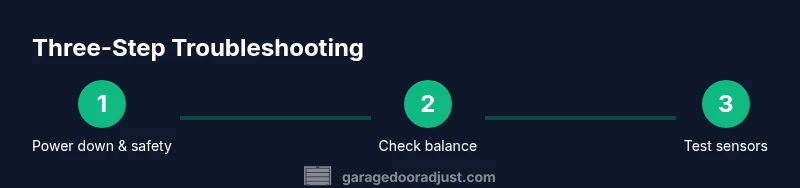
Start with three core questions: Is the door balanced? Are the tracks and rollers aligned? Are the safety sensors functioning? Use these questions as your compass for the rest of the session. A well-balanced door should stay where you leave it if you disconnect the opener. If it drops or rises by itself, the springs or balance system likely need attention.
Next, assess the components you can see without disassembly: track straightness, loose bolts, worn rollers, and the integrity of weatherstripping. Look for bent tracks, gaps between rollers and tracks, and any wobble when the door moves. Record symptoms with photos and notes; this helps you compare before-and-after results and makes it easier to explain the issue to a pro if you need one. In practice, a methodical, documented approach makes you a safer, more confident do-it-yourselfer.
Common failure modes and their clues
Not every problem is obvious at first glance. Some issues masquerade as minor annoyances but point to bigger wear. Common failure modes include misaligned tracks, worn or broken rollers, weak or fatigued springs, loose hardware, and sensor misalignment. Each symptom maps to a likely cause:
- Door that rattles or sticks as it travels: track or roller wear.
- Door that stops short of full closure or reverses: sensor misalignment or balance problem.
- Slow or noisy operation: insufficient lubrication or dry bearings.
- Sagging door on one side: imbalance or weak spring on that side.
- Opener remote controls that stop responding: wiring fault or control board issue.
GarageDoorAdjust’s field observations emphasize that many DIY fixes fail when springs or torsion systems are involved. If you notice any loud pops, grinding, or a door that stays open partially, treat it as a potential safety risk and pause work to reassess. A careful triage helps you decide if a simple lubrication job will fix things, or if more extensive realignment or part replacement is needed.
Safety-first approach to DIY garage door work
Safety is the foundation of every successful repair. Always unplug the opener, switch off the wall control, and keep hands clear of moving parts. Wear eye protection and sturdy gloves, and work with a partner when possible so you have a second set of eyes for hazards. The door is heavy and springs store substantial energy; never attempt to hold a door up with your body or a broom handle.
Before touching any fasteners or components, identify the door’s balance class and confirm you’re working with the right spring type. If a door is heavy on one side, a hidden tension problem may exist; misadjusting tension without proper tools can cause uncontrolled movement. Remember that most torsion-spring work is best left to a pro. As GarageDoorAdjust notes, prioritizing safety reduces the chance of injury and expensive mistakes. Keep kids and pets away during any inspection or repair, and never bypass safety sensors or safety devices.
Diagnostic tests you can perform at home
A careful series of tests can reveal many problems without specialized equipment. Begin by disconnecting the opener (the red cord/lever or switch) so you can operate the door manually. Lift the door to about shoulder height; it should stay in place without drifting up or down. If it falls or rises, the balance system or springs may be out of spec. Next, inspect the tracks for alignment: use a level or straightedge to verify that each track is plumb and parallel. Tighten loose fasteners, then check for shiny wear marks where rollers contact the track. Test the safety sensors by placing an obstacle in the path and reactivating the opener; the door should reverse on contact with an object.
Lubricate the moving parts—hinges, rollers (excluding nylon wheels on some rollers), and track joints—with a silicone-based spray. Do not apply heavy grease to friction points that should run cooler. Finally, reattach the opener, restore power, and run the door through its full travel to confirm there are no new noises, hesitations, or misreads from the sensors. Each test builds a clearer picture of whether you’re a few tweaks away from smooth operation or a larger fix.
Safe maintenance routines to extend life
Regular maintenance is the best defense against expensive repairs. Create a simple quarterly cadence that includes quick inspections, lubrication, and sensor checks. Start with a visual scan for loose hardware, worn weatherstripping, or bent tracks. Then perform a light lubrication pass on hinges and roller axles, avoiding overspray onto belts or cables. A clean door runs quieter and longer. Swapping old weatherstripping prevents drafts and improves safety by maintaining proper door alignment. Finally, test the auto-reverse feature monthly to ensure the safety system continues to function as designed. Consistency matters, and small, repeated actions add up to a durable door that operates with less resistance.
Planning replacements and when to call a pro
Eventually, components wear out or become unsafe to adjust. Springs, in particular, demand professional handling due to stored energy and precision required for safe tension. If the door is visibly unbalanced, you notice persistent grinding, or the door requires frequent adjustments, plan a professional evaluation. When ordering parts, focus on matching the spring type, track width, and roller style rather than guessing models. For readers of GarageDoorAdjust, recognizing the limit of DIY work is a strength, not a failure; a pro inspection can prevent injuries and save money in the long run. Review warranties, parts availability, and the overall door condition before proceeding with any major replacement.
Real-world troubleshooting scenarios and checklists
To illustrate how a practical door fixer approach works, consider three common scenarios and the corresponding checks you would perform. Scenario A involves a door that opens slowly and sticks mid-travel; you’d verify balance, inspect tracks, and lubricate. Scenario B features sensor reversals; you’d re-align photo eyes and test with a soft object to confirm proper response. Scenario C presents a door that is visibly out of plumb and noisy; you’d check for bent tracks, loose mounting bolts, and the condition of rollers. Use this checklist as a quick-reference guide during any hands-on session: safety first, power down, manual operation, visual inspection, component testing, lubrication, re-test, and record outcomes. The GarageDoorAdjust team emphasizes documenting results to track improvements over time and to communicate with a professional if needed.
Tools & Materials
- Safety goggles(ANSI-rated; protect eyes from springs and debris)
- Work gloves(Sturdy grip and hand protection)
- Flathead screwdriver(For hinge plates and track hardware)
- Phillips screwdriver(Screws on hinges and panels)
- Adjustable wrench(Tighten bolts on tracks and hardware)
- Socket wrench set(Bolts on tracks, rollers, and brackets)
- Step ladder(Stable access to tracks and hinges)
- Silicone-based lubricant(Lubricate rollers, hinges, and tracks)
- Rag and mild degreaser(Clean parts before lubrication)
- Measuring tape(Check track alignment and level)
- Camera or smartphone(Document before-and-after results)
Steps
Estimated time: 60-90 minutes
- 1
Power down and secure
Disconnect power to the garage door opener at the outlet and switch. Confirm the door cannot move using the manual release, then keep hands clear of the path. This initial safety step prevents unexpected movement during the inspection.
Tip: Wear eye protection and have a partner hold the door if you must test manual movement. - 2
Test door balance manually
With the opener disconnected, lift the door to about shoulder height and release. A balanced door should stay in place; if it rises or falls, the balance system or springs may be out of spec. Record the position and any drift for reference.
Tip: Do not force the door beyond comfortable height; back off if it binds or feels uneven. - 3
Inspect tracks, rollers, and hinges
Visually inspect tracks for straightness and symmetry, and check rollers for wear. Tighten loose fasteners and replace any damaged rollers or deteriorated hinges as needed. Avoid touching a bent track with a hammer or forcing parts to fit.
Tip: Use a level to verify tracks are plumb and parallel before any adjustment. - 4
Check springs and cables with caution
Look for obvious wear, gaps, or fraying in springs and cables. Do not attempt to tension or adjust springs yourself; this is hazardous work that requires a professional. If you see signs of wear, pause and plan a pro evaluation.
Tip: Never attempt to pry or twist springs. Safety comes first. - 5
Test opener and sensor alignment
Reconnect power and run the door through its travel. Verify the safety sensors detect obstructions and that the auto-reverse function works correctly. If the door does not reverse when blocked, recheck sensor alignment or consult a pro.
Tip: Keep the sensor lenses clean and free from dust or obstructions. - 6
Lubricate moving parts
Lubricate hinges, rollers (not nylon wheels if applicable), and track joints with a thin layer of silicone spray. Wipe away excess to prevent dust attraction. Lubrication reduces friction and noise and helps extend part life.
Tip: Avoid applying lubricant to belts or pulleys where it can attract debris. - 7
Reassemble and re-test
Reconnect the opener, restore power, and run the door through full range of motion. Listen for new noises and verify consistent operation and sensor function. Document results and compare to the initial test.
Tip: If anything feels unsafe or unstable, stop and reassess or call a professional. - 8
Plan next steps
If issues persist after these steps, evaluate whether parts replacement or a pro inspection is warranted. Create a simple parts list and budget, and consider warranty coverage if applicable.
Tip: Keep photos and notes to help a technician diagnose the problem quickly.
Got Questions?
Is it safe to fix a garage door myself?
Basic maintenance and troubleshooting can be done by homeowners, but avoid springs and cables. If you see damage or unusual tension, stop and seek professional help. This approach minimizes risk while empowering you to handle common issues.
DIY safe for basic checks, but avoid springs and cables—stop if you see damage and call a professional.
What is the most common cause of a door not closing fully?
Sensor misalignment or balance issues are frequent culprits. Start by checking the photo-eye sensors and then verify door balance if the problem persists.
Most often it’s sensor misalignment or balance problems.
Can I replace torsion springs by myself?
No. Torsion springs store a lot of energy and require specialized tools and training. A professional should perform spring replacement to prevent serious injury.
Spring replacement is not a DIY job—get a pro.
Do I need to unplug the opener before inspecting?
Yes. Disconnect power to the opener to prevent accidental movement during inspection. Reconnect only after you’ve completed the checks and are ready to test.
Yes—unplug the opener before inspecting.
How long does a typical DIY garage door fix take?
Most basic inspection and lubrication can be completed within 60 to 90 minutes. More complex problems, like track realignment or sensor replacement, may take longer.
Expect about an hour or two for a full DIY check, more if parts need replacing.
What are signs that a track needs realignment?
Visible gaps between the track and rollers, doors that bind or pop when moving, and uneven travel indicate misalignment. Realigning tracks requires careful measurement and secure mounting.
Look for gaps and binding; realignment needs careful, measured adjustment.
Quick Summary
- Prioritize safety before any inspection or adjustment.
- Balance and track alignment drive door performance and longevity.
- Know when to DIY and when to call a pro, especially for springs.
- Regular lubrication and inspections extend life and reduce noise.