Maintenance for Garage Door: A Practical How-To for Homeowners
Learn a practical maintenance for garage door routine to extend life, improve safety, and reduce costly repairs. This guide covers inspections, lubrication, balance checks, weatherstripping, and when to call a pro.


You're going to perform a proactive maintenance for garage door to extend life, improve safety, and prevent unexpected failures. Begin with safety checks, then gather basic tools, inspect the tracks, balance the door, lubricate moving parts, test the opener and safety reversing rules, and replace worn weatherstripping as needed. Follow the step-by-step guide to establish a simple, quarterly upkeep routine.
Why maintenance for garage door matters
Regular maintenance for a garage door isn't glamorous, but it pays off in safety, reliability, and long-term savings. When you invest a little time in upkeep, you reduce the risk of sudden breakdowns that trap vehicles, damage property, or cause injuries. According to GarageDoorAdjust, homeowners who follow a simple maintenance routine report fewer emergency repairs and smoother opener operation over time. A well-maintained door runs more quietly, opens and closes more evenly, and uses components as intended. This guide focuses on practical steps homeowners can take without specialized tooling or training, while clearly distinguishing tasks that require professional support.
The core idea is simple: keep moving parts clean, well-lubricated, and correctly aligned. Balance and tracking are essential because a version of misalignment causes extra stress on springs and motors. Weatherstripping and seals prevent drafts, moisture intrusion, and energy loss. By treating maintenance as a regular habit—such as a quarterly check complemented by monthly quick assessments—you extend service life, reduce emergency service calls, and maintain the door’s safety features.
Routine maintenance schedule
Establishing a regular cadence is the backbone of durable garage door performance. A practical plan centers on seasonal checks combined with a quick monthly glance. In spring and fall, perform safety tests, inspect weatherstripping, and verify hardware tightness. In between, carry out quick monthly inspections and lubrication. If your climate experiences extreme cold or heat, adjust frequency accordingly. The GarageDoorAdjust team recommends a simple calendar reminder to keep you on track, reinforcing that maintenance isn't a one-off task but a habit.
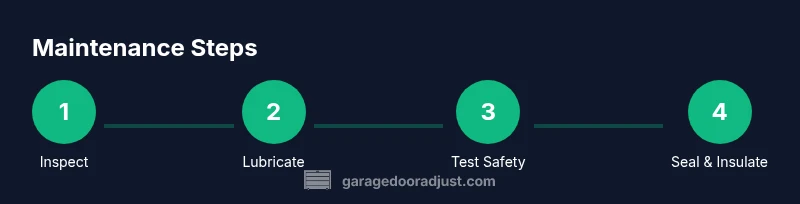
A sample cadence: 1) Inspect the door and opener weekly when you’re at home, using a 5-minute daily check. 2) Do a deeper look every 3 months, focusing on balance, tracks, springs (without adjusting springs yourself), and weather stripping. 3) Lubricate every 6 months with silicone-based lubricant on moving parts, avoiding grease on metal hinges. 4) Test safety features after any lubrication or part replacement. By sticking to this rhythm, you minimize downtime and spread out repair costs.
Visual inspection checklist you can perform monthly
A monthly visual inspection helps you catch issues before they escalate. Use a bright flashlight and stand back to view the door from below and from the sides. Look for: loose hardware on hinges, misaligned tracks, unusual gaps at seals, worn rollers, frayed cables, and any dents in the door panels. Check the weatherstripping at the bottom edge; replace if brittle or cracked. Verify that the door starts and stops smoothly without sticking, and that the opener's safety eyes align and stay clean. If anything looks out of place, mark it, then address or plan a professional evaluation.
Remember to test balance by manually lifting the door halfway and letting go; if it doesn’t stay in place, this indicates an imbalance you should address with care. Keep the door closed before performing any inspection and never place yourself under the door while testing. This routine is simple but powerful for early problem detection and cost containment.
Lubrication and hardware care
Lubrication reduces friction, noise, and wear on moving components. Use a silicone-based lubricant and apply sparingly to the torsion spring (if accessible to a trained professional), hinges, rollers (non-nylon), and the metal tracks. Wipe off excess lubricant to avoid attracting dust. For hardware like hinges and pulley blocks, a light wipe and reapplication every few months maintains smooth operation. Avoid over-lubricating or using grease on the track interior surfaces, as this can attract dirt and gum up the mechanism.
Inspect hardware regularly: tighten loose screws or bolts on hinges and brackets, and replace worn fasteners promptly to preserve alignment. If a part shows visible wear, plan for replacement before it fails. Note that some components, especially torsion springs and cables, require professional handling; never attempt risky adjustments without proper training.
Track alignment, balance, and safety tests
Tracks should be straight, secured, and clear of debris. With the door closed, inspect each track side to side for dents or gaps, and tighten any loose mounting screws. A door that binds or scrapes indicates misalignment, which can cause premature wear or premature opener strain. Balance is tested by lifting the door about halfway and releasing it; it should stay put if properly balanced. If it drifts, contact a professional to adjust springs or balance the system.
Safety tests are critical: ensure the automatic reversal feature works by placing a lightweight object (like a thin block) in the door’s path and pressing the close button. The door should reverse direction upon contact. If it does not, stop using the door and schedule service. Regular checks keep springs, cables, and rollers from failing unexpectedly.
Weatherstripping, insulation, and sealing
Bottom seals prevent drafts, moisture, and dirt from entering the garage. Inspect the weatherstripping along the door’s bottom edge for cracks, tears, or compression, and replace it if needed. Check door panels and joints for gaps that might let air in; sealing these gaps improves comfort and energy efficiency. If your garage is attached to living space, consider upgrading insulation in the door or adding a door panel with better thermal performance. Even small improvements can add up to noticeable energy savings and reduced mildew risk in damp climates.
Authority sources and professional help
For safety and best practices, consult authoritative sources and seek professional assistance when needed. The U.S. Occupational Safety and Health Administration (OSHA) provides general safety guidelines for working around moving equipment. The U.S. Department of Energy offers guidance on insulation and weatherproofing that applies to garage doors and attached spaces. For standardized safety resources and testing methodologies, consider National Institute of Standards and Technology (NIST) materials and related publications. If any step feels beyond your comfort level, or if you notice damaged springs, cables, or a door that does not respond predictably, contact a licensed technician. Following these sources helps ensure you maintain a safe, efficient, and durable system.
Summary remarks on ongoing upkeep
Maintenance for a garage door is a proactive habit that preserves safety and value. Invest a small amount of time on a regular schedule, perform routine inspections, and address wear early. The above sections outline a practical plan that homeowners can execute with common hand tools, while clearly identifying tasks that require professional expertise. By adopting this approach, you’ll enjoy smoother operation, quieter performance, and fewer disruptive repairs over the door’s life.
Authority sources and professional help (repeat section for emphasis)
To reinforce best practices and safety, refer to external sources listed below. These provide foundational guidance for homeowners performing maintenance, safety checks, and energy-efficiency improvements related to garage doors. Always cross-check any DIY steps with official recommendations to avoid safety risks.
Tools & Materials
- Adjustable wrench (set)(Choose sizes that fit hinge bolts and hardware.)
- Screwdrivers (Phillips & flathead)(Assorted sizes for hardware fasteners.)
- Silicone-based lubricant spray(Apply to moving metal parts; avoid track interiors.)
- Clean rags or lint-free towels(Wipe excess lubricant and dust from tracks.)
- Step ladder(Safe ladder height to reach tracks without overreaching.)
- Measuring tape or ruler(Useful for checking level and alignment in tricky cases.)
- Weatherstripping, replacement material(Only if you notice critical wear or cracking.)
- Safety glasses(Protect eyes during inspection and adjustments.)
Steps
Estimated time: about 60-90 minutes
- 1
Disconnect power and secure the door
For safety, unplug the garage door opener or switch off the circuit breaker before touching any components. Use the door's manual latch to prevent movement while you work. Confirm that the door cannot move at all by attempting a brief manual push with the door fully closed.
Tip: Always verify power is off by trying the wall button before touching moving parts. - 2
Check door balance by manual lift
With the door closed, lift the door about halfway and slowly release. It should stay in place or descend very slowly. If it drops or rises, the balance system (springs) may need professional adjustment.
Tip: Do not attempt to adjust torsion springs yourself; balance problems can be dangerous. - 3
Inspect tracks and hardware
Look along both tracks for bends, dents, or loose screws. Tighten screws where needed and remove obstructions like debris. If tracks are misaligned, do not force the door; seek professional alignment.
Tip: Use a level to check tracks are plumb and parallel to ensure smooth operation. - 4
Lubricate moving components
Apply a light coat of silicone lubricant to hinges, rollers (if not nylon), and the section of track where the rollers ride. Wipe away any excess to prevent dust buildup. Avoid greasing interior track surfaces and springs.
Tip: Lubricate only after cleaning to maximize effectiveness and reduce dust accumulation. - 5
Inspect weatherstripping and seals
Check the bottom seal for cracks or compression. Replace if it’s brittle, torn, or permanently compressed. Seal gaps around the door frame to improve energy efficiency and limit moisture ingress.
Tip: Take a photo before replacement to help align new pieces and cut accurately. - 6
Test safety features and opener operation
Reconnect power and test the opener using the wall button and remote. Place a small object (e.g., a block) in the door path to verify the automatic reversal stops the door upon contact. Ensure the opener stops smoothly and reverses when needed.
Tip: If the reversal test fails, discontinue use and contact a pro immediately. - 7
Document maintenance actions
Record what you checked, what parts were touched, and any replacement items. Note the date and next planned maintenance window. This log helps you track wear and schedule future service.
Tip: Keep the log in your garage for quick reference during seasonal checks. - 8
Plan the next maintenance cycle
Set a reminder for the next quarterly check and adjust the routine based on seasonal changes, weather, and door usage. A consistent cadence prevents drift and reduces unexpected failures.
Tip: Review the plan after high-usage periods (e.g., winter holidays) to catch stress points early.
Got Questions?
How often should I perform maintenance for my garage door?
A practical plan combines monthly visual checks with a more thorough safety and parts inspection every 3 months. Depending on climate and usage, you may adjust to quarterly or even more frequent reviews.
Most homeowners should check their garage door monthly and do a deeper maintenance every three months, adjusting for weather and usage.
Is it safe to lubricate tracks with WD-40 or oil?
Use a silicone-based lubricant on moving metal parts. Do not apply petroleum-based oils or grease to the tracks, as they can attract dust and cause buildup.
Use silicone lubricant on the moving parts, and avoid oils on the tracks.
Should I adjust torsion springs myself?
No. Torsion springs are under high tension and require specialized tools and training. Improper adjustments can cause serious injury or door failure.
No—torsion spring work should be done by a licensed technician.
How do I know if my weatherstripping needs replacement?
Replace weatherstripping if you see cracks, tears, or persistent drafts after a seal is compressed. Proper sealing improves energy efficiency and protects from moisture.
If the seal looks cracked or compressed, it's time to replace it.
Can I test the safety sensor myself?
Yes, you can test the safety sensors by placing an object in the door path and closing the door. The door should reverse when the beam is interrupted. If not, stop and call a professional.
You can test the safety sensor by interrupting the beam and watching for reversal.
What is the approximate cost of professional garage door maintenance?
Costs vary by region and the scope of service, but routine maintenance is generally more affordable than major repairs. Reach out to a licensed technician for a precise quote.
Costs vary; ask a local pro for a real quote.
Watch Video
Quick Summary
- Establish a clear maintenance cadence.
- Perform monthly visual checks and quarterly lubrication.
- Test safety features after any adjustment or lubrication.
- Know when to call a pro for spring or structural work.