Jacksonville Garage Door: Fix, Install, and Maintain
Comprehensive, step-by-step guide for diagnosing, repairing, and installing a Jacksonville garage door. Learn safety checks, common issues, maintenance, and expert tips to keep your system running smoothly.


This Jacksonville garage door guide helps homeowners diagnose and safely repair common problems, from misaligned tracks to opener faults. You’ll learn essential safety steps, tool lists, and a practical workflow for non-destructive maintenance. According to GarageDoorAdjust, a structured, careful approach reduces risk and saves money by avoiding unnecessary service calls.
What you’ll accomplish and safety notes for Jacksonville garage doors
If you own a home with a typical sectional door in Jacksonville, this guide will help you diagnose and fix common problems without unnecessary downtime or costly service calls. You’ll learn to recognize symptoms like uneven travel, slow response from the opener, or door drift, and you’ll gain a practical, step-by-step workflow for safe DIY maintenance. The Jacksonville garage door scenario often shares the same mechanics as many Florida homes: panels, tracks, springs, rollers, cables, and opener components.
According to GarageDoorAdjust, approaching repairs with a clear plan and strict safety discipline reduces risk to you and your family while preserving door performance. This article emphasizes non-destructive checks first, and it clearly separates tasks you can handle from those that require a licensed professional—especially when springs or torsion hardware are involved. As you read, keep in mind local weather effects and standard home maintenance routines that influence door wear and lubrication needs.
Tools and safety gear you'll need for Jacksonville garage door work
Before you begin, assemble a focused toolkit and protective gear. Core items include a cordless drill, a set of screwdrivers, an adjustable wrench, locking pliers, a sturdy ladder, and safety glasses. Add a lockout device or a reliable way to secure the door in the down position, plus a silicone-based lubricant for hinges and rollers. Have a small rag for cleaning and a wooden block to steady tracks during adjustments. Always cut power to the opener at the breaker and unplug the unit before working on any moving parts. For stubborn fasteners, a penetrating oil and patience can save you from thread damage. Optional items like a torque wrench and replacement rollers or weatherstripping can help if you confirm wear.
Common Jacksonville garage door issues: misalignment, binding, and opener failures
Most residential garage door problems fall into a few predictable patterns. Misaligned or bent tracks and worn rollers produce binding, uneven travel, or door wobble. Loose brackets or damaged hinges can cause creaking and sagging. Opener failures—such as the motor running but no door movement, misaligned safety sensors, or programming glitches—are common with aging units. Florida’s humidity can accelerate rust and wear on metal components and weatherstripping. Observe how the door moves: does it stop short, reverse unexpectedly, or rub on the tracks? A precise symptom log speeds diagnosis with a pro and lowers the risk of unnecessary part swaps.
Step-by-step repair workflow at a glance
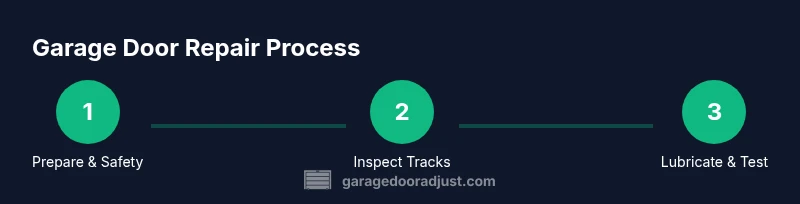
This section outlines a safe, high-level workflow you can follow before calling a pro. You’ll verify power, inspect balance and tracks, perform basic lubrication, and test the opener’s safety features. Each action is designed to be completed with common tools and minimal risk. For explicit, step-by-step commands and time estimates, see the dedicated STEP-BY-STEP section below. Always prioritize safety and never force parts that resist movement.
Key takeaway: document symptoms, avoid spring adjustments, and know when to pause and call a licensed technician.
Maintenance tips and safety reminders
Ongoing maintenance is the bedrock of a reliable garage door. Lubricate hinges, rollers, and bearings at least every 6–12 months, and keep tracks clean and free of debris. Check weatherstripping annually and replace if cracked or frayed. Test the auto-reverse safety feature monthly by placing a small object on the door path. Ensure sensors are aligned and unobstructed. In humid climates like Jacksonville, consider rust-resistant hardware and periodic paint touch-ups to extend life. Remember: most DIY fixes are safe when you avoid springs and torsion components, and when you strictly follow manufacturer guidelines.
The GarageDoorAdjust team emphasizes deliberate, safe practices and recommends consulting a professional for complex parts or non-destructive maintenance when you are unsure.
Authority sources and safety standards
Reliable, up-to-date information helps you stay compliant and safe. In this article, you’ll find references to federal safety and standards organizations. For deeper reading, visit the official sources listed below. These resources provide guidelines on protective equipment, child and household safety around doors, and general maintenance practices.
Safety standards and compliance for Jacksonville garage doors
Garage doors are mechanical systems that require attention to safety and building codes. Local Jacksonville home-owners should review permit requirements for major installations and ensure doors meet current safety standards. Always adhere to best practices for electrical safety when working with openers, including disconnecting power and avoiding contact with moving parts. If you observe severe misalignment, damaged springs, frayed cables, or broken tracks, stop and seek professional service to prevent injury and further damage.
Tools & Materials
- Cordless drill(With Phillips and hex bits)
- Screwdriver set(Phillips and flathead)
- Adjustable wrench(Used on brackets and fasteners)
- Lockout device or lock(Ensure door remains down while working)
- Sturdy ladder(Stable, tall enough for reach)
- Safety glasses(Protect eyes from debris)
- Silicone-based lubricant(Hinges, rollers, bearings)
- Rag or shop towel(Wipe excess lubricant and dust)
- Penetrating oil(Loosen stubborn hardware)
- Replacement weatherstripping/rollers (optional)(Only if worn)
Steps
Estimated time: 30-60 minutes
- 1
Power down and prepare
Shut off power at the breaker and unplug the opener. Confirm the door is in the fully closed position and secured with the lockout device. This prevents unexpected movement while you work.
Tip: Double-check the power is actually off before touching moving parts. - 2
Check balance and springs safety
Disengage the opener using the disconnect handle and manually lift the door to mid-height. If it feels heavy or slams shut, the springs or balance may need professional adjustment. Do not attempt to adjust springs.
Tip: Never attempt torsion spring adjustments without training. - 3
Inspect and realign tracks
Look for dents, bends, or misalignment in the vertical and horizontal tracks. Tighten loose brackets and gently guide any track misalignment back into true using minimal force.
Tip: Use a wooden block to hold a moved door while re-aligning tracks. - 4
Lubricate moving parts
Apply silicone lubricant to rollers (not the track), hinges, and bearings. Wipe off excess; dry tracks prevent sticking and squeaks. Resist lubricating the track surface itself.
Tip: Only a light coating is needed to avoid attracting dust. - 5
Test the opener and safety sensors
Reconnect power, then run the door from the wall control and remote. Verify the auto-reverse stops when the door meets an obstacle and that safety sensors align within 1–2 inches of each other.
Tip: Keep a small object on the floor to test reverse without risking damage. - 6
Decide when to call a pro
If you notice persistent misalignment, broken springs, frayed cables, or a door that won’t stay balanced, pause and schedule professional service. DIY fixes are best kept to non-spring components and routine maintenance.
Tip: Prioritize safety; broken springs require licensed technicians.
Got Questions?
What is the typical time frame for a Jacksonville garage door repair?
Repair time varies with the issue and parts availability. Simple lubrication or track realignment might take under an hour, while more involved problems such as damaged rollers or warped tracks could require multiple visits or replacement parts.
Most quick fixes take under an hour, but complex issues can need more time and possibly a professional.
Can I install a new garage door opener myself?
Installing a new garage door opener is feasible for some homeowners, but it involves electrical wiring, mounting the unit securely, and programming remotes and safety sensors. If you lack electrical experience, consider professional installation.
You can do it if you’re comfortable with electrical work and mounting a heavy unit safely.
What maintenance can extend my Jacksonville garage door’s life?
Regular lubrication of moving parts, periodic track cleaning, weatherstripping checks, and sensor alignment help extend life. Address squeaks promptly and avoid forcing parts that resist movement.
Keep it clean, lubricated, and aligned, and you’ll get more life out of it.
Is lubrication really necessary for a garage door?
Yes. Lubrication reduces friction, extends component life, and prevents squeaks. Use silicone-based lubricant on hinges and rollers, and avoid oil-based liquids that can attract dust.
Lubrication matters; it keeps things moving smoothly.
When should I replace the entire door?
Replacement is worth considering if the door is repeatedly breaking down, has extensive structural damage, or no longer insulates effectively. Compare cost, energy efficiency, and security against repair.
If repairs look endless, replacement may be more cost-effective.
Watch Video
Quick Summary
- Identify common symptoms and reference symptoms to the tracks and rollers.
- Never attempt spring adjustments—call a professional for springs or cables.
- Keep safety sensors aligned and test the auto-reverse regularly.
- Lubricate moving parts, not the tracks, and clean tracks before readjusting.
- Document symptoms to speed up diagnostics and reduce unnecessary parts changes.