How to Remove a Dent from a Garage Door: The DIY Guide
Step-by-step DIY methods to remove a dent from a garage door, with safety tips, tools, and guidance on when to hire a pro. Learn suction pulls, heat-cold techniques, and maintenance to prevent future dents.


You can often remove a small dent from a garage door at home. Start by assessing the dent’s size, location, and paint condition, since sharp creases or chipped paint may require a professional. According to GarageDoorAdjust, most shallow dents on steel, aluminum, or fiberglass panels respond to simple DIY methods such as suction cup pulls, heat-and-cool techniques, or careful tapping with a rubber mallet.
Understanding dents on garage doors
Dents on garage doors arise from blunt impacts, weather, or accidental contact, and the material matters a great deal. Steel and aluminum panels bend differently than fiberglass or composite doors, so the repair approach and safety considerations vary. Paint condition is a critical factor—if the finish is chipped or peeling, DIY repairs can push moisture under the paint and worsen the problem. When you learn how to remove a dent from a garage door, you’re simultaneously evaluating whether repainting or professional repair will be needed after the fix. A thorough assessment also helps you avoid making the problem worse by selecting an approach that respects panel integrity, door balance, and the motor’s safety features. This first step sets the stage for a successful repair that doesn’t compromise operation or warranty coverage.
Quick decision guide for dent repair on different materials
- Steel doors: Small to moderate dents often respond to non-destructive methods like suction pulls or heat-and-cool cycles. Avoid excessive heat around any painted edge to prevent additional paint damage.
- Aluminum doors: Aluminum tends to be more forgiving with gentle tapping and suction methods, but you should still avoid sharp blows at the edges or near joints.
- Fiberglass doors: Fiberglass is resilient but can crack if hammered too hard. Start with gentle pressure and low-profile tools, watching for any cracks or color changes.
- Painted vs. unpainted panels: Painted surfaces require extra care to prevent stripping paint; unpainted or primed panels may show dents more clearly after repair, so test on a small area first.
The importance of safety and timing
Always work with the door in a lowered position if possible and use a stable ladder if you must reach higher panels. If you hear grinding from the opener, or the door doesn’t balance smoothly after a repair, stop and re-evaluate. A misaligned track or damaged torsion spring can create a serious safety hazard that DIY methods can’t fix. This block emphasizes that dents can be a sign of greater issues, and the safest approach is to treat the problem as a multi-factor repair that may require a professional inspection.
Tools & Materials
- Rubber mallet or wooden block(Prefer a rubber mallet; place a wooden block between the mallet and the door to avoid direct impact)
- Suction cup dent puller(Optional but helpful for shallow dents on smooth surfaces)
- Hair dryer or heat gun(Low-heat setting to warm panel surface)
- Compressed air can or dry ice(For a heat-and-cool effect; wear gloves and use in well-ventilated area)
- Protective gloves(Keep hands safe from heat and sharp edges)
- Soft cloth and mild detergent(Clean area before repair to improve grip and avoid slipping)
- Painter’s tape or edge guard(Protect edges during repair and prevent accidental scratching)
- Soft, non-marring tool (plastic spatula or nylon pick)(Use for gently guiding the dent toward the center if needed)
- Safety glasses(Wear when using tools to prevent eye injury)
Steps
Estimated time: 60-120 minutes
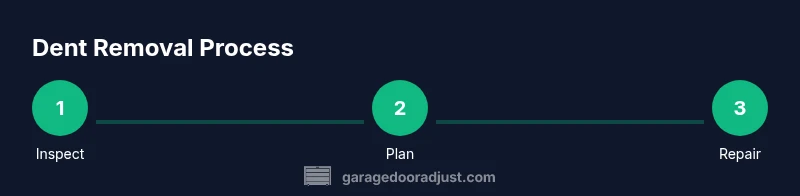
- 1
Inspect the dent
Carefully evaluate the dent’s size, depth, and location. Check for cracks in the paint and note whether the edge near the dent feels sharp. This helps determine if a suction cup, heat-cold method, or tapping is most appropriate.
Tip: Take photos from multiple angles before you start so you can compare results later. - 2
Prepare the workspace
Clear the area around the door and wipe the panel with a damp cloth. A clean surface improves grip for suction methods and reduces the risk of slipping tools. If you’re working on a higher panel, set up a stable ladder with a spotter.
Tip: Use painter’s tape to protect nearby edges and keep tools from slipping. - 3
Choose a repair method
Based on the dent type and paint condition, decide whether to try suction, heat-cool cycling, or controlled tapping. For shallow, smooth dents with intact paint, suction or heat-cool can be effective. Deeper dents with paint damage may require professional repainting.
Tip: If the paint is chipped, start with a gentle approach to avoid expanding the damaged area. - 4
Apply suction cup pull (if using suction)
Position the suction cup over the center of the dent and pull straight outward with steady pressure. If the dent loosens, release and re-seat the cup, then pull again. Do not twist the cup, which can tear the surface.
Tip: Work slowly and avoid sudden jerks that can stretch or crack the paint. - 5
Use heat to soften the panel (heat method)
Warm the dented area with a hair dryer at a safe distance for about 30-60 seconds. The heat increases the panel’s malleability, making it easier to reshape. After heating, apply a quick cold shock with a can of compressed air held upside down or with dry ice.
Tip: Never hold the heat source on one spot for too long to prevent paint damage. - 6
Tap gently with a mallet (padding method)
Place a wooden block or thick protective pad over the dent and gently tap from the edge toward the center. Use light, controlled taps and check for movement after each set of taps. Stop if you notice creasing or paint lifting.
Tip: Always use a padded surface to dampen impact and avoid marring the surface. - 7
Reassess the panel
After you’ve worked the dent, inspect for residual deformation, paint cracks, or altered panel alignment. Subtle changes may still be visible; it’s common for re-raised edges to settle after cooling.
Tip: Run your hand along the edge to feel for any sharp transitions that indicate new issues. - 8
Test door operation
Close and open the door slowly to ensure smooth operation and that the track and torsion system aren’t affected by the repair. Listen for unusual noises or resistance that could indicate misalignment or binding.
Tip: If the door doesn’t balance correctly, stop and check tracks, rollers, and springs before continuing. - 9
Finish and protect
If you’ve successfully minimized the dent, clean the area again and consider applying a touch-up paint if there are minor chips. Lubricate moving parts and verify that the opener is functioning normally.
Tip: Document the repair with another photo for future reference and potential warranty needs.
Got Questions?
Will removing a dent affect the door’s paint or finish?
Yes, aggressive methods can damage paint or finish. Start with gentle approaches and test on a small area. If you see cracking or peeling, stop and seek a pro.
Dent repair can affect paint. Start gentle, test on a small area, and stop if you see cracking before calling a professional.
Can I fix dents on all garage door materials with DIY methods?
DIY methods work best on shallow dents on steel, aluminum, or fiberglass with intact finishes. Deeper dents or damaged paints often require professional service or repainting.
DIY works for shallow dents on common materials; deep dents or damaged paint usually need a pro.
What if the dent is near the edge or on a seam?
Dents near edges or seams are more prone to splitting or misalignment. Avoid aggressive tapping and consider professional assessment to protect structural integrity.
Edge or seam dents can cause structural issues; get a pro if unsure.
When should I stop DIY and call a professional?
Stop DIY if the door binds, reverses unexpectedly, shows paint damage, or you notice misalignment in tracks or springs. A professional can safely assess and repair structural components.
If you notice binding, misalignment, or paint damage, call a professional.
Will the repair affect the garage door’s warranty?
DIY dent repair can affect warranty coverage depending on the manufacturer’s terms. Check your warranty and consult the installer if you’re near the expiry date.
Check your warranty terms; DIY fixes can impact coverage.
Watch Video
Quick Summary
- Assess the dent and paint condition before starting.
- Choose a method that matches the panel material and paint integrity.
- Protect the surrounding area to prevent unintended damage.
- Test door balance after repair and avoid forcing misaligned panels.
- The GarageDoorAdjust team recommends seeking a pro for large dents or damaged paint.