How to Get Spray Paint Off a Garage Door: A Step-by-Step Guide
Learn proven, safe methods to remove spray paint from a garage door, protect the finish, and restore curb appeal with a practical, step-by-step approach.


This step-by-step guide shows homeowners how to safely remove spray paint from a garage door while protecting the finish. Start with gentle soaps and water, then test solvents on a hidden area, and progress to more effective cleaners as needed. Always wear protective gear and work in a ventilated space.
Understanding why spray paint sticks to garage doors
Spray paint can bond to a garage door in a variety of ways, depending on the door material (metal, wood, or composite) and the paint type (acrylic, enamel, or oil-based). Abrasive scrubbing or harsh solvents can scratch or discolor the surface, especially on aluminum and softened coatings. According to GarageDoorAdjust, the safest approach is to start with gentle cleaning methods and escalate only when necessary. This incremental method minimizes finish damage while maximizing removal efficiency. Before you begin, identify the paint type if possible (look for the paint’s sheen and smell) and consider your door’s age and coating. A careful, patient approach pays off with fewer touch-ups later.
- Aluminum doors are prone to scratching; use non-abrasive tools.
- Wood doors may need sealant or touch-up after cleaning.
- Glass-filled or vinyl surfaces require compatible cleaners to avoid hazing.
Safety first: gear and prep
Preparation reduces risk and makes the job easier. Put on chemical-resistant gloves, safety glasses, and a mask or respirator if you will use solvents. Clear the area around the door, cover nearby plants, concrete, and vehicles with drop cloths, and ensure good ventilation. Remove any loose paint flaking from the door surface with a dry brush so you don’t grind it into the finish when cleaning. Keep a bucket of clean water handy for rinsing and a separate bucket for soapy water. Protect adjacent surfaces with painter’s tape and plastic sheeting as needed.
- PPE helps prevent skin, eye, or inhalation exposure.
- Ventilation minimizes solvent fumes.
- Set up a spill kit (old towels + plastic bags) for easy cleanup.
Assessing the door finish and choosing a method
Not all paint removal methods are suitable for every door. If the door finish is a sensitive coating (like a factory-applied paint or powder coat), gentler methods are preferred. Start with warm, soapy water and a soft sponge to lift paint without abrasion. For stubborn spots, test a small, inconspicuous area with a gentle cleaner designed for painted surfaces. If the paint doggedly adheres, consider a solvent-based cleaner labeled safe for your door material. Always read product labels and test on a hidden area before full application. For safety, avoid metal scrapers on finishes that could gouge the surface.
- Test on an inconspicuous area first.
- Use cleaners compatible with your door material.
- Avoid metal tools that can scratch finishes.
Gentle removal methods you can start with
Begin with the least aggressive approach. Mix a few drops of mild dish soap in warm water and apply with a soft cloth or sponge. Gently blot and wipe the paint, then rinse with clean water. A soft-bristle brush or non-scratch sponge can lift stubborn specks without scratching. If soap and water don’t fully remove the paint, you can try a dedicated graffiti remover or isopropyl alcohol on a small area. Always re-wet and rinse thoroughly to prevent residue.
- Work in small sections to avoid spreading paint.
- Keep the door cool to prevent rapid solvent evaporation.
- Always rinse off residues after cleaning.
Stronger solutions for stubborn spray paint
For tenacious paint, slightly stronger cleaners are appropriate, but you must proceed with caution. Use isopropyl alcohol (at least 70%) or a solvent like mineral spirits on a cloth, never directly on a large area. Apply to a microfiber cloth and let it sit for 2–5 minutes before gently rubbing. If color transfers or finishes dull, stop and test elsewhere. For very stubborn grains, a plastic scraper can ease the paint without scratching, but never use metal tools. Rinse frequently and dry the surface after each pass to monitor progress.
- Always test solvents on a hidden patch first.
- Do not saturate the door with solvent; dab and lift.
- Rinse-and-dry to prevent solvent from soaking into seams.
Finishing: cleaning, sealing, and touch-ups
After removal, wash the door again with mild soap and water to remove any cleaning residue. Dry completely, then inspect the surface for remaining blemishes. If the finish shows signs of wear or faint staining, you may apply a touch-up coat of matching paint and a clear sealant. Light sanding with fine-grit sandpaper (320–400) can smooth rough patches before paint touch-ups, but test first on a hidden area. Finally, re-seal or wax if appropriate for the door material to restore protection.
- Dry thoroughly before touching up.
- Use the exact color match for seamless repair.
- Consider a protective topcoat to extend the door’s life.
When to call a professional
If the paint covers large areas, or you suspect the door’s finish is damaged, consult a professional. Lead-based paints, common on older structures, require careful handling and professional assessment. A pro can assess the finish, select the safest solvent, and apply coatings to restore your door’s appearance without compromising structural integrity. If you smell strong solvents or notice bubbling, stop and seek expert help.
- Older doors may have hazardous coatings that require special handling.
- Professional help prevents permanent finish damage.
- Always verify credentials and insurance before contracting.
Maintenance tips to prevent future paint issues
To minimize future spray paint problems, apply a primary coat of primer if you expect surface exposure (garage doors facing busy streets can accumulate more pollution). Regular cleaning with a mild detergent prevents buildup and makes future paint removal easier. Store solvents and tools in a dry, ventilated area away from the door to avoid accidental spraying. Establish a routine to inspect and clean your door every 6–12 months, and consider protective finishes rated for outdoor exposure.
- Regular cleaning simplifies future maintenance.
- Primer and protective finishes extend surface life.
- Schedule periodic inspections to catch issues early.
Tools & Materials
- Mild dish soap(Any dish soap will work; avoid harsh degreasers on delicate finishes)
- Warm water(For soap solution and rinsing)
- Bucket(One for soapy water, one for rinse water)
- Soft-bristle brush(Non-abrasive cleaning tool)
- Plastic putty knife(Use gently to lift paint; avoid metal scrapers)
- Non-scratch sponge(For scrubbing without scratching)
- Painter's tape(Mask surrounding edges and fixtures)
- Plastic sheeting/drop cloths(Protect ground and nearby items)
- Gloves(Chemical-resistant, to protect skin)
- Safety glasses(Eye protection during cleaning)
- Mask or respirator(Protect from solvent fumes)
- Rubbing alcohol (isopropyl alcohol)(70%+ for spot treatment on stubborn spots)
- Acetone or graffiti remover (paint-safe)(Use sparingly; test on hidden area first)
- Old toothbrush(For detailed scrubbing in crevices)
- Fine-grit sandpaper (320-400)(For smoothing touch-ups after cleaning)
- Matching spray/paint for touch-ups(Ensure color match for repairs)
Steps
Estimated time: 60-180 minutes
- 1
Survey the affected area
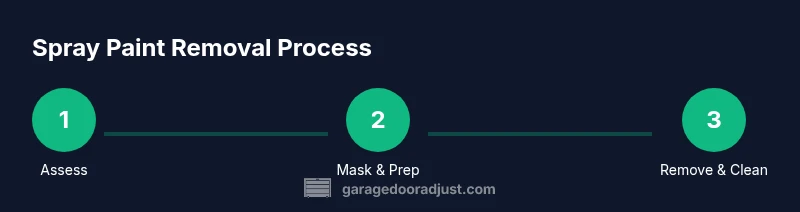
Walk the perimeter of the door and note all spray-painted regions. Check for texture changes, peeling, or staining that would affect removal strategy. Document any delicate areas near handles, seals, or hardware so you protect them during cleaning.
Tip: Take pictures to reference color and finish before you begin. - 2
Mask surrounding areas
Apply painter's tape around the paint boundary and cover adjacent surfaces with plastic sheeting to prevent accidental splashes. Keep the masking tight to avoid gaps that solvents could seep through.
Tip: Secure edges with a tight seal to prevent drift. - 3
Prepare your cleaning solution
Mix mild dish soap with warm water in a bucket. Use a second bucket for rinsing to avoid cross-contamination of dirty water with clean solution.
Tip: Label your buckets if you have multiple cleaners in use. - 4
Test a small hidden area
Apply the soap solution to a hidden patch and gently scrub with a soft cloth. Rinse and inspect for any adverse effects on the finish before scaling up the approach.
Tip: If the finish shows dulling or discoloration, stop and reassess. - 5
Gently scrub with soap and water
Use the soft-bristle brush to lift paint in gentle circular motions. Rinse frequently to prevent soap residue from drying on the surface.
Tip: Work in sections to control the area you’re cleaning. - 6
Apply a solvent for stubborn spots
If paint remains, dampen a microfiber cloth with isopropyl alcohol (70%+) or a paint-safe graffiti remover and place it on the spot for 2–5 minutes. Gently rub and lift, avoiding prolonged exposure.
Tip: Avoid soaking the door; apply briefly and wipe away. - 7
Rinse and dry
Rinse the cleaned area with clean water and dry with a lint-free cloth. Inspect for any remaining pigment and repeat if necessary.
Tip: Drying helps identify whether further removal is required. - 8
Address remaining blemishes with touch-ups
If residual staining remains, lightly sand the area with fine grit and apply a matching paint touch-up, followed by a clear protective coat if appropriate.
Tip: Always test color match on a hidden spot first. - 9
Final inspection and cleanup
Re-check the entire door for evenness, clean tooling marks, and any missed paint. Remove masking materials and dispose of waste per local guidelines.
Tip: Leave the area cleaner than you found it.
Got Questions?
Is spray paint easy to remove from a metal garage door?
Removal difficulty depends on the paint type and surface. Start with mild soap and water and test a small area. If stubborn, use a solvent safe for the door material, but avoid aggressive scrubbing that could scratch the metal.
In most cases, gentle cleaning works first; if not, try a solvent that’s safe for metal doors, testing on a hidden spot.
Can I remove spray paint on wood vs metal doors the same way?
Wood doors can tolerate slightly stronger cleaners, but sward surfaces may absorb color more readily, requiring refinishing after cleaning. Always test on a hidden patch and avoid soaking wood to prevent swelling or warping.
Wood doors may need different cleaners and a finish touch-up after cleaning; test first.
What chemicals are safe to use on a painted garage door?
Use mild dish soap with warm water first. If necessary, isopropyl alcohol (70%+) or a paint-safe graffiti remover can help with stubborn spots. Always test on a hidden area and avoid harsh solvents on delicate finishes.
Start with soap, then consider a paint-safe solvent if needed, always test first.
How long should I wait after applying a solvent before scrubbing?
Let the solvent dwell on the paint for 2–5 minutes, then gently rub with a microfiber cloth. Do not let it dry in place, which can make removal harder.
Wait a few minutes, then gently scrub and wipe away.
Should I sand the door after cleaning?
Only sand if you have rough patches or color inconsistency after cleaning. Use very fine grit (320–400). Mask and protect surrounding areas, then apply touch-up paint if needed.
Sanding is only for smoothing after cleaning, not a first step.
When should I call a professional?
If large areas are painted, the finish is damaged, or you suspect lead-based coatings, consult a professional. They can assess safety, recommend appropriate cleaners, and perform refinishing without risking the door.
If in doubt, call a pro to avoid damaging the door or risking health.
Watch Video
Quick Summary
- Test cleaners on hidden areas first
- Start with soap and water, escalate if needed
- Mask surrounding areas to protect finishes
- Avoid metal tools to prevent scratches
- Consult a pro if old coatings or lead paint are suspected