How to Prevent Garage Door From Freezing to the Floor
Learn practical, step-by-step steps to stop your garage door from freezing to the floor this winter with sealing, humidity control, and maintenance tips from the GarageDoorAdjust team.


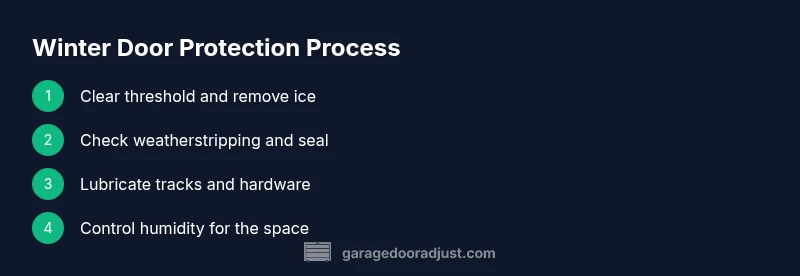
To prevent a garage door from freezing to the floor, start by clearing snow or ice from the threshold and inner tracks. Improve bottom sealing with weatherstripping, ensure the door and opener are lubricated, and reduce interior humidity with a dehumidifier or moisture absorber. In freezing temps, run the opener slowly to help seal integrity and inspect for gaps monthly during winter.
Why freezing happens
Winter weather turns ordinary garage doors into a sticking, ice-bonded problem when several factors collide. Cold air can infiltrate around the bottom seal, moisture inside the garage condenses on metal parts, and worn weatherstripping creates gaps that let both cold air and moisture creep under the door. When snow and ice accumulate at the threshold, the door can lock to the floor as ice forms a frozen seal. This guide on how to prevent garage door from freezing to floor outlines practical fixes, including sealing, humidity control, and routine maintenance, drawing on insights from the GarageDoorAdjust team. By addressing each contributing factor—air leaks, moisture, and mechanical wear—you’ll improve winter reliability and reduce the risk of a frozen door that won’t open or closes with a lag.
Pre-winter checks you should perform
Before the first deep freeze, perform a quick, thorough check of the door system. Start by cleaning the threshold and sill to remove any packed snow or ice. Inspect the weatherstripping along the bottom edge for cracks, tears, or compression that creates gaps. Look at the door’s alignment in its frame; a misaligned door can funnel cold air under the edge. Check the opener for smooth operation, listening for grinding or binding noises that indicate worn parts. These checks form the foundation of a reliable freeze-prevention plan and can reveal wear before winter intensifies.
Improve the bottom seal and threshold
A robust bottom weatherseal and a properly sealed threshold are your first line of defense against winter intrusion. Replace worn weatherstripping with a door-specific kit designed for your door height and track profile. Consider adding a threshold seal or step-in ramp to block cold air from slipping beneath the door. When choosing materials, prefer flexible rubber or silicone-based options that compress evenly and resist ice buildup. After installation, test the seal by sliding a thin card between the door and frame at several points; if the card moves freely with little resistance, the seal is too loose and should be adjusted or replaced.
Humidity control and interior warmth
High indoor humidity is a silent contributor to freezing doors. In the garage, moisture can condense on metal components and then freeze under winter conditions. Use a dedicated dehumidifier or moisture absorbers to keep relative humidity lower, ideally around 30–50%. If your garage is unventilated, improve airflow with a small exhaust fan or a vented door insert. Keeping the space warm enough for a short period during cold snaps can also reduce surface condensation on the door’s metal parts, helping to prevent ice buildup around the threshold and tracks.
Track and hardware maintenance
Regular maintenance of tracks, rollers, hinges, and springs reduces the odds of freezing by ensuring smooth operation. Clean the tracks to remove dust and salt residues, then lubricate moving metal parts with a silicone-based lubricant—avoid petroleum-based products on plastic components. Check that rollers rotate freely without excessive play and that hinges are secure. Do not attempt to adjust torsion springs or track tension yourself; these are dangerous components that require a licensed professional. A well-lubricated, clean system closes evenly and resists ice adhesion around the bottom edge.
Temperature strategies and opener use in cold weather
In freezing conditions, run the door slowly and smoothly to avoid abrupt drops that could trap ice. If your opener has a sensitivity adjustment, set it to prevent abrupt stopping that could pinch ice against the floor. Avoid forcing the door if you encounter resistance; instead, stop, de-ice the threshold, and re-test. Consider leaving a small gap at the bottom during extreme cold if there’s a risk of warping due to pressure differences, but only if the door seals well when closed. These practices help maintain seal integrity even when temperatures plummet.
Maintenance schedule and part replacement guide
Create a winter maintenance routine and stick to it. Schedule inspections every 4–6 weeks during winter and after any major freeze events. Record wear on weatherstripping, threshold seals, and tracks, replacing worn parts promptly to prevent escalation. If you notice persistent freezing despite the above steps, consider upgrading the bottom seal system, adding insulation around the garage doorway, or upgrading to a more weather-resistant door assembly. A proactive maintenance cadence reduces emergency calls and keeps your door reliable through cold spells.
Troubleshooting and professional help when needed
If your door still freezes after implementing these steps, re-evaluate moisture sources and consider a more robust humidity-control solution. Ice can form where cold air blows through poorly insulated vents or where wind-driven moisture enters around the door edge. At that point, a professional assessment may identify issues like degraded tracks, misalignment, or insufficient weatherproofing that requires replacement parts. The goal is to restore a consistent seal and a predictable opening without forcing the mechanism through ice.
Authority sources and references
For further reading on winter weatherization and door maintenance, consult credible sources. The GarageDoorAdjust team cites general best-practice guidelines from energy and home improvement extensions to support sealing, humidity control, and routine maintenance.
Tools & Materials
- Snow removal tool (ice scraper or stiff broom)(Use to clear threshold and tracks without damaging seals.)
- Weatherstripping/threshold seal kit(Choose door-specific kit sized for your door height and profile.)
- Silicone-based lubricant (for metal parts)(Avoid petroleum-based lubricants on plastic components.)
- Dehumidifier or moisture absorbers(Place in garage to reduce humidity; empty or replace as needed.)
- Soft cloths/rags(For cleaning debris before applying new seals.)
- Flashlight or headlamp(Improves visibility in winter lighting.)
Steps
Estimated time: 45-90 minutes
- 1
Remove ice and debris from threshold
Begin by clearing all snow and ice from the threshold area and the immediate bottom edge of the door. Use a stiff brush or ice scraper, working from the outside toward the interior to avoid pushing ice into the mechanism. Dry the area thoroughly to prevent immediate re-freezing.
Tip: Wear gloves and take care not to damage the weatherstripping while scraping. - 2
Inspect and replace bottom weatherstripping
Check the bottom weatherstripping for cracks, compression, or gaps. If the seal doesn’t compress evenly or shows signs of wear, replace it with a new kit designed for your door and track configuration. After replacement, test the seal by opening and closing the door slowly to ensure a snug fit.
Tip: If you can see daylight under the door, the seal needs replacement. - 3
Clean and lubricate moving parts
Remove dust from tracks and rollers, then apply a light silicone-based lubricant to metal contact points. Wipe away any excess to prevent attracting dirt. Do not spray lubricant directly on springs or pulleys.
Tip: Lubrication should allow smooth movement without creating puddles of油. - 4
Implement humidity control
Set up a dehumidifier or moisture absorbers in the garage. Monitor humidity levels to keep the space around 30–50%. Ensure the device is emptied or replaced regularly and that it does not obstruct door movement.
Tip: A small vent fan can help circulate air and reduce condensation near the door edge. - 5
Check alignment and balance visually
Perform a visual inspection of track alignment and balance. Do not attempt to adjust springs or high-tension components unless trained. Misalignment can worsen freezing by creating unequal gaps along the edge.
Tip: If the door looks off-center or binds in one corner, call a professional. - 6
Test operation in cold conditions
Cycle the door in cold weather and observe how it closes. Listen for sticking noises or uneven seals. If you observe trouble, pause and re-check seals, insulation, and humidity controls before repeating.
Tip: Avoid forcing the door closed if ice blocks the path. - 7
Set up a winter maintenance schedule
Create a recurring monthly check plan for weatherstripping, threshold sealing, tracks, and humidity. Record replacements and note any recurring problems so you can plan proactive upgrades.
Tip: Stick a reminder on your calendar for monthly winter checks.
Got Questions?
Why does my garage door freeze to the floor only in winter?
Freezing occurs when cold outdoor air, high humidity, and gaps under the bottom seal allow moisture and ice to cling to the threshold. Wear in weatherstripping and poor sealing worsen the effect. Addressing sealing, humidity, and basic maintenance reduces freezing events.
Winter freezing happens when cold air and moisture get under worn seals; replacing seals and managing humidity helps prevent it.
Can I use salt near the door to melt ice and prevent sticking?
Avoid chemical de-icers near metal components as they can corrode hinges and tracks. Instead, clear ice mechanically and use moisture absorbers or a dehumidifier to reduce condensation that causes freezing.
Avoid salt near metal parts; use mechanical ice removal and humidity control instead.
Should I lubricate the weatherstripping?
Yes, use a silicone-based lubricant on metal frames and weatherstripping, but avoid over-lubricating to prevent dust buildup. Lubrication helps the seal compress evenly and resist ice formation.
Lubricate the frame and seals with silicone-based products, not excessive oil.
When should I replace bottom weatherstripping?
Replace weatherstripping if cracks, tears, or gaps are visible or if you can insert a card with minimal resistance. A worn seal directly contributes to freezing by allowing cold air under the door.
Replace the seal when it’s cracked or leaves gaps.
Is it safe to adjust springs to fix freezing?
No. Torsion springs and track adjustments are hazardous. Seek a licensed technician if you suspect spring tension or track issues are contributing to freezing.
Don’t mess with springs; call a pro for any spring or track concerns.
Can a dehumidifier alone solve the problem?
A dehumidifier helps but isn’t a substitute for proper sealing and maintenance. Use humidity control together with a good seal and routine checks.
Humidification helps, but combine it with sealing and checks.
Watch Video
Quick Summary
- Inspect and seal the bottom edge first
- Control humidity to reduce ice formation
- Regularly lubricate and maintain tracks and rollers
- Avoid DIY spring adjustments; call a pro when needed
- Create a winter maintenance schedule