How to Lock a Garage Door Manually
Learn how to lock a garage door manually with a safe, reliable method. This guide covers built-in latches, external hasps, and maintenance to keep your home secure when power is out or the opener fails.


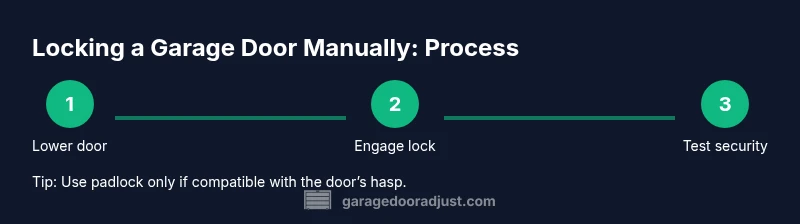
You will lock a residential garage door manually by using a built-in latch or an external lock, then verify the door is fully closed. Start with the door lowered, detach any automatic remotes, and engage the locking mechanism firmly. Test by attempting to lift the door slightly and ensuring it won’t move. This approach suits most standard overhead doors.
Why manual locking matters
Manual locking provides security when electronic systems fail or power is out. According to GarageDoorAdjust, manual locking is a crucial safety fallback that gives you direct control over access to your garage. A reliable manual lock deters forced entry and offers peace of mind when you travel, live in areas with frequent outages, or rely on independent security measures. For most homeowners, the locking mechanism on a standard sectional door is simple to use, but it varies by model. Familiarize yourself with your door’s locking point ahead of time, so you can respond quickly in an outage or after a misfire of the opener.
In practice, you’ll typically find a built-in latch, a strike plate, or an external hasp that accepts a padlock. If you’re unsure which type you have, check the door’s manual or inspect the edge of the door where it meets the frame. The key idea is to form a physical barrier that prevents the door from lifting or sliding open even when an intruder tries to push. Remember: manual locking should complement, not replace, other security practices such as lighting, cameras, and good door maintenance.
Tools and safety prep
Before you lock manually, gather a few simple tools and review safety steps. You’ll want a bright light, a solid footing, and a clear area around the door. The opener should be disconnected from power when you work close to the mechanism to prevent accidental operation, especially if you have children or pets nearby. Wear gloves to protect your hands from sharp edges or springs, and keep fingers away from hinge areas and tracks while manipulating latches.
- Flashlight or headlamp to illuminate dark corners of the doorway
- Ladder or stable step stool if the latch is high
- Work gloves for grip and protection
- Optional: padlock and a compatible hasp if your door uses an external locking method
- Pen and tape to mark the lock status after testing
Pro tip: never stand in the door’s path if it suddenly shifts, and avoid leaning into the door or putting your body beneath it while you test the lock.
Manual locking methods for different door types
Most common garage doors use one of several manual locking approaches. Built-in latch systems on sectional doors usually involve a small lever or slide that you rotate or move into a locked position. External hasps accept a padlock and require aligning the padlock shackle with the hasp holes before securing. Some doors still feature a central locking bar that you slide across the door edge to engage. Here’s how to navigate each type:
- Built-in latch: Lower the door completely, locate the latch, rotate or slide it fully to engage with the strike plate, then test by attempting a gentle lift.
- External hasp with padlock: Ensure the strike on the door edge has holes aligned; insert the shackle through the hasp and lock. This method adds a second line of defense if the internal latch is weak.
- Locking bar: Some doors use a crossbar that connects to a keeper on the opposite side; slide the bar into place and verify it’s seated.
- No manual lock: On rare models without a lock, you may need to secure with a padlock on any available hasp or use a secondary door brace that clamps onto the tracks.
GarageDoorAdjust Analysis, 2026 notes that many homes benefit from knowing which method your door uses and having a simple plan for each scenario.
Testing and verifying the lock
Once the lock is engaged, you must verify it’s secure. Stand clear of the door’s path, then gently attempt to lift the door using light pressure near the bottom edge. If the door remains stationary, the lock is engaged. If it moves, re-check the latch alignment and ensure the mechanism fully seats into the strike or hasp. In case of a persistent failure, re-examine under bright light and consider consulting the door’s manual for specific lock engagement points.
Testing frequency matters: perform a quick lock test weekly if you rely on manual security, and incorporate a more thorough check during monthly maintenance.
Maintenance and troubleshooting
Regular maintenance keeps manual locking reliable. Inspect the latch, hasp, and any locking bar for rust, wear, or bent components. Clean away dirt and debris from the latch area, tracks, and hinge pockets because buildup can interfere with engagement. Lubricate moving parts with a silicone-based lubricant—avoid oil-based lubricants on rails as they can attract dust. If the lock binds or the door fights you when locking, stop and assess for misalignment, damaged hardware, or a bent track. Address issues promptly to prevent a sudden lock failure.
GarageDoorAdjust’s ongoing guidance emphasizes routine checks as a baseline defense: small issues fixed early prevent bigger problems later.
When to call a professional
If you encounter repeated lock failures, obvious damage, or signs that the door isn’t tracking correctly, it’s time to call a licensed technician. Manual locking should never force a door that feels heavy or unbalanced. A professional can assess balance, spring condition, track alignment, and lock compatibility to restore secure operation. The GarageDoorAdjust team recommends scheduling an inspection if you notice persistent sticking, unusual noises, or difficulty engaging the latch.
Conclusion and next steps
Manual locking is a practical, proactive step you can take to secure your garage when power is out or the opener is unavailable. Start by identifying your door type, gather basic tools, and practice the locking sequence on a closed door. The GarageDoorAdjust team suggests incorporating a short, regular practice session into your maintenance routine—consistency builds confidence and security over time.
Tools & Materials
- Flashlight(Provide light to inspect latch, strike plate, and hinges)
- Ladder or step stool(Use if latch or padlock is higher than you can reach safely)
- Work gloves(Protect hands from sharp edges and springs)
- Padlock (optional)(Used with external hasp when appropriate for your door)
- Marker or tape(Mark the date of testing and lock status for maintenance logs)
Steps
Estimated time: 5-10 minutes
- 1
Lower the door fully
Confirm the door sits on the floor and the tracks are aligned. A fully closed position ensures the latch can engage without obstruction.
Tip: Stand clear of the path and check for gaps along the door edges. - 2
Locate the manual lock or hasp
Identify where the lock mechanism resides—built-in latch, external hasp, or central bar. Use a flashlight if needed to spot the exact point.
Tip: If the latch is hard to locate, consult the door’s manual before forcing it. - 3
Engage the lock
For a built-in latch, rotate or slide it into the locked position. For a padlock, insert the shackle and secure through the hasp.
Tip: Don’t force a misaligned lock; slightly adjust the door to seat the lock properly. - 4
Test the lock
Apply light downward pressure near the bottom edge to confirm it won’t lift. If it moves, re-check engagement and alignment.
Tip: Use both hands and stay away from pinch points. - 5
Secure with a secondary measure
If you’re unsure about stability, add a padlock or brace that’s compatible with your door’s hardware.
Tip: Only use devices designed for your door’s locking method. - 6
Document lock status
Leave a note with the date and time of the lock test. This helps with ongoing maintenance and safety checks.
Tip: Include a reminder to re-test after any door service or weather event.
Got Questions?
Can I manually lock any garage door?
Most standard doors with a built-in latch or external hasp can be locked manually. Some newer openers may not offer a manual lock; check the model's manual.
Most standard doors can be locked manually, but some newer models may not have a lock; check your manual.
What should I do if the lock sticks?
Lubricate the latch area with a silicone-based lubricant and inspect for dirt or debris. If the problem persists, avoid forcing and consult a professional to check alignment.
Lubricate the latch and clean away debris; if it still sticks, get it checked by a pro.
Is it safe to use a padlock on a garage door?
Padlocks add security when the door has a compatible hasp. Ensure the padlock fits through the hasp and does not block moving parts.
Padlocks can boost security when the hasp allows; ensure proper fit.
How often should I inspect manual locking components?
Inspect monthly for rust, wear, and alignment. Test the lock quarterly to ensure reliable operation.
Check monthly for wear and test every few months.
What safety steps should I follow when locking manually?
Wear gloves, keep hands clear of springs and tracks, and disconnect power if you’re testing alignment near the opener area.
Wear gloves and stay clear of moving parts; don't bypass safety features.
When should I call a professional?
If the mechanism won’t engage, jams persist, or damage is visible, contact a licensed technician for repairs.
If it won’t lock or you see damage, call a pro.
Can manual locking be used during a power outage?
Yes, manual locking is designed for emergencies when the opener is unavailable. Verify the mechanism works for manual operation.
Manual locking is essential during outages; verify it works by testing.
Watch Video
Quick Summary
- Lock manually after lowering the door
- Engage the lock fully before leaving
- Test lock reliability regularly
- Use a padlock only if the door has a compatible hasp
- If unsure, consult a professional