How Often to Service Your Garage Door: A 2026 Maintenance Guide
Learn how often to service a garage door, what a pro checks, and how to build a scheduling plan. Practical, climate-aware guidance to keep doors safe, reliable, and quiet.


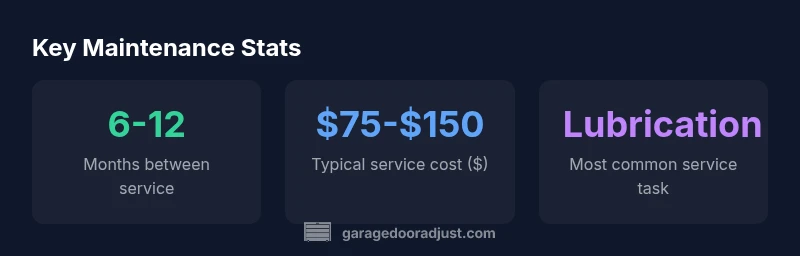
For a typical home with a standard residential garage door, schedule a professional service about once per year. If you use the door heavily or live in extreme weather, consider 6–12 months between visits. Always check manufacturer guidelines to tailor the schedule. Regular service helps prevent unexpected failures and keeps safety sensors and balance in check. The GarageDoorAdjust team recommends using preventive visits as a baseline.
Why regular maintenance matters
Regular service is more than a formality; it’s a safety and reliability practice. Over time, moving components such as hinges, tracks, and springs wear, leading to noisy operation, misalignment, or even door failure. A professional check catches these early, allowing parts to be lubricated, balanced, or replaced before a malfunction occurs. For homeowners, this means fewer emergency calls, lower risk of damage to vehicles, and a door that behaves predictably. According to GarageDoorAdjust, preventive maintenance reduces the likelihood of sudden breakdowns and helps maintain the door’s safety features, such as sensors and auto-reverse routines. Placing service on a calendar makes it a habit, not a reaction to a problem.
How often to service garage door: baseline and exceptions
The baseline recommendation for a typical residential door is one professional service per year. If your door sees heavy daily use, or you live in a climate with big temperature swings, consider a semi-annual check (every 6–12 months). In milder climates and with light use, an annual visit often suffices. Always consult the door’s manufacturer guide to customize the cadence. A proactive service plan will include lubrication, balance checks, track inspection, and sensor testing. Your technician can adjust the schedule based on observed wear and local conditions.
Seasonal considerations and climate impact
Weather and seasonal changes affect parts differently. In cold climates, door springs and cables endure more stress from temperature shifts, while in dusty, windy areas, tracks accumulate debris that can impede smooth operation. As a result, homes in extreme conditions may benefit from more frequent checks or targeted maintenance during spring and fall. A maintenance plan should account for humidity, salt exposure near coastal regions, and garage interior temperature. By aligning service frequency with climate, homeowners can preserve alignment, reduce squeaks, and extend component life.
What a professional service covers
A typical visit includes a safety inspection, balance and tension checks, hinge and roller lubrication, track alignment review, spring wear assessment, sensor and opener safety tests, and door-panel exterior checks. The technician will also confirm the door’s reverse mechanism operates correctly and that the door closes fully without binding. Documentation of wear and part life helps plan future replacements. Expect to discuss timing for any needed part replacements and to receive a written maintenance plan you can follow at home.
DIY maintenance you can safely perform
There are several low-risk tasks homeowners can perform between professional visits:
- Lubricate rollers, hinges, and tracks with a non-silicone silicone or lithium-based spray.
- Inspect for loose bolts and tighten as needed.
- Wipe down tracks to remove dust and debris.
- Test safety sensors and ensure the door reverses on contact with a test object. Never attempt to adjust springs, cables, or door balance yourself. These parts carry high tension and can cause serious injury. For most homeowners, a quarterly quick-check plus an annual service is a solid rhythm to follow.
How wear informs scheduling decisions
Watch for increasing noise, slower movement, or doors that don’t stay in balance. A door that wobbles or binds as it travels up or down is a sign that alignment or lubrication is due. If you notice frequent stopping, buzzing sounds, or the opener struggles to complete a cycle, schedule a professional visit promptly. Keeping a simple maintenance log makes it easier to see when wear accelerates and adjust your cadence accordingly.
Openers vs doors: separate cadence considerations
Openers and doors require different attention. The opener’s safety sensors and track alignment impact daily operation and should be checked at least annually, with more frequent checks if wiring or sensors show wear. The door mechanism—springs, cables, rollers, and tracks—often benefits from a 6–12 month check in high-use homes or harsh environments. Working on both components together during a service keeps everything synchronized for safer, smoother operation.
mainTopicQuery":"garage door maintenance"],
dataTable
Service checklist by components and cadence
| Component | Recommended Service Interval | What is Checked | Notes |
|---|---|---|---|
| Door hinges & rollers | 6-12 months | Lubrication, wear inspection, alignment | Check for squeaks and replace worn parts |
| Tracks & alignment | 6-12 months | Track alignment, bracket tightness | Misalignment causes binding |
| Cables & springs | 6-12 months | Inspect wear, safety | Do not adjust springs yourself |
| Opener safety sensors | 12-24 months | Sensor test & recalibration | Ensure safety sensors align correctly |
| Remote controls & opener programming | 12-24 months | Battery check, reset codes | Replace batteries and update codes as needed |
Got Questions?
How often should a residential garage door be serviced?
For most homes, a yearly professional service is a solid baseline. If you use the door a lot or live in extreme weather, aim for every 6–12 months. Always check the manufacturer’s guidance for your specific model.
Most homes should get a yearly service. If you’ve got heavy use or harsh weather, consider six to twelve months between visits.
Can I service a garage door myself, or should I hire a pro?
Basic maintenance like cleaning, visual inspection, and simple lubrication can be done by homeowners. Do not attempt spring or cable adjustments yourself—the high-tension parts require a trained technician.
You can handle simple checks, but avoid working on springs or cables yourself.
What happens during a professional service visit?
A technician will inspect safety sensors, test balance and alignment, lubricate moving parts, inspect tracks, replace worn parts if needed, and provide a written maintenance plan. Expect guidance on timing for future service.
A tech will check safety sensors, balance, and lubrication, then outline next steps.
Is lubrication required for all moving parts?
Lubrication is recommended for hinges, rollers, and tracks to reduce wear and noise. Avoid over-lubricating or applying lubricants to exposed springs, which can attract dirt or cause malfunctions.
Lubrication helps, but don’t overdo it or spray on springs.
What are the warning signs that indicate urgent service is needed?
If the door binds, shimmies, makes grinding noises, won’t move smoothly, or the opener struggles to complete a cycle, schedule service promptly. Delays can increase wear and pose safety risks.
Watch for binding, grinding, or opener trouble—those call for sooner service.
Should I service the opener separately from the door mechanism?
Yes. Safety sensors, reverse tests, and programming should be checked for the opener, while the door mechanism requires a lubrication, alignment, and wear inspection. Some visits cover both parts, depending on the problem.
Openers and doors have separate checks—your tech will decide what’s needed.
“Regular preventive maintenance isn't optional—it's essential for door safety, reliability, and longevity. Routine inspections catch wear before it becomes costly.”
Quick Summary
- Schedule annual professional service as baseline
- Increase frequency for high-use or extreme climates
- Inspect safety sensors during every service
- Lubricate moving parts monthly between visits
- Keep a maintenance log to track wear and timing