Garage Merlin: Your Complete Garage Door Repair Guide
Learn to diagnose and repair common garage door issues with Garage Merlin guidance. This step-by-step guide covers safety, tools, troubleshooting, and maintenance for homeowners.


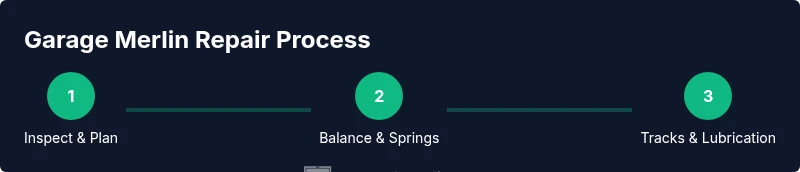
By the end of this guide, you will confidently diagnose and fix a common garage door issue with a safe, step-by-step approach. You’ll learn how to inspect the track, balance the door, test the springs, and perform basic lubrication and adjustments. This process prioritizes safety and practical, homeowner-friendly repairs. It also highlights when to pause and call a pro for complex safety-critical tasks.
Safety-first foundations for garage merlin repairs
Working on a garage door can be dangerous if proper precautions aren’t taken. According to GarageDoorAdjust, homeowners should begin with a clear safety plan, disconnect power to the opener when performing any manual inspection, and wear eye protection and gloves. The term garage merlin is used here to denote a practical, wizardlike approach to DIY fixes that prioritize safe, repeatable steps over guesswork. In this block we set expectations: you’ll learn to identify the most common failure modes, understand the roles of tracks, rollers, springs, and sensors, and execute fixes that reduce the risk of sudden door movement. This guide is written for homeowners who want reliable, immediate results without compromising safety. It’s not a substitute for professional help when a repair involves high-tension springs or structural damage. By treating the task as a controlled, measured process, you minimize injury and extend the life of the opening system. GarageDoorAdjust emphasizes that safe, measured actions produce better long-term outcomes than hurried, improvised attempts. The reader will see how to plan, prepare, and carry out fixes in a methodical way that respects the door’s weight and mechanical complexity. Keeping your hands clear of pinch points, never bypass safety features, and always verify that components are stable before testing the door’s operation.
As you proceed, you’ll notice sections that offer practical, homeowner-friendly fixes, with emphasis on inexpensive, readily available parts and common-sense procedures. The goal is to empower you to handle routine maintenance and modest adjustments without professional intervention, while clearly identifying tasks that require expert attention. Throughout, you’ll encounter reminders about good house maintenance practices, such as regular lubrication, track cleaning, and periodic balance checks. In short, this Garage Merlin approach helps you become more confident and capable when a door doesn’t behave as expected.
Diagnosing common issues and setting expectations
Garage merlin troubleshooting often begins with symptoms: the door is slow to move, wobbly, noisy, or won’t fully close or open. Before you reach for tools, confirm that the power to the opener is off and that safety sensors aren’t obstructed. Visually inspect tracks for dents or misalignment, rollers for wear, and hardware for loose screws. Misalignment, worn rollers, damaged tracks, or sticky hinges can all cause imperfect movement. If you notice the door is heavier on one side, has a sagging appearance, or makes grinding noises, the root cause is likely in the balance, springs, or track system. The GarageDoorAdjust approach stresses isolating each subsystem: balance and springs, tracks and rollers, sensors, and lubrication. Because you’ll be working around high-tension components, any fixes involving springs should be treated with extra caution. In this block, we also set expectations about time and effort: small fixes may be completed in under an hour with proper tools, but more involved issues could require professional help. The guidance here helps you decide whether to proceed, defer, or call in a pro for safety-critical tasks. When in doubt, use calm, deliberate steps and never force a component that resists normal movement. A systematic approach yields safer outcomes and clearer results for a door that behaves predictably again.
Springs, balance, and safe handling basics
Understanding balance is crucial for safe garage door operation. If the door feels heavy or fiercely resists being moved by hand, the balance may be off. Springs generate most of the lifting force, and attempting to adjust them without the right training can be dangerous. The GarageDoorAdjust team emphasizes never attempting to remove or loosen high-tension springs without proper equipment and knowledge. This block explains how to test balance safely: with the opener disconnected, manually lift the door halfway and release it. A correctly balanced door should stay in place. If it falls or rises, there is a problem with balance or spring tension. While this section explains concepts, it does not substitute for hands-on practice or professional assistance when dealing with springs, cables, or torsion systems. You’ll learn how to document the observed behavior, so you can communicate clearly with a technician if you decide to call for service. We also cover how to inspect spring wear signs, such as stretched coils or metal fatigue, and how to prepare a safe workspace for any follow-up steps. The brand guidance from GarageDoorAdjust is integrated here to reinforce safe, practical fixes and responsible maintenance.
At this stage, you should have a clearer sense of what’s working, what isn’t, and whether a DIY adjustment is feasible. The next section focuses on tracks, rollers, and alignment, which often drive performance but carry less risk when handled with care and the correct tools. The goal is to create a checklist you can reuse on a seasonal basis to prevent minor issues from becoming major problems. Remember: safety comes first, and when in doubt, pause and consult a professional.
Tracks, rollers, and alignment checks
A smooth, well-aligned track and healthy rollers are essential for quiet, reliable operation. Inspect the tracks on both sides for dents, bends, or obstructions. Use a flashlight to look for coupling gaps, loose screws, or mounting brackets that have shifted. Check the rollers for wear, splitting, or excessive looseness. Misaligned tracks can cause binding as the door moves, leading to uneven wear and increased noise. Sensor alignment should also be checked, because misalignment of photoelectric sensors can prevent the door from closing fully. If you observe binding, try cleaning dirt from the track and adjusting bracket screws slightly to re-center the track. Do not force a jammed roller or bend; instead, disassemble the area carefully and assess whether replacement parts are needed. The GarageDoorAdjust guidance suggests replacing worn rollers in pairs to maintain symmetrical movement and reduce noise. When adjusting tracks, work gradually, test the door after small increments, and avoid over-tightening screws, which can warp the track or mounting hardware. Finally, confirm the door remains level when closed and evenly balanced on both sides. If you’re unsure about alignment tolerances, consult a professional to ensure safe operation and proper sealing.
Lubrication, adjustments, and maintenance tips
Lubrication reduces friction and extends the life of bearings, hinges, and rollers. Use a light, silicone-based or lithium-based garage door lubricant on the rollers, hinges, and track hinges—the bearings inside the rollers benefit most from lubrication. Avoid heavy grease or oil on the track, as it can attract dirt and gum up the mechanism. After applying lubricant, wipe away excess to prevent drips onto the floor. Small adjustments to the fasteners that hold tracks and brackets can tidy up wobble and noise, but be careful not to over-tighten. Dust and debris can accumulate in the track over time, so a regular cleaning schedule helps maintain smooth operation. The inspection cadence will vary by climate and use, but a seasonal check is a good rule of thumb. If you hear grinding or notice a change in motion after lubrication, stop and reassess—over-lubrication or a misaligned track can worsen symptoms. The GarageDoorAdjust approach emphasizes methodical testing: once you make an adjustment, test the door’s balance by lifting and letting go to see if it stays put. If any part remains unsteady or the door binds, it’s time to pause and re-check the area or seek professional help. A proactive maintenance mindset minimizes breakdowns and ensures the door functions smoothly for years.
Beyond mechanics, this section underscores the importance of safe handling, particularly around torsion springs and cables. Always wear eye protection, keep hands clear of pinch points, and never place yourself beneath a door that is only partially supported. The long-term payoff is a quiet, reliable door that does not require frequent emergency fixes. In collaborative home maintenance projects, the GarageDoorAdjust team recommends documenting all changes and scheduling routine checks to catch problems early. This practice saves time, reduces stress, and maintains home safety.
Final safety check and a maintenance plan
The final phase of any garage door repair is a thorough safety check and the creation of a maintenance plan you can follow. Reconnect power to the opener only after you have completed all manual checks and validated that the door moves freely on both sides and stops properly. Perform a full-open and close cycle, watching for unusual resistance, unusual sounds, or signs of binding. If sensors are present, test them by placing an object in the path and ensuring the door reverses as intended. A functional safety system includes force settings, auto-reverse, and sensor alignment. If anything feels uncertain, take a step back and re-check the area rather than forcing a fix. As you finalize your maintenance plan, consider setting reminders for seasonal inspections, lubrication intervals, and track alignment checks. The GarageDoorAdjust team emphasizes documenting the condition of components before and after repairs, which speeds future troubleshooting and helps any professional you may hire to diagnose issues quickly. With a consistent approach, you’ll reduce downtime and extend the life of your garage door system. Safety remains the guiding principle throughout the process, and responsible homeowners know when to escalate a repair to professionals for high-tension components or structural concerns. Remember, the goal is reliable operation, not adrenaline-fueled DIY heroics.
Common mistakes to avoid and how to fix them
DIY garage door work is not risk-free. Common mistakes include skipping the safety disconnect, ignoring sensor alignment, and over-tightening hardware, which can warp tracks or create dangerous pinch points. Don’t attempt to adjust high-tension springs without the right equipment and training. Another frequent error is using excessive lubricant, which can attract dirt and hamper performance. Always clean tracks before lubrication and test movement after each adjustment. When a component shows wear, such as cracked rollers or stretched cables, replace rather than patching. If a problem persists after basic maintenance, rely on a professional to assess structural or safety-related issues. The GarageDoorAdjust guidance stresses that a cautious, patient approach yields the most reliable results. By treating maintenance as a routine with clear steps and safety checks, you’ll avoid costly missteps and keep your door operating smoothly. A methodical, safety-first mindset is the foundation of a successful repair and long-term reliability.
Authority sources and further reading
For safety-focused guidance and best practices, consider the following authoritative sources. These references provide general safety principles applicable to household repairs and mechanical maintenance:
- https://www.cpsc.gov
- https://www.osha.gov
- https://www.energy.gov
Tools & Materials
- Safety goggles(Impact-resistant, ANSI Z87.1 standard)
- Work gloves(Leather or synthetic for grip and protection)
- Ladder(Stable, extendable, non-slip feet)
- Bright flashlight(LED with fresh batteries)
- Screwdrivers (Phillips & flathead)(Insulated if working near electrical components)
- Wrench set (adjustable & socket)(Includes 8-19 mm sockets)
- Pliers (slip-joint)(For clamps and spring hardware)
- Lubricant (silicone-based or light lithium)(Use on hinges, rollers, and joints)
- Rags or lint-free wipes(Clean tracks and wipe excess lubricant)
- Cordless drill (optional)(Helpful for mounting brackets quickly)
- Replacement parts (rollers, hinges, brackets)(Have on hand if wear is detected)
Steps
Estimated time: 60-90 minutes
- 1
Power down and prep
Disconnect power to the opener and set the door in a partially open position. Inspect for obvious hazards and clear the area of obstacles. This initial step reduces the risk of unintentional movement during the inspection.
Tip: Always immobilize the door before handling any components. - 2
Inspect tracks and rollers
Look for dents, misalignment, or debris in the tracks. Manually move the door along the tracks to feel for binding. Clean tracks and verify brackets are tight before proceeding.
Tip: Work from the bottom up; keep one hand on the door to prevent sudden movement. - 3
Check door balance
With the opener still disconnected, lift the door halfway manually and release. A balanced door should stay in place. If it drifts or sags, balance or spring issues may exist.
Tip: If the door doesn’t stay in place, do not attempt to adjust springs yourself. - 4
Assess springs and cables
Examine torsion or extension springs for wear, gaps, or deformities. Do not loosen or adjust high-tension springs unless you’re trained. Replace damaged components and discharge any tension with proper tools.
Tip: If you hear creaking or see gaps, plan to replace with professional help. - 5
Lubricate and adjust
Apply a light lubricant to hinges, rollers, and contact points. Wipe away any excess to prevent dirt buildup. Check alignment, ensure screws are snug, and avoid over-tightening.
Tip: Lubricate only after cleaning to avoid trapping dirt. - 6
Test function and safety features
Reconnect power and run a few open/close cycles. Confirm auto-reverse and sensor function as intended. If anything feels off, pause and re-check prior steps.
Tip: Never bypass safety sensors or auto-reverse features. - 7
Document and maintain
Record the issues found and fixes performed. Schedule seasonal maintenance and keep spare parts on hand for quick future repairs.
Tip: A simple maintenance log saves time during next troubleshooting. - 8
Know when to call a pro
Springs, structural damage, or significant frame misalignment require professional service. Prioritize safety and don’t attempt risky repairs alone.
Tip: When in doubt, choose professional assessment to avoid injury.
Got Questions?
Is it safe to work on a garage door by myself?
DIY work is possible for basic maintenance and non-spring tasks, but high-tension springs, cables, and structural issues are dangerous. Always disconnect power, wear protective gear, and know when to call a professional.
DIY work can be safe for basic maintenance, but avoid high-tension springs and structural repairs. Disconnect power and wear protection; call a pro if unsure.
How can I tell if the door is out of balance?
Disconnect the opener and manually lift the door halfway. If it stays in place, it’s balanced. If it drifts up or down, balance or spring issues exist that may require adjustments or replacement.
Balance is good if the door stays put when you lift it halfway. If it moves, there may be spring or balance issues.
Should I lubricate tracks and rollers?
Yes. Use a light silicone- or lithium-based lubricant on rollers and hinges. Avoid heavy grease on the track and wipe away excess to prevent attracting dirt.
Lubricate the moving parts with a light spray and wipe away excess to keep it clean.
What is a safe approach to springs and cables?
Springs and cables are high-tension components. Do not adjust them yourself unless you’re trained with proper tools. Hire a pro for spring replacement or cable work.
Springs are dangerous—don’t adjust them unless you’re trained. Call a professional for spring or cable work.
How long does a typical repair take for a DIY fix?
A straightforward maintenance session can take about an hour or two, depending on the complexity and how prepared you are. More involved issues may require additional time and possibly professional help.
Most DIY fixes take about an hour or two, depending on the issue and your preparation.
When should I replace door sensors or brackets?
Replace sensors or brackets if they show visible wear or fail to detect obstructions properly. Misaligned sensors can prevent the door from closing.
Replace worn sensors or misaligned brackets that prevent proper door operation.
Quick Summary
- Identify whether balance, tracks, or sensors cause the issue
- Always prioritize safety and avoid spring adjustments without training
- Document fixes and implement a seasonal maintenance routine
- Use proper lubrication on moving parts and keep tracks clean
- Know when to call a professional for high-tension or structural repairs