Garage Door Masters: DIY Repairs & Maintenance
Step-by-step DIY guide to diagnose, repair, and maintain garage doors safely. Learn essential tools, maintenance routines, and expert tips from GarageDoorAdjust.


This guide helps homeowners diagnose common garage door problems and perform safe repairs or maintenance. You’ll confirm safety, gather essential tools, and follow a clear, step-by-step approach to improve door balance, reduce noise, and prevent costly failures—delivering reliable results for DIY enthusiasts and homeowners alike.
Understanding the Garage Door Master System
Garage doors operate as a coordinated system that blends springs, tracks, rollers, hinges, cables, and a powered opener. The Garage Door Masters approach emphasizes careful diagnosis, safety-first procedures, and practical repairs that homeowners can perform without specialized equipment. Key components include torsion or extension springs that provide lift, vertical and horizontal tracks that guide movement, rollers and hinges that permit smooth travel, and safety sensors that protect people and vehicles in the door’s path. When any part wears or goes out of alignment, you’ll notice slower operation, unusual noises, or a door that won’t stay balanced. The GarageDoorAdjust team recommends starting with a hands-on balance check and visual inspection before moving to more involved repairs. By understanding how each piece interacts, you can pinpoint root causes more efficiently and avoid unnecessary replacements.
To stay safe, always unplug the opener when performing manual checks and use a sturdy ladder to inspect high components. If you see frayed cables, significant track damage, or torn springs, treat these as high-priority issues and consider professional service. Regular inspection focuses on wear patterns, lubrication needs, and fastener security, which collectively extend door life and keep operating noise low.
Tools, Materials, and Safety Essentials
Before you dive into maintenance or repairs, gather the following essentials and review safety basics. Having the right tools on hand reduces trial-and-error time and minimizes risk. Always wear safety glasses and gloves, and keep children and pets away from the work area. A secure, uncluttered workspace and good lighting are non-negotiable when handling heavy door components or climbing a ladder.
Core tools you'll likely use include a work light, a sturdy ladder, a drill/driver, a set of Phillips and flathead bits, an adjustable wrench, pliers, a torque wrench (if you’ve got torsion springs and know how to use it safely), a rubber mallet for gentle adjustments, a silicone-based lubricant for moving parts, a clean rag, and painter’s tape or magnets to label parts during disassembly. Optional but helpful items include a spring scale or tension gauge for springs, track alignment shims, and a magnetic parts tray to keep screws organized. By preparing these tools in advance, you’ll move through steps smoothly and avoid leaving parts mid-task.
For safety, consider a closed-door policy on anything that requires spring tension handling. If you encounter damaged springs, frayed cables, or severely bent tracks, contact a qualified technician. The goal is to empower homeowners with safe, practical techniques while knowing when to ask for professional help.
Diagnosing Common Problems and Root-Cause Triage
Most garage door issues fall into a few core categories: balance problems, track misalignment, noisy or jerky movement, and opener faults. Start with the simplest checks and escalate only as needed. A door that feels heavy or doesn’t stay put when you disconnect the opener usually indicates balance or spring health needs attention. Listen for grinding or squealing noises that point to worn rollers or dry hinges. Track misalignment often presents as rubbing or uneven travel; you may see the door binding at the top or bottom of its arc.
Triage steps include performing a manual balance test (disconnect the opener and raise/lower the door to see if it stays put or drifts), inspecting tracks for dents and loose fasteners, and verifying that all rollers rotate freely without binding. If the door is unbalanced, spring involvement is likely required, and attempting DIY repair without proper training is hazardous. In such cases, plan for professional inspection or spring service to avoid serious injuries.
Maintenance Best Practices to Extend Door Life
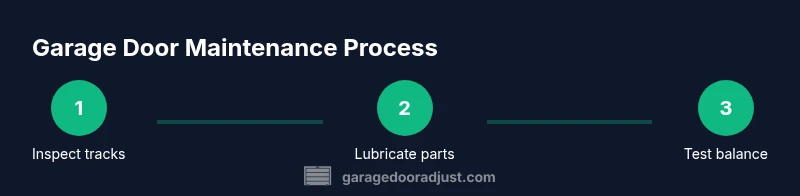
Proactive maintenance saves money and reduces emergency repairs. Create a simple routine that includes visual inspections, lubrication, and hardware checks every 6 months, with a deeper inspection once a year. Lubricate moving parts—rollers, hinges, and the track rollers—with a silicone-based lubricant; avoid oil-based products that can attract dust and degrade plastic components. Tighten loose screws along the track and hardware, and ensure the weather seals stay intact to improve energy efficiency and reduce grit entering the mechanism.
When adjusting, make small changes and test the door’s balance after each tweak. Keep a log of what you did, what you observed, and when. This habit helps you track wear patterns, notice gradual changes, and plan timely replacements. If you notice persistent misalignment, unusual noises, or slower operation after lubrication, revisit the issue or seek professional advice. The goal is a smooth, quiet, and safe operation that preserves your door’s functionality.
Safety-First Guidelines: Common Pitfalls and Precautions
Garage door maintenance can be safe when you follow clear rules and avoid high-risk tasks. Never attempt to adjust torsion springs without specialized training and equipment. These springs store significant energy and can cause severe injuries. Always unplug the opener before inspecting or adjusting internal components and never place hands or tools in the track area when the door is moving.
Important safety steps include securing the door in a partially open position with clamps if you must work near the tracks, using a sturdy ladder that is fully opened and on a flat surface, and wearing eye protection. If you suspect damaged springs, frayed cables, or structural damage to the door or frame, call a licensed technician. Finally, keep the door’s safety reversal sensors clean and unobstructed; misalignment can prevent the door from closing properly and create serious hazards.
Authority Sources
For safety guidelines and best practices, refer to established authorities:
- U.S. Consumer Product Safety Commission (CPSC): https://www.cpsc.gov
- U.S. Occupational Safety and Health Administration (OSHA): https://www.osha.gov
- U.S. Department of Energy (DOE) on energy efficiency and insulation considerations for garage doors: https://www.energy.gov
Plan Your Maintenance Schedule and What to Do Next
Concluding this guide, it's clear that a practical, repeatable maintenance plan makes a big difference. Schedule a 60–90 minute weekly-tactical check every six months and a deeper annual review. After performing steps outlined in this guide, test the door’s balance and safety features with the opener engaged and with the door manually operated. If issues persist, or you encounter spring or track damage, contact a trained technician promptly. With consistent care, your garage door will remain reliable and safe for years to come.
Tools & Materials
- Safety glasses(Impact-resistant, ANSI-rated; wear at all times during inspection.)
- Work gloves(Sturdy, cut-resistant; protect hands from sharp edges.)
- Sturdy ladder(Stable, tall enough to reach tracks and rollers.)
- Drill/driver with bits(Phillips and flathead bits; magnetized bit holder is helpful.)
- Adjustable wrench set(Sizes cover track bolts and hardware.)
- Pliers and a rubber mallet(For gentle adjustments and part handling.)
- Silicone-based lubricant(Use on metal hinges and rollers; avoid oil-based products on plastic parts.)
- Rag and cleaner(Keep tracks and sensors clean during inspection.)
- C-clamps or locking pliers(Useful to hold a door while testing balance (where permitted).)
- Torque wrench (optional)(Useful for spring adjustments if you are trained to perform them.)
Steps
Estimated time: 60-90 minutes
- 1
Disconnect power and secure the door
Unplug the garage door opener from its outlet and, if possible, disconnect the emergency release cord so the door won't move unexpectedly. Position a floor-safe barrier or a block of wood under the door to prevent it from closing while you work. This creates a safe baseline for manual checks.
Tip: Double-check that the door cannot move before touching any components. - 2
Inspect tracks, rollers, and hardware
Look for dents, bends, or loose screws along the vertical and horizontal tracks. Spin each roller to ensure it rotates freely without binding. Tighten loose fasteners and replace severely worn rollers if necessary.
Tip: Use a level to verify tracks are plumb; slight misalignment can cause binding. - 3
Check door balance (manual test)
With the opener disconnected, lift the door halfway and release. If it stays in place, balance is acceptable; if it drifts up or down, the springs or balance system may be off and require professional service.
Tip: Never attempt to adjust torsion springs unless you are trained and equipped. - 4
Lubricate moving parts
Apply a small amount of silicone-based lubricant to hinges, rollers, and pivot points. Wipe away excess and avoid getting lubricant on belt drives, sensors, or the rubber seal where it could create slip hazards.
Tip: Lubrication should be light; over-application can attract dust and cause buildup. - 5
Test safety sensors and opener
Reconnect power and operate the opener to verify smooth movement. Test auto-reverse by placing a small object in the door path; the door should reverse on contact. Confirm sensors are aligned and unobstructed.
Tip: If the door does not reverse or sensors misread, do not ignore this—seek professional service immediately. - 6
Plan for ongoing maintenance
Create a simple maintenance calendar: semi-annual inspections, annual deep checks, and a yearly track and spring evaluation with a pro if needed. Keep notes of what you adjusted and when.
Tip: Keeping a log helps you notice slow wear and makes future repairs quicker.
Got Questions?
What should I do first if my garage door won't open?
Begin by cutting power to the opener and testing the door manually to assess balance. Check that safety sensors aren’t blocked and inspect tracks for obstruction or damage. If the door remains unbalanced or won’t move, seek professional help.
First, cut the power and test the door manually. Check sensors and tracks, and if it stays unbalanced, contact a pro.
Can I fix a broken torsion spring myself?
No. Torsion springs are under high tension and pose serious risk of injury. Only trained technicians with proper equipment should handle spring replacement.
Torsion springs should only be handled by professionals due to high tension and risk of injury.
How do I quiet a noisy garage door?
Lubricate moving parts, tighten loose hardware, and inspect rollers for wear. If grinding persists, you may need to replace worn components. Avoid oil on plastic parts.
Lubricate, tighten hardware, and replace worn rollers if needed. Persistent grinding may require component replacement.
How often should I lubricate a garage door?
Lubricate every 6 months under normal conditions, and more often in extreme weather. Focus on hinges, rollers, and pivot points; avoid lubricating pulleys and belts unless specified by the manufacturer.
Lubricate about twice a year, more in extremes, focusing on hinges and rollers.
What maintenance tasks are recommended for openers?
Test safety reversing sensors, ensure the auto-reverse function works, and replace batteries in remotes as needed. Keep the opener area clear and periodically check mounting hardware for stability.
Test sensors and auto-reverse, and replace remote batteries as needed.
When should I replace a garage door?
Consider replacement when the door shows extensive wear, structural damage, or repeated costly repairs. Compare the long-term costs of repairs versus a new door with insulation benefits.
If wear is extensive or repairs become frequent, replacement may be the smarter option.
Quick Summary
- Identify root causes before replacing parts.
- Regular lubrication and visual checks reduce failures.
- Stay focused on safety; springs and tracks require caution.
- Maintain a simple log to track wear and maintenance.
- When in doubt, consult GarageDoorAdjust for guidance and safety.