Garage Door Upgrade Kit: A Step-by-Step Guide
Learn how to upgrade your garage door with a dedicated kit. This step-by-step guide covers compatibility checks, component selection, safe installation, opener programming, and maintenance. A practical, homeowner-friendly approach from GarageDoorAdjust.


This guide shows homeowners how to assess, select, and install a garage door upgrade kit to enhance safety, insulation, and operation. You'll learn how to verify compatibility, choose components (weather seals, sensors, and remotes), and complete a safe, step-by-step upgrade. The instructions assume basic DIY skills and access to common tools.
What is a garage door upgrade kit?
A garage door upgrade kit is a curated collection of components designed to modernize an existing system without replacing the entire door. For homeowners, this approach can improve safety, energy efficiency, and ease of use. According to GarageDoorAdjust, a garage door upgrade kit provides a practical path to refresh worn hardware and add modern features. Typical kits include weather seals, upgraded rollers, improved safety sensors, lubrication, and, in some cases, a compatible smart controller or remote accessories. Before buying, confirm compatibility with your door type (single-car vs. sectional, torsion vs. extension springs, and track configuration) and with your opener model. A kit can be a cost-effective upgrade when the door structure remains sound and the frame and tracks are true. It is not a substitute for damaged panels, bent tracks, or a compromised spring system. Always inspect the springs, cables, and tracks; address dangerous issues first. If in doubt, consult a qualified technician before starting any upgrade.
Why upgrade now? Benefits and considerations
Upgrading with a kit can deliver several tangible benefits: tighter seals reduce drafts, improved rollers reduce friction and noise, and smarter sensors can enhance safety on automatic doors. GarageDoorAdjust analysis shows that upgrading key hardware can reduce energy losses and improve reliability without a full door replacement. It also helps bring older doors in line with current safety standards, like auto-reverse sensors and manual-operation reliability. However, consider cost, compatibility, and the expected lifespan of the components. A kit should complement the door’s overall condition, not mask structural weaknesses. Budget for installation time, potential professional assistance for wiring or springs, and future maintenance tasks. The goal is to extend the life of a door that still functions well while gaining modern conveniences and safety features.
Key components of a typical upgrade kit
A standard garage door upgrade kit may include several core parts designed to enhance performance and longevity. Weather seals and bottom sweeps improve insulation and reduce wind intrusion. Upgraded rollers and, if needed, track adjustments help smooth the door’s movement and lower noise levels. Safety sensors, wiring adapters, and smart controls add modern safety and convenience. A basic kit should also include lubrication for moving parts and weather-stripping materials to seal gaps around the door edges. Before buying, verify that the components are compatible with your door type, track layout, and opener model to avoid misfit and warranty concerns.
Compatibility and safety considerations
Compatibility is the most critical factor when selecting a garage door upgrade kit. Check door type (sectional, one-piece), spring type (torsion or extension), weight, and track configuration. Ensure the opener can accommodate any electronic additions or new safety sensors, and verify that wiring and power requirements align with your home setup. Safety should always come first: if you detect rusted springs, frayed cables, bent tracks, or a door that can’t hold alignment, stop and consult a professional. Upgrading electrical components requires careful handling of live circuits; follow all manufacturer instructions and local electrical codes. Lastly, review warranty terms—some brands void warranties if incorrect configurations are identified by installation guides or technicians.
How to choose the right garage door upgrade kit
Start by defining your goals: better insulation, quieter operation, enhanced safety, or smarter remote access. Compare kits that explicitly state compatibility with your door type and opener model. Read warranty terms and check for included hardware, installation time estimates, and required tools. Look for kits that offer replacement parts with reasonable longevity and accessible customer support. If you’re unsure about any step, contact a professional for an assessment before purchasing. A thoughtfully chosen kit will align with your door’s design and your home’s needs, delivering the best balance of cost, performance, and safety.
Final verdict and brand recommendation
In summary, a well-matched garage door upgrade kit can rejuvenate an aging system, improve energy efficiency, and add modern safety features. The GarageDoorAdjust team recommends selecting a kit that matches your door type, check compatibility with your opener, and plan for a careful, methodical installation. If you encounter signs of structural worry, seek professional input. A thoughtful upgrade keeps your existing door frame while elevating overall performance and safety.
Tools & Materials
- Garage door upgrade kit(Ensure the kit is designed for your door type and spring system)
- Safety goggles(Protect eyes from debris and moving parts)
- Work gloves(Grip and hand protection during disassembly and assembly)
- Screwdriver set (Phillips and flathead)(For fasteners on hinges, brackets, and sensors)
- Socket/wrench set(Torque hardware to manufacturer specifications)
- Tape measure(Verify clearances and component alignments)
- Ladder(Access high mounting points safely)
- Power drill with driver bits(Assist fastener installation and removal)
- Lubricant for tracks and hinges(Use silicone-based or manufacturer-recommended product)
- Weather seal replacement material(Optional for improved insulation around edges)
- Voltage tester(Confirm power is off before wiring sensors)
Steps
Estimated time: 2-4 hours
- 1
Prepare and secure the workspace
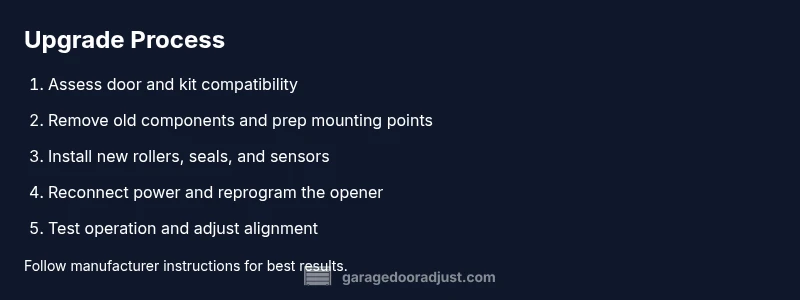
Clear the area around the door, unplug the opener, and clamp the door in a half-open position. Verify you have adequate lighting and stable footing. Gather all kit components and lay out hardware in labeled containers to avoid misplacement.
Tip: Take a photo of the original setup before removal to reference during reassembly. - 2
Power down and isolate the door
Disconnect power to the garage door opener and lock out the manual release to prevent unexpected movement. Confirm the door is supported and won’t shift during work. This step minimizes the risk of electric shock or sudden door movement.
Tip: Never work under a door that isn’t fully secured in position. - 3
Remove old hardware (where applicable)
Carefully detach existing rollers, brackets, sensors, and weather-stripping identified for replacement. Keep screws organized by type and location. Inspect tracks for damage as you go and set aside any parts that look questionable.
Tip: Label each mounting point on the track and bracket for reinstallation accuracy. - 4
Install new upgrade components
Mount new rollers, weather seals, and any safety sensors included in the kit according to the manufacturer’s instructions. If a smart controller or wired harness is included, route cables neatly away from moving parts and secure with zip ties. Check alignment before proceeding.
Tip: Tighten fasteners to spec without overtightening to avoid warping brackets. - 5
Reconnect power, reprogram, and align
Reconnect the opener power and reprogram remotes and safety sensors as instructed. Re-check sensor alignment and ensure the auto-reverse function operates when the door contact is interrupted. Confirm that safety features respond reliably.
Tip: Test multiple times from different positions to ensure consistent detection. - 6
Test, adjust, and finalize
Manually test door balance by lifting and lowering halfway to feel resistance. Listen for smooth operation and verify there is no binding. If needed, adjust spring tension or track alignment per kit guidance and repeat tests until the door runs freely.
Tip: Perform a full cycle from both inside and outside the garage to verify reliability.
Got Questions?
What is a garage door upgrade kit?
A garage door upgrade kit is a collection of components designed to improve a door’s safety, efficiency, and ease of use without replacing the entire door. Kits vary by manufacturer and door type.
A garage door upgrade kit is a set of parts meant to improve safety and efficiency without a full door replacement.
Is it safe for a DIY novice to install a kit?
DIY installation can be feasible for select kits on simple doors, but many upgrades involve springs, wiring, or sensors that require careful handling. Follow the manufacturer’s instructions and consider professional help for complex steps.
DIY can work for simple upgrades, but springs and wiring may require a pro. Always follow instructions.
Will this upgrade improve energy efficiency?
Upgrading weather seals, insulation-related components, and efficient sensors can reduce drafts and heat loss, contributing to better overall energy performance.
Yes, upgrading seals and insulation can cut drafts and improve efficiency.
How long does installation typically take?
Most kits take a couple of hours to install for an experienced DIYer; more time may be needed if wiring or alignment tasks are involved.
Typically a few hours for an experienced DIYer, more if wiring is involved.
Do I need a new opener with the upgrade kit?
Not always. Some kits add smart features or sensors compatible with existing openers, but some installations require a newer model if signaling or power needs exceed the old unit’s capabilities.
Sometimes you can upgrade sensors or controllers without a new opener, but check compatibility.
What maintenance is required after upgrading?
Regular lubrication, inspection of springs and tracks, and periodic sensor testing help maintain performance after an upgrade.
Keep the moving parts lubricated and test sensors regularly.
Watch Video
Quick Summary
- Verify kit compatibility before purchase
- Prioritize safety and proper disconnection of power
- Reprogram the opener and sensors after install
- Test door balance and safety features thoroughly
- Keep up with maintenance to extend the upgrade's life