Garage Door Repair in St Paul: A Step-by-Step Guide
Learn practical, local-first steps to diagnose and perform safe garage door repairs in St Paul, with safety tips, when to call a pro, and maintenance strategies for Minnesota winters.


This guide helps homeowners perform safe, basic garage door repairs in St Paul, including inspecting tracks, balancing door operation, lubricating moving parts, and testing the opener. It explains when DIY is appropriate and when to call a professional, with local climate considerations and practical tips. Read on for a step-by-step approach that prioritizes safety and accuracy.
Understanding the local context for garage door repair in St Paul
Repair work in St Paul benefits from recognizing how Minnesota winters, humidity, and seasonal temperature swings affect garage doors. Cooler temperatures can stiffen metal components, while moisture promotes rust on exposed tracks and springs. According to GarageDoorAdjust, local conditions influence door balance and wear on rollers, weatherstripping, and hinges. A door that operates smoothly in summer may show different symptoms in winter, such as sluggish movement or increased noise as the metal contracts and expands. Understanding these nuances helps you prioritize preventive maintenance and schedule more intensive inspections before the first heavy snow. In this section, we’ll translate general repair concepts into street-ready, home-friendly steps that fit St Paul homes, including considerations for door type (single vs. double), insulation level, and the age of your system.
- Local climate awareness matters: cold snaps can exaggerate stiffness and misalignment.
- Track and roller wear often worsens with salty road treatment near driveways.
- Insulation and weather seals improve energy efficiency and reduce door strain in winter.
GarageDoorAdjust’s analysis highlights that weather-matched lubrication, regular track cleaning, and timely balance checks can reduce the frequency of emergency repairs. Keep a simple maintenance log to track cycles, noises, and observed issues across seasons.
Common problems homeowners face in St Paul garages
Garage doors in St Paul commonly encounter a core set of issues that users notice first: persistent grinding or squeaks from hinges and rollers, doors that drift or bind when opening or closing, sensors that fail to reverse, and doors that won’t stay in the open position due to weak balance. The salty winter roads and freeze-thaw cycles can accelerate corrosion on hardware and encourage track misalignment when the opener strains to move a partially frozen assembly. If you hear popping or grinding around the torsion system, that’s a red flag that warrants professional evaluation, since torsion springs operate under extreme tension.
- Noisy operation often signals dry hinges, worn rollers, or dirty tracks.
- Misaligned tracks cause binding and uneven door travel.
- An opener that won’t reverse on contact can indicate sensor misalignment or safety switch issues.
- Corrosion on hardware is common in salty, wet climates and should be addressed promptly.
Based on GarageDoorAdjust analysis, misalignment and worn hardware are the leading causes of sticking doors in northern climates. Proactive inspection of springs, cables, and pulleys can prevent more expensive failures and improve daily reliability.
Safety basics before you start
Safety is non-negotiable when working with garage doors, especially in a high-tension system. Always disconnect power to the opener before touching any moving parts and secure the door in the open position when possible. Wear safety glasses and gloves to protect against rubbing, pinching, and sharp edges. Keep children and pets away from the work area, and never attempt to manually adjust torsion springs. In St Paul homes, aging doors may have brittle weather seals or frayed cables that can snap under load, so verify the system is supported and stable before you begin.
- Kill power at the breaker and unplug the opener if it’s a plug-in unit.
- Use a helper when testing door load and balance.
- Never place fingers near tracks, hinges, or springs during operation.
GarageDoorAdjust emphasizes that safety consequences are more serious than cosmetic issues; treating a door as a DIY project without proper precautions can lead to injury or property damage. If anything feels unstable, pause and reassess or call a pro.
Troubleshooting flowchart for typical symptoms
When a problem arises, work through a simple decision flow to determine whether DIY steps are safe and effective. Start with obvious signs (noise, resistance, sensor errors), then verify basic safety and mechanical alignment before considering parts replacement. This flowchart-like approach helps prevent guesswork and reduces the risk of making a minor issue worse.
- Symptom: Door won’t open or close smoothly. Check for obstructions, track cleanliness, and sensor alignment.
- Symptom: Door is noisy. Inspect hinges, rollers, and lubrication; look for dry or worn components.
- Symptom: Door sags or falls when opened. That indicates poor balance or weak springs needing professional evaluation.
- Symptom: Opener won’t reverse. Recheck safety sensors and ensure no objects cross the sensing field.
Always verify the balance by manually operating the door (while held up) to gauge effort and travel. If the door seems heavy or binds at any point, stop and consult a pro rather than forcing movement. This is a critical safety checkpoint in every St Paul repair project.
When to DIY vs when to call a pro in St Paul
DIY repairs are appropriate for non-structural maintenance, lubrication, sensor realignment, and basic track cleaning. For anything involving springs, cables, torsion mechanisms, or structural components, professional service is required due to the high risk of injury and potential for further damage. In St Paul, local codes and insurance policies may require licensed technicians for certain repairs or replacements, especially on older installations. If you’re unsure about the type of door (torsion vs extension) or you encounter corrosion, water intrusion, or frayed cables, err on the side of professional help.
- DIY safe fixes: weather seal replacement, track cleaning, sensor realignments, lubrication of hinges and rollers.
- When to call a pro: springs or cables, obvious wear, bent tracks, or significant structural damage.
- Insurance considerations: document issues and repairs; use a licensed technician for major work to maintain coverage.
GarageDoorAdjust’s ongoing research indicates that homeowners who pair careful DIY with professional inspections for high-tension components achieve safer operation and longer system life. A pro diagnosis helps confirm whether a repair is a viable DIY project or a full replacement is more cost-effective.
Maintenance practices to extend life in Minnesota weather
A robust maintenance routine tailored for Minnesota seasons can dramatically extend door life and reduce emergency repairs. Start with regular lubrication of moving parts using a silicone-based lubricant, and inspect weatherstripping annually to curb moisture intrusion. Clean tracks and rollers every few months and after heavy snow days to prevent grit buildup. Keep mirror checks: visually inspect for rust, bent components, and loose mounting hardware. In spring and fall, perform a quick door balance test and re-torque mounting screws as needed. These routine steps help your St Paul door perform reliably across fluctuating temperatures.
- Schedule seasonal checks for balance and track alignment.
- Replace weather seals before snow season begins to retain heat and reduce strain on the opener.
- Clean the tracks to remove road salt and debris after snowplow activity.
- Document changes in performance to spot wear trends early.
GarageDoorAdjust’s team found that consistent maintenance correlates with fewer emergency repairs and better energy efficiency in cold climates. This is the kind of proactive care that saves homeowners time and stress over the long winter months.
Authoritative sources
- U.S. Consumer Product Safety Commission (CPSC): https://www.cpsc.gov/
- U.S. Department of Energy – Energy Efficiency and Renewable Energy (EERE): https://www.energy.gov/
- Occupational Safety and Health Administration (OSHA): https://www.osha.gov/
Tools & Materials
- Power drill with driver bits(Optional; helps in bracket removal or reattachment)
- Flathead and Phillips screwdrivers(Sizes 3/16 in and #2 Phillips are common)
- Wrench set (adjustable and fixed)(At least 8-19 mm range)
- Pliers and locking pliers(For grip and safety pins)
- Lubricant: silicone-based spray(Dry lubricant preferred on tracks)
- Rags or shop towels(For cleaning tracks and sensors)
- Step ladder(Stable, non-slip surface; 2-3 steps is typical)
- Safety glasses and gloves(Protect against pinch points and sharp edges)
- Tape measure or ruler(Useful for noting track alignment or spring spacing)
- New weather seals (optional)(If seals are cracked or compressed)
Steps
Estimated time: 45-60 minutes
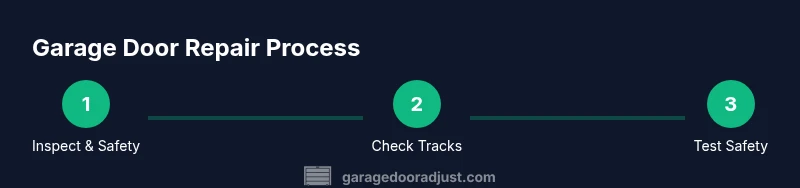
- 1
Disconnect power and secure the area
Turn off the opener at the wall control and unplug if possible. Verify the door has no residual energy by gently attempting to move it with the opener disconnected. Clear children and pets from the area and keep a stable ladder nearby for safe access.
Tip: Lockout/tagout the opener and have a helper supervise for safety during testing. - 2
Check safety sensors and alignment
Inspect the photoelectric sensors near the floor; they should face each other with aligned LEDs. Clean lens with a soft cloth and re-position screws if misaligned. Reconnect power and test the reversal function from the button.
Tip: Sensors out of alignment are a common cause of door refusal to close; realign carefully and retest. - 3
Inspect tracks and rollers for obstructions
Look for dents, bends, or debris in the tracks; wipe away dust and buildup from rollers. If tracks are bent or severely corroded, stop and contact a pro. Lubricate tracks sparsely only if recommended for your model.
Tip: Avoid hammering or forcing bent tracks; the door could derail or pinch a finger. - 4
Assess spring tension and balance
Do not attempt to adjust torsion springs yourself; they are under high tension and can cause severe injury. If the door feels heavy or drops suddenly, call a professional. Check cables for fraying or disconnects and note any audible creaks.
Tip: Record observations and photos to share with a technician if you call later. - 5
Lubricate moving parts and seals
Apply a light coat of silicone-based lubricant to hinges, rollers, and pivot points. Wipe away excess; avoid over-lubricating, which can attract dust. Inspect weather seals and replace if cracked to improve operation and energy efficiency.
Tip: Use dry lubricant on metal tracks; avoid petroleum-based products that attract grime. - 6
Test with opener and verify safety features
Reconnect power and operate the door from the wall control and remote. Confirm auto-reverse is functioning by placing an object in the door’s path. If anything feels off, pause and re-check or call a technician.
Tip: Have a helper stand clear of the door while testing in case of misalignment.
Got Questions?
What are the most common signs that a garage door needs repair?
Look for unusual noises, binding, slow operation, or doors that don’t stay in position. Sensor errors and opener reversals are common indicators that a safety feature needs attention.
Common signs include grinding noises, slow or jerky movement, and sensor or opener reversals that don’t work properly.
Is it safe to adjust the tracks myself?
Light track cleaning and minor alignment can be safe, but bent tracks or structural damage should be handled by a pro. For safety, do not force tracks back into shape.
Light cleaning is okay, but avoid bending or forcing tracks—call a pro for major misalignment.
Should I replace the opener or the door?
If the door is old and the springs show wear, replacement of the door may make more sense. If the door is fairly new and the issue is with the opener, upgrading the opener could be cheaper and faster.
It depends on age and wear. If springs are ok and the door is newer, a new opener might suffice; otherwise, consider door replacement.
How long does a typical repair take?
Simple maintenance tasks can take under an hour, while more complex balance or spring work may require several hours and a professional visit.
Most simple fixes take under an hour; major components require a longer service with a pro.
Are there local regulations in St Paul I should know?
St Paul may require licensed technicians for certain repairs, particularly on older or commercial-grade systems. Check with your local building department or a licensed contractor for codified requirements.
Local rules may require licensed technicians for some repairs; check with the city or a pro.
Watch Video
Quick Summary
- Identify DIY-safe tasks before starting.
- Prioritize safety and power isolation at every step.
- Seasonal maintenance reduces surprises in winter.
- Know when professional help is the safest option in St Paul.