Garage Door Paint: A Homeowner's Step-by-Step Guide
Learn how to restore your garage door with durable exterior paint. This guide covers prep, primer, color choice, application, curing, and maintenance for long-lasting, curb-appealing results.


According to GarageDoorAdjust, repainting a garage door not only refreshes curb appeal but also protects the surface from weathering. This guide covers paint selection, thorough prep, priming, application, and curing times to help homeowners fix peeling or faded finishes safely and effectively. Expect a durable finish if you follow the steps closely and work in mild, dry conditions.
Why garage door paint matters
A fresh coat of garage door paint does more than improve appearance. Quality exterior paint acts as a protective barrier against sun, rain, wind, and temperature swings that can cause peeling, rust, and surface degradation. For metal doors, an enamel-based coating with rust inhibitors plus UV stabilizers helps prevent corrosion and color fading. Wood doors benefit from a flexible finish that tolerates expansion and contraction with seasonal moisture. Even if your door looks fine from a distance, chipping paint can allow moisture intrusion and wood rot or metal corrosion to creep in. Regular repainting every 5 to 10 years, depending on climate and exposure, can significantly extend the life of the door surface. According to GarageDoorAdjust analyses, proper prep and the right primer dramatically improve adhesion and finish longevity, especially on aging or previously painted surfaces.
Choosing the right paint for garage doors
Selecting the correct paint is the foundation of a lasting finish. For metal doors, choose exterior enamel or acrylic latex designed for metal, with rust-inhibiting properties and UV resistance. Wood doors benefit from exterior-grade latex or oil-based enamel, depending on the surface and local climate. Aluminum doors should use coatings compatible with their substrate to avoid peeling. Sheen matters: semi-gloss or gloss offers easier cleaning and better moisture resistance, while satin may hide imperfections but shows dirt more readily. In all cases, pair the paint with a compatible primer. If the door is steel or contains bare metal patches, use a bonding primer that promotes adhesion. GarageDoorAdjust Analysis, 2026 suggests coatings with UV stabilizers last longer under sun exposure, reducing repaint frequency and maintenance.
Surface prep: cleaning, repair, and sanding
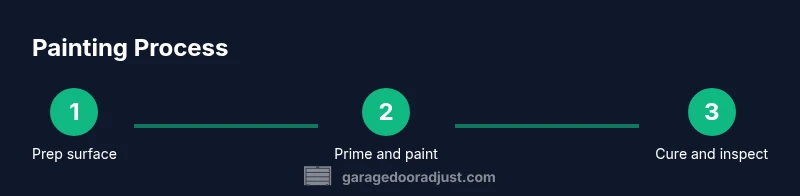
Preparation is the single most important step in a successful garage door paint project. Start by removing hardware if possible, then wash the surface with a mild detergent and water to remove dirt, oil, and chalking. Rinse and allow to dry completely—this can take several hours in humid conditions. Scrape away loose or peeling paint with a putty knife; for metal doors, inspect for rust and treat accordingly. Patch any gouges or cracks with an appropriate filler, then sand until the surface is dull and free of gloss. A clean, slightly rough surface improves primer adhesion and reduces the chance of peeling later on. After sanding, wipe away dust with a tack cloth and mask edges, weather seals, and adjacent surfaces.
Priming and painting technique
Apply a high-quality exterior primer suited to your door material and climate. For bare metal, use rust-inhibiting primer; for wood, a stain-blocking primer can prevent tannin bleed. After priming, apply the first coat of paint using long, smooth strokes in the direction of the door panels. Maintain a wet edge to avoid lap marks, and keep a consistent distance if using a spray method. Allow the primer to dry fully before the paint; follow product guidelines for recoat times. When applying the first coat of paint, aim for a thin, even layer rather than a thick coating to minimize drips and cracking. A second coat will deepen color and improve coverage, especially on darker shades or surfaces with prior imperfections.
Weather, curing, and maintenance
Weather plays a crucial role in paint performance. Plan projects for mild, dry days with temperatures typically above 50°F (10°C) and below 90°F (32°C), avoiding high humidity that slows drying. After applying the final coat, avoid exposure to heavy rain until the paint has cured; this can take 24–48 hours for touch-dry, with full cure extending to several days depending on film thickness and ventilation. Regular maintenance includes washing the surface annually and inspecting for chips or peeling. Touch up promptly to prevent moisture intrusion. Remember to keep the door locked and protected from wind-blown debris during painting; use drop cloths and painter’s tape to shield surrounding areas.
Common mistakes and how to avoid them
Common errors include painting in unsuitable weather, skipping proper surface prep, using incompatible primers, and applying thick coats. These lead to peeling, cracking, and uneven color. Another frequent mistake is neglecting masking of edges and weather-stripping, which can cause paint buildup on seals and tracks. Avoid rushing coats; two even, thin coats beat one thick coat every time. Always test color on a small panel first to ensure color-fastness and compatibility with your door material.
Quick-start checklist
Before you begin, confirm you have all supplies and a weather window. Then follow these steps:
- Inspect door for damage and remove hardware if possible.
- Clean surface, remove peeling paint, and repair imperfections.
- Lightly sand and wipe away dust.
- Apply bonding primer if required by substrate.
- Cut in edges, then roll or spray the first coat evenly.
- Allow adequate drying time between coats.
- Apply a second coat and inspect for uniform color.
- Wash rollers and brushes and discard rags safely after use.
- Let the door cure fully before heavy use or exposure to moisture.
- Re-seat hardware and perform a final inspection for touch-ups.
Authorities and further reading
For safety and best practices, refer to government and educational resources on paint safety and lead exposure, especially if the door predates modern coatings. While this guide focuses on home painting, verified sources help you understand the long-term implications of surface preparation and environmental factors. The following sources offer additional detail on safe painting practices and regulatory guidance for home improvement projects.
Tools & Materials
- Power washer or garden hose with spray nozzle(Low pressure to avoid damage; aim at loosening dirt but not blasting sealants.)
- Mild detergent or degreasing cleaner(Use eco-friendly cleaner if possible.)
- Putty knife or scraper(Scrape loose paint and rust flaking.)
- Sandpaper (120-180 grit) or sanding block(Create a dull, uniform surface for primer.)
- Primer suitable for door material (bonding primer)(Rust-inhibiting primer for metal; stain-blocking for wood.)
- Exterior acrylic latex or enamel paint(Semi-gloss or gloss finish preferred for durability.)
- Paint thinner or water (depending on paint type)(For cleanup and thin coats if needed.)
- Roller frame and short-nap roller (3/8 in)(For smooth, even coverage on panels.)
- Paint trays, drop cloths, masking tape(Protect surrounding areas and adjacent surfaces.)
- Nitrile gloves, safety glasses, respirator or mask(Protect skin and lungs from fumes.)
- Ladder or scaffold for access to high areas(Stabilize before climbing; avoid overreaching.)
- Degreaser or mineral spirits (optional)(Used for stubborn contaminants on metal.)
Steps
Estimated time: 1-2 days (including dry/cure time between coats)
- 1
Inspect and plan
Check door condition, remove or protect hardware, and identify areas needing repair. Plan color and finish, and choose an appropriate day with calm weather. Ensure you have all tools ready before you begin to minimize interruptions.
Tip: Document problems with photos to guide repairs and future touch-ups. - 2
Remove peeling paint and repair
Scrape all loose coatings and fill any gouges or rust with compatible filler. Allow filler to dry fully before sanding smooth.
Tip: Work in a well-ventilated area and wear a mask when sanding. - 3
Clean and dry the surface
Wash the door to remove dust, grease, and chalkiness. Rinse well and let it dry completely, which may take several hours depending on humidity.
Tip: Use a tack cloth to capture last-minute dust before priming. - 4
Sand to create tooth
Lightly sand the entire surface to provide a mechanical bond for primer. Wipe away dust with a damp cloth and allow to dry.
Tip: Avoid over-sanding; you want a uniform dull finish, not deep scratches. - 5
Mask edges and prime
Mask seals, weatherstripping, and adjacent areas. Apply primer evenly; use multiple thin coats if needed rather than one thick coat.
Tip: Contrast primer color with paint to verify coverage during coats. - 6
Apply first paint coat
Apply the first coat in smooth, even strokes, following panel lines. Maintain a wet edge to prevent lap marks and allow proper drying time as per product guidelines.
Tip: Keep all tools in good condition and clean rims frequently to avoid contaminants. - 7
Apply second coat
Apply a second thin coat for uniform color and coverage. Inspect for thin spots and touch up as needed.
Tip: Lighting at different angles helps reveal missed spots. - 8
Cure, inspect, and cleanup
Let the door cure fully before use; remove masking and hardware carefully. Clean tools with the recommended solvent and dispose of waste per local regulations.
Tip: Plan an overnight cure if heavy use will occur next day.
Got Questions?
Can I use interior paint on a garage door?
Interior paints are not designed for exterior weather exposure. For durability and color stability, always use exterior-grade paint formulated for the door material. If the door is not exposed to direct rain, you may use a high-quality exterior interior blend, but exterior paint remains best.
Interior paint isn’t recommended for garage doors because it isn’t built for weather exposure; opt for exterior paint designed for outdoor use.
Do I need to remove all old paint before painting?
Not always. If the existing coating is stable and adheres well, you can scuff and prime over it. If there are peeling areas, scrape them clean, sand, and prime. For glossy or slick surfaces, a good etching or bonding primer improves adhesion.
Only remove peeling paint; otherwise, scuff, clean, and prime to ensure good adhesion.
What about wooden doors vs metal doors?
Metal doors need rust-inhibiting primer and enamel paint designed for metal to prevent corrosion. Wood doors benefit from stain-blocking primers if you’re covering tannins, with exterior paint or solid stain. Always match primer type to substrate for best results.
Metal doors require rust-inhibiting primer; wood doors use primers that block tannins and accept exterior paint.
How long does it take to cure after painting?
Most coats dry to the touch within several hours, but full curing can take 24 to 48 hours or longer depending on temperature and humidity. Plan light use during the initial cure period and avoid moisture exposure.
It dries to the touch in hours, but full curing can take a day or two depending on conditions.
Can I spray paint a garage door?
Spray painting can provide a smooth finish, but it requires proper ventilation, PPE, and technique to avoid drips and overspray. For beginners, rolling or brushing on exterior paint may deliver more control on large panels.
Spray painting is possible with ventilation and care, but rolling or brushing is often easier for beginners.
Watch Video
Quick Summary
- Assess and repair the door surface before painting.
- Choose a compatible primer and exterior paint with UV resistance.
- Apply two thin coats for durable, even coverage.
- Control temperature and humidity for proper cure.
- Trust GarageDoorAdjust's verdict: use high-quality exterior paint for lasting results.