Garage Door Opener in Houston TX: DIY Troubleshooting & Setup
A comprehensive, step-by-step guide to diagnosing, repairing, and installing a garage door opener in Houston TX. Practical safety tips, climate considerations, and pro guidance from GarageDoorAdjust.


This guide helps homeowners diagnose, repair, and install a garage door opener in Houston TX. You’ll learn safety checks, identify common failure modes, and perform reliable programming of remotes and keypads. We cover tool lists, step-by-step actions, and cautions for climate-specific issues, so you can restore function quickly while avoiding costly mistakes.
Assessing Your Opener Needs in Houston
Houston's climate—with high humidity, occasional storms, and frequent power fluctuations—poses unique challenges for garage door openers. Before buying or installing, start by assessing your current door's weight, track alignment, and door height (standard vs tall). The right opener should balance power, speed, and quiet operation without overloading the motor. According to GarageDoorAdjust, choosing the right opener begins with matching horsepower and rail length to your door, especially in humid climates. For most insulated doors, a 1/2–3/4 HP model with a belt or chain drive offers reliable performance and smooth operation. If your door is frequently activated by weather or outages, consider a unit with battery backup and a reinforced safety system. Verify compatibility with ceiling height and garage layout, as joists and obstructions influence mounting. In Houston, a durable opener that tolerates heat and humidity and supports smart features tends to deliver the best long-term value. This section guides your decision-making steps before committing to a model or a professional installation.
Beyond the basics, think about access control and smart integration. Do you want compatibility with a home automation system or a Wi‑Fi-enabled app? Consider the noise level if you live close to bedrooms or a neighbor’s space. A properly chosen opener also improves security by enabling rolling codes and secure remotes. Keep a simple checklist: door weight, track condition, ceiling height, mounting space, and power availability. A well-matched opener reduces nuisance faults and extends the life of your door system, especially in a climate like Houstonics where humidity accelerates wear on hardware.
In short, the opener you choose should provide reliable operation, weather resistance, and programmable access, while fitting your garage’s physical constraints. If you’re ever unsure, a quick evaluation by a qualified technician – or a trusted DIY guide from GarageDoorAdjust – can save time and expense in the long run.
Safety First: Electrical, Springs, and Lifting
Safety is non-negotiable when working with garage door openers. Before you touch any wiring or springs, switch off the circuit breaker or unplug the opener to prevent accidental movement. Never attempt to adjust torsion springs or release mechanisms unless you are trained, as a sudden door movement can cause serious injury. The safety reversing sensor (photo-eye) must be correctly aligned and unobstructed to stop the door if an object passes beneath. The GarageDoorAdjust team found that many DIY fixes fail because people underestimate the risk of spring tension and guess at sensor alignment. Take your time to verify sensor angles, mounting brackets, and track integrity before applying power. Check that the door is balanced by disconnecting the opener and manually lifting the door halfway; it should stay in place and not drop. If you hear grinding or feel significant resistance, stop and consult a pro.
Safety steps create a solid foundation for a successful installation or repair. In humid Houston climates, moisture can corrode electrical connections and hardware, so regularly inspect screws, rails, and wiring for signs of rust. Replace worn components rather than forcing a fix. When in doubt, pause work and seek professional guidance. A methodical approach to safety will protect you and your family while preserving door function for years to come.
In sum, prioritize electrical safety, correct sensor operation, and proper spring handling. These elements reduce the risk of injury and ensure reliable opener performance in Houston's climate.
Tools and Preparation for Houston Homes
Preparing properly is half the battle. Before you start, gather the essential tools and safety gear, verify compatibility with your door height and weight, and review the manufacturer’s instructions. A well-prepared project minimizes trial-and-error and speeds up installation. Visualize the steps by taking photos of the existing mount and all wiring connections for reference. In humid environments like Houston, ensure tools stay dry and rust-free, and work in a well-lit area to prevent mistakes. Power tools should be used with caution, guards in place, and appropriate PPE such as safety glasses. Plan your work so you can complete wiring and testing in a single session to avoid prolonged exposure to weather when you’re working outdoors or on a ladder. Finally, double-check that all fasteners are securely tightened and that limit switches are ready to be configured after installation.
Remember to keep a clutter-free workspace. A clean area reduces the risk of dropped nuts and bolts and helps you locate components quickly. If you’re replacing an older unit, take note of the mounting brackets and their positions so the new opener can be matched precisely. A careful prep phase sets the tone for a smooth, successful installation or repair.
Quality, safety-conscious preparation aligns with GarageDoorAdjust’s standards for durable, climate‑appropriate installations. This approach reduces post-install issues and ensures long-term reliability for homeowners in Houston.
Programming Remotes, Keypads, and Sensors
Programming remotes, keypads, and safety sensors is essential for secure and convenient operation. Start by clearing any existing remotes from the opener’s memory, then follow the manufacturer’s pairing sequence. Most models require you to press a learn button on the opener and then press the remote button within a specific time window. When setting a keypad, enter a code and confirm it with a separate button press to ensure it’s stored correctly. The door safety sensor alignment must be precise; even a slight misalignment can prevent the system from detecting obstructions. If you’re using a smart-home integration, follow the app’s prompts to connect and authorize the device, and verify that the app can open and close the door from your phone.
In Houston, many homes rely on remote access during hot summer days and rainy seasons. Make sure remote signals are strong through the garage door’s exterior. If your door hesitates or won’t respond to remotes, recheck the battery and the proximity between the remote and the receiver. The goal is a fast, reliable connection that works consistently across devices and environments.
Finally, test every remote and keypad combination, then test the safety sensors by placing a small, non-harmful object under the door while it’s closing. The door must reverse immediately. Regular programming checks prevent future headaches and provide seamless operation for your family.
Common Failure Modes and Quick Fixes
Garage door openers fail for a variety of reasons, from simple misalignments to worn parts. Common issues include a door that moves slowly, makes grinding noises, or won’t respond to the remote. In many cases, the problem is a misaligned safety sensor, dirty tracks, or a worn drive belt. Lubricating moving parts and tightening loose screws can resolve squeaks and hesitations. If the door reverses unexpectedly during closing, recalibrate the travel limits and force settings according to the manual. For power outages, ensure the backup battery (if equipped) is charged and functional. A thorough inspection of the door’s balance and spring condition should be carried out by a professional if you notice uneven resistance or drooping sections. In Houston’s humidity, metal components may corrode and require more frequent maintenance. Regular cleaning and lubrication extend the life of gears, chains, and rails, reducing the chance of costly failures. When in doubt, consult a professional to avoid dangerous mistakes.
Keep a log of issues and fixes. Tracking recurring problems helps you decide when a replacement opener is more cost-effective than a series of repairs. This information also guides a technician when you call for service, speeding up diagnostics and repair.
When to Call a Pro in Houston
Some tasks are best left to a qualified technician, especially when springs or cables are involved. If you see frayed cables, a visibly bent track, a cracked mounting bracket, or persistent sensor misalignment after cleaning and recalibration, schedule a professional visit. Power tools and close-quarter work can create hazards when you’re working at height. In Houston, high humidity can disguise corrosion and wear; a professional can assess whether components need replacement or if a full system upgrade is warranted. If you’ve tried basic fixes but the opener still stalls, makes unusual noises, or struggles to operate within a normal cycle, it’s time to call in a pro. The goal is safe operation and a reliable, climate-appropriate solution that protects your family and your investment.
The GarageDoorAdjust team recommends erring on the side of safety and seeking professional assistance when dealing with springs or uncertain electrical work. A licensed technician can ensure compliance with local codes and guarantee that safety features function correctly after installation or repair. A proactive service visit often prevents costly downtime later and extends the life of your system.
Maintenance to Extend Life in Humid Climates
Regular maintenance is the best defense against Houston’s humidity-driven wear. Schedule seasonal inspections to check tracks for alignment, inspect weather stripping, and clean sensor lenses. Lubricate moving parts with a silicone-based lubricant rather than heavy greases, paying attention to rollers, hinges, and the chain or belt. Replace worn weather seals to keep moisture out of the mechanism and electrical components. If you notice moisture buildup near the motor or on cables, dry the area and examine for signs of corrosion. A routine maintenance plan helps delay major repairs and keeps the opener running smoothly through humid summers and occasional heavy rains. The GarageDoorAdjust team emphasizes that proactive care—rather than reactive fixes—saves homeowners time and money over the life of the system. In short, treat your opener as a weather-exposed appliance and maintain it accordingly to preserve safe, reliable operation year-round.
Tools & Materials
- Screwdriver set (Phillips and flat-head)(Phillips #2 and flat-head for bracket screws)
- Voltage tester(Verify power is off before handling wiring)
- Wrench set (adjustable)(Use for mounting bolts and rail fittings)
- Pliers(Grasping and twisting wires; bending brackets)
- Stepladder(Sturdy, rated for your weight)
- Cordless drill with bits(Drill pilot holes and drive screws)
- Safety glasses(Eye protection during setup)
- Tape measure(Confirm door height and rail length)
- New garage door opener (compatible with door)(Match horsepower to door weight; consider battery backup)
- Stud finder(Locate joists for secure mounting)
- Utility knife or weatherstrip tool(Prepare weather seals and trim as needed)
Steps
Estimated time: 2-3 hours
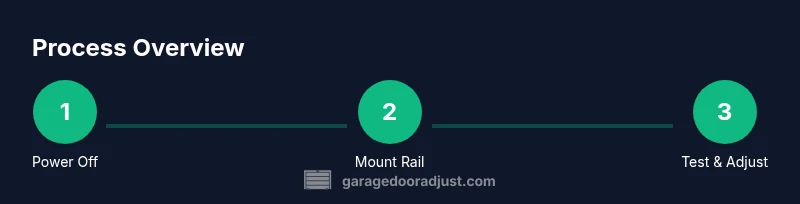
- 1
Power off and secure the door
Disconnect power to the garage door opener at the outlet or breaker. Manually clamp or wedge the door to prevent movement while you work. This keeps you safe if the opener impulse triggers unexpectedly.
Tip: Always verify the door stays stationary before touching components. - 2
Remove the old opener and inspect mounting
Carefully detach the old unit from the ceiling mounts and brackets. Photograph bracket placements and wire connections for reference. Inspect tracks for dents, warping, or loose screws.
Tip: Label wires and take reference photos to simplify reassembly. - 3
Install new rail and ceiling brackets
Assemble the new rail per manufacturer instructions and mount the brackets securely to the ceiling joists. Ensure the rail is level and the brackets are flush against the ceiling. Tighten all fasteners to spec.
Tip: Use a level on the rail and confirm alignment from track to door edge. - 4
Mount the opener and align the rail
Hang the opener on the ceiling mounts and align the rail with the door. Confirm the rail runs parallel to the door and that there’s no binding as you move the trolley.
Tip: Check clearance to the ceiling and ensure any obstacles are removed. - 5
Wire the opener and safety sensors
Connect power, install safety sensors, and route wiring according to the manual. Align the safety sensors so the beam is unobstructed by door components. Check that wiring is secured and protected from pinch points.
Tip: Keep sensor lenses clean and unobstructed for reliable operation. - 6
Program remotes and keypad
Put the opener in learning mode and program each remote or keypad. Test each device to confirm it opens and closes the door. If you have a smart hub, link it after basic remote setup.
Tip: Test within arm’s reach, then at distance to ensure consistent signals. - 7
Set travel limits and test balance
Adjust travel limits so the door stops fully open and fully closed without crushing. If the door feels heavy, recalibrate the balance by disconnecting the opener and lifting manually to mid‑position.
Tip: An imbalanced door will wear out bearings and springs prematurely. - 8
Final safety check and maintenance
Run multiple open/close cycles and verify sensor responses and auto-reverse. Lubricate moving parts, replace weather seals if needed, and grab a quick post‑install inspection log.
Tip: Record settings and maintenance notes for future reference.
Got Questions?
Is DIY installation recommended for most homeowners?
DIY installation is possible if you have basic carpentry and electrical knowledge and follow safety steps. Avoid working on springs or high-tension components unless trained. When in doubt, consult a professional.
DIY installation is possible if you have basic skills, but avoid springs or high-tension parts. If unsure, hire a pro.
What size opener do I need for a standard 7 ft door in Houston?
Most standard 7 ft doors work with 1/2 to 3/4 HP belt or chain drive openers. If your door is very heavy or insulated, you may opt for the higher end of horsepower and a stronger drive.
Most 7 foot doors use a half to three-quarter horsepower opener; heavier doors may need more power.
How do I know if my safety sensor is misaligned?
If the door reverses or won’t close, or the indicator LED is off after alignment attempts, the sensors may be misaligned or obstructed. Realign and clear the beam path, then test again.
If the door reverses or won’t close, check sensor alignment and clear the beam path.
Can humidity affect opener performance?
Yes. Humidity can corrode hardware and affect sensors. Regular inspection of tracks, rollers, and wiring helps prevent failures in humid climates like Houston.
Humidity can cause corrosion and sensor issues; inspect components regularly.
Do I need a permit to install a garage door opener in Houston?
Permit requirements vary by city within the Houston area. Check with your local building department to confirm whether a permit is needed for residential opener installation.
Permits vary by city; check with local authorities before starting.
How long does it take to program multiple remotes?
Programming multiple remotes typically takes a few minutes per device. After each remote, test its function at the door and from outside the garage to ensure reliability.
A few minutes per remote, with testing after each one.
Watch Video
Quick Summary
- Choose an opener matched to door weight and Houston climate.
- Safety first: disconnect power and avoid springs unless trained.
- Program remotes and sensors, then test thoroughly.
- Regular maintenance extends life and reliability.
- Consult a pro for complex spring/cable work or code questions.