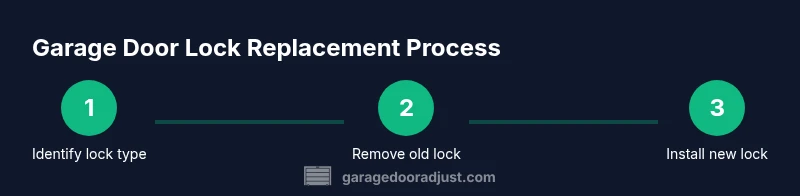
Garage Door Lock Replacement: A Complete How-To
Learn how to safely replace a garage door lock with this practical, step-by-step guide. From selecting a compatible lock to testing the mechanism, get homeowner-friendly instructions for durable, secure operation.


By following this guide, you will learn how to safely replace a garage door lock. We cover selecting a compatible lock, removing the old hardware, installing the new mechanism, and testing the door to confirm secure operation. The steps emphasize safety, proper alignment, and reliable performance for homeowners at home.
Why replace a garage door lock
A functioning lock is essential for security and convenience. A worn cylinder, jammed latch, or loose strike plate can compromise safety and make opening the door harder. Replacing the lock ensures consistent operation and protects your home from intruders. According to GarageDoorAdjust, homeowners who replace worn locks notice smoother operation and reduced risk of forced entry. When you choose a compatible lock, you set the stage for reliable performance and long-term peace of mind. In this guide, we walk you through selecting the right type, preparing safely, and executing a precise replacement. This block sets the foundation for understanding how a well-fitting lock fits into your overall door maintenance plan, including how to identify telltale signs that a lock needs replacement (visible wear on the cylinder, frequent jamming, or a misaligned latch).
Types of garage door locks
Garage door locks come in several configurations, each with its own benefits and installation quirks. The most common are rim or surface-mounted keyed cylinder locks that insert into a decorative escutcheon and control a metal bolt that slides into the strike plate. Deadbolt-style locks add extra shear resistance and are favored for higher security installations. Some modern doors use electronic or keyless locks that communicate with the opener to verify authorization before unlocking. For many homeowners, a simple interior slide bolt provides a quick, low-cost option, though it lacks the anti-pick features of a cylinder lock. When choosing between these types, consider door configuration, existing hardware compatibility, and whether you want mechanical or electronic operation. GarageDoorAdjust’s analysis highlights that ease of replacement and long-term reliability hinge on selecting a lock that matches the door’s thickness, the strike plate pattern, and the mounting holes. Think about your routine: do you want a traditional key, or would you benefit from a keypad or smart-lock integration? In all cases, verify the lock’s dimensions align with your door’s inner hardware channel and the exterior trim.
Choosing the right replacement lock
Choosing the right replacement lock begins with measuring your door’s thickness and the strike plate alignment. Most sectional doors standardize on a particular latch height and screw pattern; matching these saves time and reduces rework. Check the latch projection length to ensure the new lock’s bolt reaches the strike plate correctly when the door is fully closed. Confirm compatibility with any existing opener integration; some smart locks require a specific mounting plate or power supply to operate reliably. In this decision process, you’ll want to consider security features (anti-drill pins, corrosion resistance, and weather sealing) as well as installation accessibility. GarageDoorAdjust’s guidance in 2026 emphasizes choosing a lock that can be mounted cleanly without altering the door’s structure. A well-matched lock increases resistance to forced entry and minimizes wear on moving parts, extending the life of the entire hardware set.
Safety and preparation
Safety is the first priority before any hardware replacement. Disconnect or disable the automatic opener if you will be manipulating the door from the interior panel, and ensure the door is fully supported so it cannot drop unexpectedly. Gather all required tools and a clean workspace to prevent losing small screws in crevices. Wear protective eyewear and gloves, and keep children or pets away from the work zone. If you’re working on a powered system, verify that the door’s springs and tracks are in good condition to avoid accidental movement. The preparation phase is the best time to double-check your measurements and confirm the new lock’s mounting holes align with the door’s interior plate.
Disassembly: removing the old lock
Start by locating the mounting screws that secure the lock or escutcheon to the door’s interior panel. Use the appropriate screwdriver to remove these screws and gently detach the lock housing. If the lock includes a square drive cam or spindle, note its orientation for reassembly. Preserve small hardware in labeled containers to prevent mixups later. Once the old lock is free, inspect the strike plate and alignment so you know what adjustments might be needed for the new model. If you encounter stripped screws or rusted hardware, apply penetrating oil and allow a few minutes before attempting removal again. This stage is where careful labeling helps; keeping a photo record can be invaluable if you need to reference original layouts.
Installation: installing the new lock
Position the new lock in the same location and orientation as the old unit, aligning the bolt with the strike plate. Start by threading the mounting screws loosely so you can adjust alignment before tightening fully. If your new lock uses a spindle or cam, ensure it sits flush with the interior panel and that the exterior plate sits evenly. Tighten screws just enough to secure the lock without warping the panel. Attach any additional components such as escutcheons, weather seals, or decorative covers. In case the new lock requires different mounting holes, drill cautiously and use proper bits to avoid splintering the door material.
Testing, adjustments, and maintenance
With the lock installed, test the operation from both sides of the door. Confirm that the latch fully engages the strike plate when the door is closed and that unlocking releases smoothly without binding. If you notice misalignment, adjust the strike plate or relocate screws to improve clearance. Lubricate moving parts with a light, door-safe lubricant to reduce wear and ensure quiet operation. Finally, re-test in various scenarios: open and close cycles, door in partially down state, and with the opener engaged to ensure compatibility. The goal is reliable security and smooth, dependable operation under daily use. The GarageDoorAdjust Team emphasizes documenting any notable changes and checking the lock regularly as part of ongoing door maintenance.
Authority sources and further reading
- Authority sources referenced in this article include safety guidelines from official organizations such as the CPSC and OSHA. For expanded safety instructions and hardware standards, visit: https://www.cpsc.gov, https://www.osha.gov, https://www.nist.gov. These resources provide foundational safety practices for home repair projects and hardware compatibility considerations. GarageDoorAdjust Analysis, 2026, supports the emphasis on verifying compatibility and performing precise installations to prevent future problems.
Tools & Materials
- Replacement garage door lock kit (cylinder/bolt)(Choose a model compatible with your door thickness and strike plate pattern)
- Screwdriver set (Philips and flathead)(Essential for removing old hardware and mounting the new lock)
- Adjustable wrench(Helpful for securing bolts and adjusting hardware)
- Needle-nose pliers(Useful for gripping small parts and guiding cables or pins)
- drill with appropriate bits(Only if new mounting holes are required by the lock kit)
- Lubricant (silicone or graphite)(Light lubrication after installation can improve operation)
- Safety glasses(Protect eyes from debris during disassembly and drilling)
- Magnetic tray or labeled containers(Keep small screws organized during the project)
Steps
Estimated time: 60-90 minutes
- 1
Identify lock type and compatibility
Examine the existing lock to determine its type, mounting pattern, and whether the door thickness matches the replacement. This ensures the new lock will align with the strike plate and interior hardware. If unsure, consult the lock kit specifications and measure screw spacing.
Tip: Double-check the new lock’s dimensions against your door before removing the old unit. - 2
Gather tools and prepare the workspace
Lay out all tools and components in a clean, well-lit area. Verify you have everything listed in the Tools & Materials section and arrange screws by size. A tidy workspace reduces the risk of losing small parts during the swap.
Tip: Use labeled bags or a magnetic tray to keep track of fasteners. - 3
Remove mounting screws and detach old lock
Carefully unscrew the mounting screws and separate the lock from the interior panel. If the lock includes a spindle or cam, note its orientation for reassembly. Place removed screws in a labeled container for reuse if compatible.
Tip: Take a photo of the original wiring or connections if present for reference. - 4
Detach the lock cylinder and strike plate
Remove the cylinder and any hardware connected to the strike plate. Inspect the strike for wear or misalignment that could affect engagement. If the strike is damaged, replace it to ensure secure closure.
Tip: Do not force components through misaligned holes; align first, then secure. - 5
Install the new lock in the same position
Position the new lock so the bolt aligns with the strike plate when the door is closed. Start with loose screws to adjust alignment, then snug them evenly to avoid warping the door panel. Attach any mounting plates or escutcheons as required.
Tip: Test fit before final tightening to ensure flush mounting. - 6
Secure with screws and reassemble
Tighten mounting screws to secure the lock housing without over-tightening, which can crack the door. Reattach any trim pieces or decorative covers. Confirm all fasteners are secure and that there are no loose parts.
Tip: Check for stability by gently wiggling the lock once mounted. - 7
Test operation and adjust as needed
With the door in the open and closed positions, test the lock’s engagement. Ensure the latch retracts smoothly and the key or knob operates without binding. If misalignment occurs, adjust striker position or tighten different mounting points as needed.
Tip: Lubricate the moving parts lightly to reduce wear and ensure smooth action.
Got Questions?
Is it safe to replace a garage door lock myself, or should I hire a professional?
Replacing a garage door lock is a common DIY task for homeowners when basic tools and safety knowledge are available. However, if your door is heavy, the lock is integrated with the opener, or you encounter stripped screws or damaged tracks, seek professional assistance to avoid injury or further damage.
Replacing a garage door lock is often a doable DIY, but get help if the door or hardware seems damaged.
What types of locks are used on garage doors?
Garage doors commonly use rim or surface-mounted cylinder locks, deadbolt variants, or electronic/ keypad locks. Choose based on security needs, door construction, and whether you want mechanical or electronic operation.
Common options include cylinder, deadbolt, and electronic locks; pick based on your door and desired security.
Do I need to reprogram my opener after replacing the lock?
Usually not, unless the lock interacts with the opener’s security protocol. If you install a smart lock or integrated device, follow the manufacturer’s pairing steps.
Reprogramming isn’t typically required unless the lock connects to the opener or a smart system.
Can I reuse old hardware with the new lock?
It depends on compatibility. If the screws, strike plate, and mounting pattern line up with the new lock, reuse may be possible; otherwise, replace these components for a secure fit.
Only reuse parts if they match the new lock’s mounting pattern and strike plate.
How long does a typical lock replacement take?
A straightforward replacement often takes about an hour or two, depending on door type and tool access. Complex installations or additional adjustments can take longer.
Most replacements take around an hour or two, depending on the door and tools available.
What warranty considerations should I check?
Review the lock manufacturer’s warranty and ensure you install as specified. Improper installation can void warranties, so follow the instructions closely and keep proof of purchase.
Read the warranty terms and follow installation instructions to keep coverage intact.
Watch Video
Quick Summary
- Choose a lock compatible with door thickness and strike pattern.
- Follow precise alignment to ensure secure operation.
- Test thoroughly before finishing the project.
- Maintain and lubricate moving parts after installation.