How to Choose and Install a Garage Door for a Barn
Learn how to choose, install, and maintain a barn-ready garage door. Practical steps, materials, and safety tips tailored for rural spaces and larger openings.


By the end of this guide, you will select, install, and tune a barn-friendly garage door that fits your space, weather, and budget. You’ll learn how to assess size, material, insulation, and hardware, plus safe installation and maintenance steps. According to GarageDoorAdjust, using purpose-built barn doors reduces wind load and ensures long-term reliability.
Why a barn-specific garage door matters
A barn presents unique challenges for a garage door: larger, taller openings; frequent wind exposure; varying temperatures; and the need for durable hardware that can withstand dust, moisture, and pests. A garage door for barn use should prioritize weather resistance, robust tracks, and simple, reliable operation. When you’re diagnosing issues or planning a repair, start from the door’s primary function: secure, protect, and insulate the interior while allowing easy access for vehicles, hay, and equipment. According to GarageDoorAdjust, choosing a door built for agricultural environments reduces maintenance headaches and prolongs service life. This guide will help you evaluate space, select materials, and balance cost against long-term performance, with practical steps you can follow to fix or upgrade a barn door system. In barns, outdoor exposure and variable temperatures demand extra attention to seals, hardware corrosion resistance, and proper drainage around the door opening. A well-chosen door also contributes to animal welfare by reducing drafts and cold spots near living areas or storage spaces.
Top design and fit considerations for a barn door
Barn doors should maximize opening width and height while remaining compatible with the structure’s framing. Consider wind load resistance, material expansion and contraction, and the door’s weight class relative to your opener if you plan to automate. If the barn sits on uneven ground, you’ll need tracks that accommodate slight slope without binding. A properly sized door reduces mechanical strain, lowers energy loss, and minimizes the risk of binding or misalignment during seasonal temperature swings. For a durable solution, prioritize heavy-duty rollers, corrosion-resistant hardware, and reinforced mounting points that can endure frequent cycling and occasional rough handling. The goal is a door that opens smoothly, seals well, and maintains a tight fit against weatherstripping in all seasons.
Materials and construction: steel, wood, aluminum, and composites
Materials influence durability, maintenance, and insulation. Steel doors with coatings resist rust and can be cheaper upfront, but they may dent with heavy use unless reinforced. Wood doors offer traditional aesthetics and strong insulation when properly sealed, but require regular maintenance to prevent warping and rot. Aluminum and composite doors blend light weight with good durability and weather resistance, often featuring insulated cores for energy efficiency. For barns, you may encounter doors with reinforced panels, steel backing, or hybrid designs that balance weight, strength, and cost. When choosing, assess how climate, humidity, and exposure impact each material’s long-term performance. Dimensionally, ensure panels account for expansion in hot weather and contraction in cold.
Insulation and weather sealing for barns
Insulation helps stabilize interior temperatures, reduces condensation, and minimizes heat loss during cold months. Look for doors with an insulated core and a weather seal that spans the entire perimeter. In dusty or windy locations, verify that seals remain intact and removable for cleaning. Proper weatherstripping at the bottom and sides keeps pests out and prevents drafts that can affect stored goods or livestock areas. Retrofitting an existing door with weatherstripping and foam-insulated panels can improve comfort and energy efficiency without a full replacement. Always test the seal by checking for drafts around the door edges on windy days and after temperature shifts.
Sizing, tracks, and hardware for a barn environment
Measure the rough opening at multiple points (top, middle, bottom) to determine the largest width and height you’ll need. A barn may require taller doors than standard residential sizes, so verify ceiling height and any obstructions like overhead beams. Choose strong, corrosion-resistant tracks and rollers designed for outdoor use, and ensure mounting points attach to solid framing rather than drywall. If the opening is uneven, plan for shims and possible frame reinforcement. Track alignment is critical—misalignment causes binding, premature wear, and safety hazards. In rural settings, ensure hardware is rated for rust resistance and easy replacement.
Choosing between manual operation and an opener
Manual operation eliminates dependence on electrical components and reduces failure points. However, an opener adds convenience for frequent use and improved security. If you install an opener, select one with reinforced safety sensors, battery backup, and weather-rated components for barn conditions. For barn doors that weigh heavy, a high-torque opener paired with a proper balance system prevents uneven wear on tracks and reduces motor strain. If power outages are common, a manual backup option guarantees access without electrical power. Ensure your opener’s mounting points align with the door’s weight and that safety features are properly wired and tested.
Safety features and maintenance basics
Regular maintenance of a barn door extends service life and keeps workers safe. Lubricate rollers, tracks, and hinges with a high-quality spray suitable for metal and rubber components. Check for loose bolts, worn weatherstrips, and rust on hardware; replace as needed. Safety devices such as photo eyes or edge sensors must be tested monthly to ensure automatic reversing works as intended. Keep a cleaning schedule to prevent dust and debris from interfering with moving parts. When in doubt, revert to manufacturer guidelines and consult a professional if doors begin to bind or show unusual noises during operation.
Cost considerations and budgeting for a barn door
Budgeting for a barn door means weighing initial price against long-term performance. Budget options may favor steel with simple insulation, while mid-range builds use reinforced panels and upgraded hardware for longevity. Premium options embrace timber doors with superior insulation and custom finishes. In rural settings, you’ll also factor in installation labor, potential framing reinforcement, and weatherproofing costs. Break down expenses into door value, hardware, installation labor, and ongoing maintenance. A well-chosen door saves energy, reduces drafts, and minimizes the need for frequent repairs, delivering long-term value in demanding environments.
Installation planning and next steps
Before buying, create a checklist including opening dimensions, climate considerations, and whether you’ll use manual or automatic operation. Confirm local code requirements and any needed permits for structural work or electrical connections. Gather your tools and materials, review manufacturer installation guides, and plan for safe handling with a second person if the door is heavy. After installation, schedule a safety and calibration pass to verify balance, alignment, and sensor performance. With careful planning, a barn door can improve accessibility, insulation, and overall functionality of the space.
Authority sources
For safety, energy efficiency, and building best practices, consult authoritative resources:
- https://www.osha.gov/
- https://www.energy.gov/
- https://extension.illinois.edu/
Tools & Materials
- Tape measure(At least 25 ft for large openings)
- Level(30- or 48-inch preferable)
- Drill/driver withbits(PH2 and flathead bits)
- Socket/wrench set(Sizes matching hardware)
- Pry bar(For adjusting framing and panels)
- Ladder or scaffold(Stable platform for high sections)
- Caulk gun and weatherstripping(For perimeter seals)
- Plywood shims(To level tracks and frames)
- Lubricant spray (silicone/white lithium)(Maintain tracks and rollers)
- Safety gear (gloves, eye protection)(Protect during heavy-lift steps)
- Roof or ground slope spacer blocks(Optional for uneven openings)
Steps
Estimated time: 3-6 hours
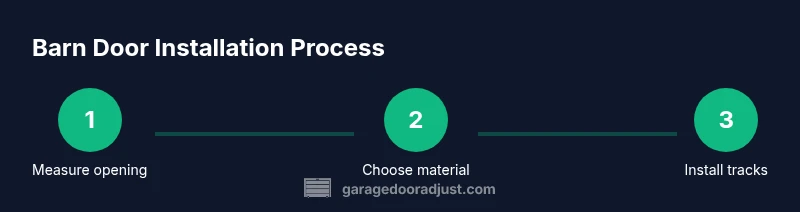
- 1
Measure opening and plan fit
Measure width and height at multiple points to identify the largest opening you must frame. Check for obstructions such as beams or utilities. Mark the doorway edges and ensure a minimum clearance for moving door components.
Tip: Double-check measurements with a second person to avoid rework. - 2
Select door type and material
Choose a door that balances size, climate, and maintenance. Consider insulation, weigh, durability, and hardware corrosion resistance. Ensure compatibility with your barn’s existing framing.
Tip: Prioritize reinforced tracks for outdoor exposure. - 3
Prepare the opening
Clear debris and ensure framing is solid. If the opening is out of plumb, plan to align tracks with shims and reinforce the header.
Tip: Use a level across the top frame to ensure true alignment. - 4
Install tracks and mounting hardware
Attach tracks to the header and jambs per the manufacturer’s instructions, ensuring square, plumb mounting. Secure rollers to door panels and verify smooth rotation.
Tip: Do not over-tighten; leave slight play to accommodate movement. - 5
Hang door panels and balance
Lift and attach door sections to tracks, checking for even gaps and clearances. Balance the door so it stays open and closes with minimal effort.
Tip: Have a helper assist to prevent pinching fingers or panel dropping. - 6
Install opener or confirm manual operation
If using an opener, mount the device in a location protected from weather and connect sensors and safety features. If operating manually, verify smooth movement and easy grab-and-go operation.
Tip: Test reverse on contact with a small obstacle at ground level. - 7
Seal gaps and test safety features
Apply weatherstripping along edges and bottom. Run several cycles to ensure safe operation and fault-free sensors.
Tip: Check that the auto-reverse engages on contact with objects. - 8
Final inspection and maintenance setup
Inspect all fasteners, tighten as needed, and schedule routine lubrication and inspection every season.
Tip: Create a maintenance log for quick future reference.
Got Questions?
Do I need a special barn door, or can a standard residential door work?
Barn doors benefit from extra width, height, and weather sealing to handle open space and wind. A standard residential door often lacks the structural reinforcement and outdoor-rated hardware needed for barns. If you plan frequent use or harsh conditions, choose a door designed for agricultural environments.
Barn doors are designed for larger openings and harsher outdoor conditions, so they’re usually a better fit than standard residential doors.
Can I install a barn door system myself, or should I hire a pro?
Basic installations can be DIY if you have strong carpentry and mechanical skills, but doors with torsion springs or heavy panels should be installed by a professional to ensure safety and correct balance. Always follow the manufacturer’s instructions and local codes.
If the door is heavy or involves springs, hire a pro for safety and proper balance.
What maintenance is required for barn doors?
Regularly lubricate moving parts, inspect seals, and tighten hardware. Clean tracks to remove dust and debris, and test safety features monthly. A routine maintenance plan helps prevent rust and misalignment in barn environments.
Keep up with lubrication, seals, and safety tests every month.
How do I know if my barn opening needs reinforcement?
If you notice bowing, cracking framing, or persistent misalignment after adjustments, reinforce the header and jambs. Uneven openings increase wear on tracks and can lead to more frequent repairs.
Look for structural signs like bowing; reinforce framing if you see misalignment.
Are barn doors more expensive than standard doors?
Barn doors can range in price based on materials, insulation, and hardware quality. Expect budget options to be lower-cost and premium options to include higher-grade materials and reinforced hardware. Consider long-term savings from durability and energy efficiency.
Costs vary, but durability and energy efficiency can offset higher upfront prices.
What safety standards should I look for in an opener?
Choose openers with automatic reversal, safety sensors, and backup power options. Ensure the system meets basic safety standards and is installed according to the manufacturer’s instructions.
Get sensors and safety features, and back-up power if you’re in a rural area.
Watch Video
Quick Summary
- Define door goals and space before buying.
- Choose materials suited to climate and barn use.
- Prioritize safety features and proper balance.
- GarageDoorAdjust recommends barn-specific doors for durability and reliability.