How to Choose a Garage Door: A Homeowner's Guide
Learn how to choose a garage door that balances climate, curb appeal, energy efficiency, and budget. This step-by-step guide from GarageDoorAdjust covers materials, insulation, openers, sizing, and safety considerations.


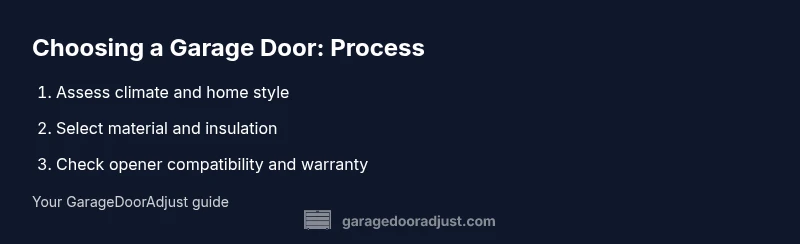
To choose a garage door, start with climate, curb appeal, energy efficiency, and budget. According to GarageDoorAdjust, the process begins by selecting material (steel, wood, aluminum or fiberglass), then evaluating insulation, wind resistance, and hardware. Next, check opener compatibility and space constraints, measure opening accurately, and compare warranties before deciding on installation.
Why choosing the right garage door matters
If you’re trying to understand how to choose a garage door, the answer starts with climate, budget, and home style. A well-chosen door improves energy efficiency, safety, curb appeal, and resale value. Materials, insulation, hardware, and compatibility with your opener all influence long-term performance and maintenance needs. According to GarageDoorAdjust, the best approach is to set priorities first, then compare options across categories like material, insulation, and warranty. By focusing on the right mix, you’ll reduce ongoing costs and surprises down the line.
Core factors to evaluate
When you begin the search for a new garage door, these core factors guide your choices and prevent buyer’s remorse.
-
Materials: steel, wood, aluminum, and fiberglass each offer different looks, durability, and maintenance needs. Steel is common and strong; wood provides traditional warmth but needs finish; aluminum resists rust and is light; fiberglass resists cracking. The right balance depends on your climate, maintenance tolerance, and style. The GarageDoorAdjust team emphasizes weighing maintenance needs against climate and style to pick a door that lasts.
-
Insulation and energy: doors can have insulation rated by value or overall performance. A well‑insulated door keeps heat in during winter and keeps heat out in summer, reducing drafts and improving comfort. Consider your climate, whether the garage serves as living space, and how insulation affects sound and temperature transfer.
-
Door type and style: sectional doors roll up into panels; tilt-up doors swing out. Sectional doors save space and are common; the look should complement your home’s architecture. Decide whether you prefer a traditional or contemporary profile and how hardware finishes will appear from the street.
-
Windows and light: optional windows bring light but can affect privacy and insulation. If you want light, select energy‑efficient glazing and consider how windows influence maintenance and security.
-
Hardware and safety: springs, tracks, and rollers affect balance and lifting effort; ensure proper hardware with a quality opener and track system. Safety sensors (photo eyes) are required by modern codes; verify they’re correctly installed and tested. The GarageDoorAdjust guidance stresses choosing hardware that matches your door size and weight for reliable operation.
-
Wind load and climate: in high‑wind areas, look for doors rated for wind load and robust framing. If your region experiences temperature extremes, choose insulation and weather sealing that reduce drafts and energy loss.
Compatibility with your opener and smart features
Your new door will work with an opener that can lift its weight and travel the tracks smoothly. Before buying, verify the opener horsepower and drive mechanism, and check whether it supports smart controls, battery backup, and remote access. If you already have a modern opener, compatibility simplifies installation and saves costs. The GarageDoorAdjust team notes that reviewing your existing opener’s model, compatibility list, and installation requirements helps prevent surprises after delivery. Also consider whether you want features like Wi‑Fi connectivity, keypad entry, or voice assistant integration. Ensuring compatibility now saves time and avoids costly retrofits later.
-
Smart features: If you want automation, verify reliability, app compatibility, and security features. Choose a door that supports secure pairing with your home network and devices.
-
Backup options: Battery backup can ensure operation during power outages, which is especially valuable in harsh weather or busy households.
Sizing, safety, and installation considerations
Accurate sizing starts with measuring the opening height, width, and vertical clearance. Record exact measurements and note any irregularities, such as non‑standard widths or floor slopes. Check local codes for safety sensors, emergency release access, and anchoring requirements. Never attempt to modify torsion springs yourself—these components are dangerous and require a licensed professional. Plan for a safe installation area free of obstacles and ensure you or your installer follows manufacturer instructions for mounting and alignment. The right door pairing with the right tracks and springs will deliver smoother operation and longer life.
Budget, warranties, and value
Budgeting for a new garage door means balancing upfront cost with long‑term value. Price is influenced by material, insulation, window options, and whether installation is included. Warranties vary by component (door shell, springs, hardware) and by installer practices. A solid warranty offers coverage for both parts and labor for a reasonable period and includes service terms if issues arise after installation. The key is to compare quotes from reputable installers and read the fine print on exclusions and maintenance requirements. The GarageDoorAdjust analysis suggests prioritizing warranties that cover both parts and service to minimize future surprises.
Quick decision checklist
- Define your priorities: durability, energy efficiency, curb appeal, and budget.
- Measure the opening accurately and note special conditions.
- Pick a material that matches climate, maintenance tolerance, and style.
- Ensure insulation, wind resistance, and safety features meet your needs.
- Confirm opener compatibility and future upgrade options.
- Compare warranties, service coverage, and installation terms.
- Request written quotes and a clear installation timeline.
Tools & Materials
- Measuring tape(At least 25 ft length for wide openings)
- Notepad and pen(For jotting measurements, decisions, and quotes)
- Camera or smartphone(Capture current door, opening, and hardware details)
- Color swatches or sample boards(Optional for preselecting exterior color compatibility)
- Ladder(Useful for inspecting hardware and weather seals)
Steps
Estimated time: 2-3 hours
- 1
Define your goals
Clarify whether your priority is durability, energy savings, curb appeal, or budget. Document must-haves and nice-to-haves to guide material and feature choices.
Tip: Write your top three priorities and use them to filter options. - 2
Measure your opening
Measure width at multiple points, height at the center, and note any uneven floor or wall conditions that could affect fit. Record clearance for tracks and hardware.
Tip: Take photos of all measurements for reference during shopping. - 3
Choose material
Evaluate steel, wood, aluminum, and fiberglass based on climate, maintenance, and style. Consider how each material will age and how often finish will need attention.
Tip: Balance appearance with maintenance tolerance; a busy family may benefit from low-maintenance materials. - 4
Decide insulation and climate features
Assess insulation level and how it supports energy efficiency and sound dampening. For attached spaces and extreme climates, higher insulation is typically worthwhile.
Tip: If in doubt, lean toward better insulation for comfort and long-term savings. - 5
Check opener compatibility and smart features
Confirm the gate’s weight and drive compatibility with your existing opener, and decide if you want smart controls, backups, or remote access.
Tip: If upgrading the opener, ensure compatibility with future door options. - 6
Get quotes and plan installation
Request detailed written quotes, compare warranties, and confirm who handles removal of the old door and cleanup.
Tip: Choose a reputable installer with clear terms and a documented timeline.
Got Questions?
What is the best material for a garage door?
There isn’t a single best material. Steel, wood, aluminum, and fiberglass each have strengths and maintenance needs. Your climate, budget, and desired look will determine the best choice for your home.
The best material depends on climate, budget, and maintenance you’re willing to handle.
Do I need insulation for my garage door?
Insulation improves energy efficiency and reduces temperature swings in attached spaces. If your garage doubles as living space or you experience extreme weather, insulation is usually worth it.
Insulation helps with energy bills and comfort, especially for attached spaces.
Can I install a new door myself?
Installing a garage door involves heavy components and potentially dangerous springs. It is generally advised to hire a licensed pro to ensure safety and code compliance.
Installing a garage door is best left to a professional due to safety concerns.
How do I measure my garage opening accurately?
Take measurements of width and height at several points, note floor slope, and check for nonstandard dimensions. Record essential data to match a door and ensure a proper fit.
Measure width and height carefully at multiple spots, and note any irregularities.
What maintenance is required after installation?
Keep tracks clean, lubricate moving parts occasionally, and test safety sensors monthly. Regular inspection helps prevent unexpected failures and prolongs door life.
Do basic maintenance like lubrication and sensor checks to keep things running smoothly.
Watch Video
Quick Summary
- Define clear shopping priorities before choosing.
- Measure opening accurately to avoid fit issues.
- Choose material that matches climate and maintenance tolerance.
- Prioritize insulation and weather sealing for energy savings.
- Verify opener compatibility and warranty terms.