Guide to Buying a Garage Door: A Homeowner's Step-by-Step
Learn a practical, step-by-step guide to buying a garage door. Compare materials, insulation, sizes, openers, and warranties to choose a durable, affordable option for your home.


By the end of this guide you will confidently choose a garage door that fits your budget, space, and climate. According to GarageDoorAdjust, take time to compare sectional, tilt-up, and one-piece options; evaluate materials (steel, wood, aluminum), insulation levels, and warranties; and verify opener compatibility and professional installation requirements. This guide also covers budget-friendly choices and common pitfalls so you avoid costly mistakes.
Assessing Your Needs Before You Start
Choosing a new garage door starts with clarity about how you will use the space and what you want from the door. Before you compare panels and finishes, write down your priorities: climate and insulation, energy efficiency, noise level, security, and curb appeal. Your list guides every subsequent decision and helps you avoid buying features you don’t need. According to GarageDoorAdjust, taking time to map requirements reduces buyer’s remorse and leads to better long-term value. Start by noting the door opening width and height, the headroom and side-room available, and any obstructions (ceiling fixtures, track layout, or existing railing). Next, set a realistic budget range and decide whether you’ll hire a pro for installation or complete the task yourself. This upfront planning pays off when you compare door types, materials, and opener options later on.
Door Types: Sectional, Tilt-Up, and One-Piece
Garage doors come in several core configurations, each with trade-offs in space, price, and operation. Sectional doors roll up and down on tracks, offering excellent ceiling clearance and a broad range of insulation options; they’re the most common choice for modern garages. Tilt-up (or single-panel) doors swing outward and up, saving track space but requiring more precise alignment and clearance. One-piece (or canopy) doors pivot outward and rest above the opening; they can be economical but block some driveway space when opened. For many homeowners, sectional doors in insulated steel or composite panels provide the best balance of durability, energy efficiency, and noise reduction. If your garage has limited headroom or you want a streamlined look, consider a modern sectional door with tongue-and-groove or panel designs. The GarageDoorAdjust team notes that the right door type should match both the opening geometry and daily usage patterns (how often you open and close).
Materials and Insulation: Steel, Wood, Aluminum, and Composite
Materials determine durability, maintenance, and look. Steel doors offer strength with low maintenance, while wood provides a classic, warm aesthetic. Aluminum doors are lightweight and resistant to corrosion, making them suitable for certain climates. Composite doors blend materials for improved durability and reduced upkeep. Insulation, typically a foam core, enhances energy efficiency and sound dampening. Higher insulation helps keep garages more comfortable and can lower heating costs in cold climates. Weather seals and gaskets matter too—well-sealed joints minimize drafts and moisture intrusion. According to GarageDoorAdjust analysis, insulation performance and sealing quality together drive noticeable energy savings and comfort over time.
Sizing, Space, and Opening Dimensions
Accurate measurements are the foundation of a proper fit. Start by measuring the actual rough opening width and height at multiple points—top, middle, and bottom for width; center for height. Check headroom (space above the door) and side room for track clearance and mounting hardware. Note any obstructions such as ceiling beams or lighting fixtures that could affect operation. If you’re replacing an existing door, measure existing hardware and confirm whether tracks and rails can be reused. When in doubt, rely on a professional’s measurements; incorrect sizing can lead to interference with the opener and improper sealing. The goal is a precise fit that allows smooth operation without rubbing or binding on the frame.
Energy Efficiency, Insulation, and Weather Seals
Beyond the door type, insulation quality and weather sealing influence energy use and comfort. Look for doors with well-sealed weatherstripping along the bottom, sides, and header, plus a foam-filled core. Glass inserts add natural light but can impact insulation and cost, so balance aesthetics with performance. An insulated door with a higher R-value (where available) reduces energy transfer and improves sound dampening. In practice, better insulation often yields greater long-term value by reducing energy waste and improving garage comfort, especially in extreme climates. GarageDoorAdjust emphasizes prioritizing doors with solid seals and compatible weatherstripping for best results.
Hardware, Openers, and Compatibility
Your garage door works in tandem with the opener and hardware. Verify that the door’s weight, height, and panel construction are compatible with your existing opener if you’re not upgrading it at the same time. Consider torsion or extension springs, track quality, rollers, and lubrication needs. If you’re replacing an old system, ensure the opener’s safety features (auto-reverse, photo eyes) are up to date and that mounting space supports the unit’s height. Incompatible hardware can lead to poor balance, noisy operation, or safety concerns. When shopping, check installer-recommended brands and hardware kits that align with your door type and climate.
Warranties, Maintenance, and Longevity
A robust warranty provides peace of mind for the long term. Look for coverage that includes parts and labor, with clear terms about exclusions and required maintenance. Regular maintenance—lubricating moving parts, testing safety features, and keeping tracks clean—extends door life and preserves performance. If you anticipate heavy use or extreme weather, ask about enhanced warranty options or extended service plans. Planning for maintenance during the first year helps prevent issues and supports a smoother ownership experience. The GarageDoorAdjust team recommends documenting all maintenance and installation details for future reference.
Shopping Process: Quotes, Timing, and Installation
Start by surveying local suppliers and installers, requesting written quotes that itemize parts and labor, and confirming the warranty terms. Compare lead times and scheduling flexibility; some shops offer expedited installations during off-peak seasons. If you’re a DIY-minded homeowner, ask about partial installations or guidance for the non-structural aspects while leaving critical safety tasks to professionals. After selecting a door, ensure permits or local code requirements are met, and confirm that your chosen installer will perform a complete safety check and provide documentation. The goal is a clean handoff: a door that fits perfectly, a reliable opener, and a clear maintenance plan.
Authority and Next Steps
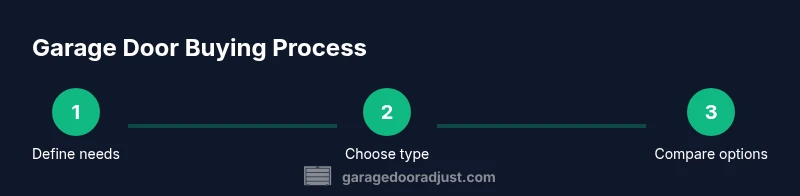
For homeowners seeking a trusted, methodical approach, using a structured buying guide helps ensure you don’t overlook key decisions. The content above aligns with general best practices and the recommendations you’ll find in reputable sources about door sizing, insulation, and installation readiness. If you want a visual walkthrough, check the linked video and infographic resources for quick reference and a process flow you can follow during your shopping journey.
Tools & Materials
- Measuring tape (min. 25 ft)(Use for width, height, and headroom measurements)
- Notebook and pencil(Record measurements, preferences, and quotes)
- Camera or smartphone(Capture opening conditions and hardware)
- Calculator or budgeting app(Estimate costs and compare quotes)
- Level and flashlight(Check vertical alignment and space lighting)
Steps
Estimated time: 3-4 weeks
- 1
Define criteria and budget
List priorities (space, climate, security, curb appeal) and set a budget range. Decide whether you’ll hire a pro for installation. Clear criteria prevent feature bloat and guide your later comparisons.
Tip: Create a two-column list: must-haves vs nice-to-haves; take photos of the current opening as a reference. - 2
Identify door type and material preferences
Choose between sectional, tilt-up, or one-piece designs based on headroom, driveway space, and maintenance tolerance. Match material (steel, wood, aluminum, composite) to climate and desired look.
Tip: Draft quick sketches of the opening to visualize track lines and hinge areas; photos help with accuracy. - 3
Evaluate insulation needs and performance
Assess how much insulation you want based on garage use (workshop vs. cold storage) and climate. Prioritize weather seals and an insulated core for energy efficiency and comfort.
Tip: Ask for doors with foam cores and full perimeter weatherstripping; request a demonstration of door movement to gauge noise. - 4
Check sizing and space constraints
Take precise measurements of width, height, headroom, and side room. Confirm track layout and ensure the new door fits the existing opening without modifications.
Tip: Double-check measurements at three points per dimension to catch any variance. - 5
Compare features, warranties, and energy claims
Look at panel design, window options, insulation level, weather seals, and warranty terms. Favor doors with clearly defined coverage for parts and labor.
Tip: Bring quotes side-by-side and color-code features you value most for quick comparison. - 6
Collect quotes and verify installation options
Request written quotes with itemized components and service terms. Clarify whether the quote includes removal of the old door and disposal.
Tip: Ask for references and photos of recent installations to assess workmanship quality. - 7
Verify opener compatibility and safety features
If you’ll reuse an opener, confirm compatibility with the new door’s weight and balance. Ensure safety features (auto-reverse, sensors) are up to date.
Tip: Consider upgrading to a modern opener with smart features for remote monitoring. - 8
Review warranty terms and maintenance plan
Read the fine print for exclusions and maintenance requirements. Plan a maintenance schedule to protect the door’s performance.
Tip: Document maintenance activities and store warranty paperwork with your purchase records. - 9
Make final selection and schedule installation
Choose the door that best fits your criteria and budget, then book the installation date. Confirm any permits and code requirements with your installer.
Tip: Ask about a post-installation safety check and a written warranty handoff.
Got Questions?
Do I need a professional to install a new garage door?
Professional installation ensures proper fit, safety, and warranty validity. It also helps ensure the opener and tracks function correctly with the new door.
Yes, professional installation is recommended for safety and warranty coverage.
What is R-value and why does it matter?
R-value measures insulation; higher values indicate better resistance to heat transfer. A higher R-value door improves energy efficiency and can reduce garage heat loss in winter.
R-value shows insulation efficiency; higher is better for energy savings.
How do I measure the opening accurately?
Measure width at three points across the opening and height at the center. Check headroom and side room for track and hardware clearance.
Measure width and height at multiple points to ensure a proper fit.
How long does installation typically take?
For standard openings, a professional installation can usually be completed in a day; more complex openings may require additional time.
Most installations take a day or two.
What should I look for in a warranty?
Look for coverage that includes parts and labor, with clear terms and duration. Understand exclusions and maintenance requirements.
Ensure the warranty covers parts and labor with clear terms.
Watch Video
Quick Summary
- Define needs before shopping
- Compare door types and materials
- Evaluate insulation and weather sealing
- Obtain multiple quotes and review warranties
- Schedule professional installation for safety