Garage Door Brush Seal: A Practical How-To Guide
Learn to diagnose, replace, and maintain a garage door brush seal to reduce drafts and improve insulation. This comprehensive how-to covers tools, step-by-step installation, maintenance tips, and safety considerations for homeowners.


You will learn how to inspect, replace, and adjust a garage door brush seal to stop drafts, improve insulation, and extend the door’s life. This quick guide highlights when to replace, what you’ll need, and a clear, 6-step process to seal gaps along the door jamb.
What a garage door brush seal does and why it matters
A garage door brush seal is a flexible strip with bristles or a synthetic brush that runs along the bottom and sides of the door opening. Its job is to seal gaps between the moving door and the frame, preventing air drafts, rain intrusion, dust, and insects from entering the garage. For homeowners, a well-maintained brush seal improves energy efficiency and comfort, especially in transitional seasons. According to GarageDoorAdjust, a properly installed brush seal reduces air leakage and keeps conditioned air inside where it belongs, protecting floors, stored items, and attached living spaces. The seal also helps with noise reduction and can extend the life of weatherstripping and door hardware by minimizing contact wear. If you notice persistent drafts near the doorway, water seepage after rain, or visible light gaps when the door is closed, it’s time to assess the brush seal and plan a replacement or adjustment.
This component is relatively inexpensive and straightforward to install, but the exact type of brush seal you choose should match your door construction and climate. Look for a seal that blends with the track geometry and provides a snug, flexible seal without binding the door. In this guide, we’ll cover inspection, selection, cutting to length, installation, and post-installation checks so you can complete the job confidently. The GarageDoorAdjust team prioritizes practical guidance you can perform with common tools and minimal specialty parts, emphasizing safety and best practices for long-term performance.
Signs your brush seal needs attention
Identifying when a brush seal needs service is the first step to preventing bigger problems. Common indicators include visible gaps along the sides or bottom when the door is fully closed, excessive air infiltration near the threshold, and frequent drafts that affect garage temperatures. Inspect the seal while the door is fully closed; a healthy brush will sit flush against the frame without large gaps or sagging. Warped mounting brackets or missing fasteners can allow the seal to misalign, creating new gaps. If the bristles are crushed, flattened, or shredded, replacement is typically more effective than repair. In some cases, the seal may still be functional but dirty or misaligned due to weathering; cleaning and minor adjustments can restore performance.
GarageDoorAdjust notes that even minor misalignment can dramatically reduce sealing performance. It’s worth checking the hinge and mounting screws for tightness and confirming the seal’s contact is uniform along the entire door length. For homes in colder climates, seal integrity matters more because drafts translate into heat loss and higher energy costs. Regular seasonal checks, especially after heavy storms or temperature swings, can catch issues early before they cause noticeable discomfort. If you’re unsure about the seal type on your door, consult the manufacturer’s recommendations or a professional.
Replacement vs. repair: choosing the right approach
Deciding between repairing or replacing a brush seal depends on the seal’s condition, age, and compatibility with your door. Small, clean gaps that result from temporary misalignment or a loose mounting screw may be resolved with adjustment or re-seating. When the bristles are worn, bent, or missing substantial portions, replacement is typically the best option. Replacement seals come in various profiles and bristle densities; choose one that matches your door’s track and weather exposure. If your door is unusually old or the track geometry has shifted, a full seal replacement plus minor frame adjustments can yield the best long-term results.
Maintenance-friendly designs with easy-to-cut lengths are ideal for DIY installation, while more complex hinge alignments or track issues may warrant professional help. Budget for a kit that includes the seal, fasteners, and any mounting hardware; some kits also include adhesive or silicone lubricant if required by the installation method. The goal is a gap-free fit that remains flexible across seasonal temperature changes without catching on the door as it operates.
Types of brush seals and compatibility
There are several brush-seal configurations to consider, including full-bottom seals, side-channel brushes, and integrated door jamb seals. A common choice for residential overhead doors is a flexible bottom seal with a corrosion-resistant aluminum or steel mounting track. Some models use a captive screw design that makes replacement straightforward, while others rely on friction-fit channels. When selecting a seal, check compatibility with your door height, track width, and the gap you’re sealing. If you have a double-door setup, ensure the seal is rated for the combined opening and that bristled density does not impede door travel.
Keep an eye on environmental exposure. Seals in humid or dusty environments may wear faster, requiring more frequent inspection. For garages with vehicles that generate heat or fumes, look for seals that resist chemical exposure. Always verify the product’s dimensions and profile before cutting to length to avoid misfitting or binding at corners.
Step-by-step overview: prepping for install and safety considerations
Before you begin, gather your tools, measure carefully, and work on a dry, stable surface. Disconnect nearby power sources if you are working near automatic openers, and keep children and pets away from the workspace. If you regularly operate the door during installation, do so slowly to monitor how the seal engages with the frame. Dry-fit the seal first to verify alignment, then secure it with the recommended fasteners. After installation, test the door in multiple cycles to confirm there is no binding, and re-tighten any fasteners if you notice movement. Remember, a well-fitted brush seal should compress slightly when the door closes but not restrict movement during opening.
The following steps (in the separate STEP-BY-STEP section) give you a precise, actionable process to complete the job with confidence.
Common mistakes and troubleshooting tips
Rushing the cut length is a common mistake; always measure twice and cut once. Using the wrong staples or screws can cause corrosion or failure to hold, so select hardware compatible with your door frame. Neglecting to clean the track can leave dust and grit under the seal, causing friction and wear; wipe all contact surfaces before install. If you notice binding during operation, reevaluate alignment, ensure brackets are square, and check that the seal sits evenly along the entire door length. Finally, store spare seals in a cool, dry place to extend their life and avoid deformation. By following proper steps and maintenance routines, you’ll keep your brush seal performing well and your garage comfortable year-round.
Tools & Materials
- New garage door brush seal (pre-cut or length for your door)(Match door height and track profile; choose bristle density suitable for climate)
- Measuring tape(Measure full door height and width; account for bottom channel)
- Utility knife or scissors(For trimming seal ends to length)
- Pencil or marker(Mark cut lines and mounting hole positions)
- Screwdriver or drill with bits(Secure seal brackets or mounting screws)
- Replacement screws or fasteners(Use hardware compatible with door frame)
- Cloth or brush, mild cleaner(Clean track contact surfaces before install)
- Lubricant (silicone-based) or dry lubricant(Optional for hinge/track parts to reduce friction)
Steps
Estimated time: 60-90 minutes
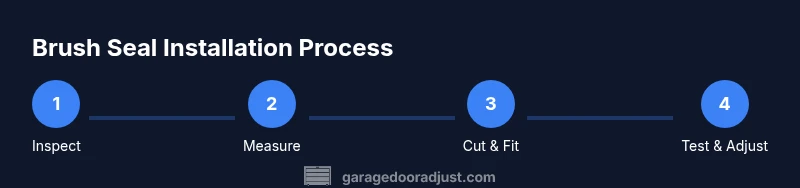
- 1
Inspect existing seal and measure
Open and lower the door fully, then inspect the current seal for wear, gaps, and mounting integrity. Use a tape measure to determine the door height and the length needed for a new seal. This ensures you buy the correct size and avoid waste.
Tip: Double-check both sides and bottom; measure at multiple points to catch uneven wear. - 2
Choose the replacement seal type
Select a brush seal compatible with your door type and climate. Consider bristle density and material; higher density reduces drafts but may require gentler contact with the frame.
Tip: If in doubt, bring a current seal sample or take precise measurements to the store. - 3
Cut the seal to length
Mark the required length on the new seal and cut straight with a sharp utility knife. Leave a small margin at the ends to ensure flush contact without binding.
Tip: Cut slowly and verify fit before final trimming; miscuts are hard to fix after mounting. - 4
Mount the seal channel or brackets
Position the seal so the bristles contact the frame when the door is closed. Secure brackets or a channel with screws, ensuring they are square and evenly spaced.
Tip: Use a level to keep the channel straight; misalignment causes gaps and wear. - 5
Install and secure the brush seal
Fit the brush seal into the channel or attach it to the mounting surface according to the product instructions. Avoid over-tightening which can deform the seal.
Tip: Leave a tiny clearance at the bottom to accommodate expansion and contraction with temperature changes. - 6
Test door operation and adjust
Cycle the door several times to confirm smooth operation and proper sealing. If you notice binding or gaps, recheck alignment and fastener tightness.
Tip: Lubricate hinges and moving parts sparingly if you hear squeaks during operation.
Got Questions?
What is a garage door brush seal and why is it important?
A brush seal is a flexible strip with bristles that seals gaps around a garage door. It prevents drafts, dust, and water intrusion, improving insulation and comfort. Regular maintenance keeps the seal effective and avoids energy loss.
A brush seal is a fuzzy strip that fills the gap around your door to stop drafts and keep the garage warm. It helps with insulation and comfort when you maintain it.
How do I know if my brush seal needs replacement?
Check for visible wear, torn bristles, loss of contact with the frame, or persistent drafts after adjustments. If the seal sits unevenly or the brackets are loose, replacement is likely the best option.
Look for worn bristles, gaps, or loose mounting. If the seal doesn’t sit firmly or drafts persist, consider replacing it.
Can I install a brush seal on any garage door?
Most brushes fit common overhead doors, but compatibility depends on track design and door height. Check manufacturer specifications and select a seal that matches your door’s profile.
Most seals fit typical overhead doors, but always confirm compatibility with your door’s profile.
How long does installation take?
A straightforward replacement typically takes about 60 to 90 minutes for a DIY homeowner, depending on door size and existing hardware.
Usually about an hour to an hour and a half for a DIY install, depending on the door.
What maintenance helps extend brush seal life?
Regularly clean debris from the seal, check alignment after seasonal changes, and lubricate moving parts sparingly. Promptly replace worn seals to maintain sealing performance.
Keep it clean, check alignment seasonally, and replace worn seals promptly.
Do I need professional help for a brush seal install?
For standard doors with no structural damage, a DIY replacement is feasible. If your track is bent, or the door operates unusually, consult a garage door technician.
For normal installs, you can do it yourself; for bent tracks or irregular operation, call a pro.
Watch Video
Quick Summary
- Identify material wear and gaps with a careful inspection.
- Choose a brush seal that matches door profile and climate needs.
- Measure twice, cut once for a clean install.
- Secure mounting hardware firmly and test with multiple door cycles.