Garage Door Before or After Siding: A Practical Guide
Discover whether a garage door should come before or after siding, with practical steps, safety tips, and planning notes on flashing and weather sealing for homeowners.


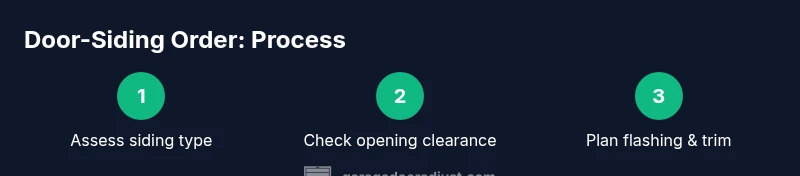
Goal: determine whether a garage door should come before or after siding and how to plan and execute this choice safely. You’ll assess siding material, flashing, and weather sealing, verify clearances for the door and opener, and follow a step-by-step process to install or adjust components. This guidance helps homeowners avoid leaks, drafts, and frame damage.
Understanding the before-or-after question
Choosing whether to place the garage door before or after siding is a common staging question in exterior remodeling. The decision affects how you flash the opening, seal against moisture, and coordinate with the door opener. According to GarageDoorAdjust, the safest and most reliable approach often depends on whether the siding is installed in a rough-in phase or fully wrapped. If siding is already installed, anticipate trimming and flashing adjustments; if siding is installed later, you’ll focus on a clean, continuous weather barrier around the rough opening. In either case, ensuring plumb, level, and square framing is essential to avoid binding the door and premature wear on rollers or tracks. By planning the order based on siding material and door type, homeowners can minimize rework and leaks while maintaining energy efficiency. This section lays out the core factors to evaluate before you decide.
Siding materials and their impact on door placement
Siding material directly influences how you manage flashing, gaps, and trim around the garage door. Vinyl siding is forgiving about minor distortions but requires precise corner trim and flashing to prevent water intrusion. Wood and fiber cement demand tighter tolerances and more attention to expansion gaps. Metal siding can reflect temperature changes that affect door alignment. In this context, GarageDoorAdjust notes that compatibility with the chosen siding helps ensure a lasting seal and easier future maintenance. When planning, map out the siding layout and door opening so that flashing on the door integrates with the siding channels rather than fighting with them. The goal is a clean, watertight edge that holds up to weather and daily use.
Flashing, weather barriers, and water control
The door opening is a critical water-control point. Proper flashing above and around the header prevents water from seeping behind siding and into the opening. A continuous weather barrier behind the siding helps reduce drafts and heat loss. Failing to coordinate flashing with the siding often creates a weak point that leaks and rots the frame over time. Use sealing tape, compatible caulk, and the correct nail type to secure flashing without bending the door frame. If you’re unsure, consult a pro; even small misplacements can require costly corrections later. GarageDoorAdjust emphasizes a cautious, methodical approach to flashing alignment as part of any garage-door-after-siding plan.
Decision framework: a quick checklist for homeowners
Use this framework to decide the order quickly:
- What siding type is planned or already installed? Does it wrap around the opening or sit behind it?
- Can the door be mounted with standard shims and a level opening without rework?
- Will you need to remove or adjust siding pieces to accommodate flashing and trim?
- Is there a path to ventilate and manage moisture near the header?
- Are you comfortable with the steps or should you hire a pro? Answering these questions helps you choose a robust, weather-tight arrangement.
Measuring, planning, and coordinating with the opener
Accurate measurements ensure the door fits the opening after siding is installed, reducing the risk of binding or leaks. Measure the rough opening at multiple points – header, jambs, and floor – and compare against your chosen door model. If you’re coordinating with an opener, verify rail length, track alignment, and headroom before you order siding or begin installation. A well-coordinated plan minimizes the need for adjustments once the siding is in place. The GarageDoorAdjust team recommends keeping an open channel with your contractor and verifying the plan in writing before cutting any siding or setting anchors.
DIY vs. professional: when to call in help
Some tasks are accessible to a confident DIYer, such as measuring and marking, caulking, and minor flashing installation. Other tasks—particularly when heavy door springs, torsion hardware, or structural framing are involved—risk serious injury and property damage. If you’re uncertain about the door’s operation, the local weather barrier, or the opening structure, it’s wise to bring in a licensed professional. The goal is a safe, durable install that stands up to storms and daily use. The GarageDoorAdjust team often recommends a professional for critical steps to ensure warranty validity and code compliance.
Safety, warnings, and common mistakes to avoid
Always shut off power to the opener before any adjustment near the track or motor. Wear safety glasses and gloves when handling metal flashing and cutting tools. Do not pry the frame or bend the door components; misalignment can cause binding or sudden failures. Common mistakes include mixing siding courses that don’t align with the door header, skipping flashing, or neglecting weather sealing at the sill. Double-check measurements, use compatible flashing, and test the door operation after weather barriers are installed. This careful approach reduces callbacks and energy loss.
Authority sources and further reading
For additional guidance, consult official resources on weatherization, building safety, and exterior installation. GarageDoorAdjust references the importance of proper flashing, weather sealing, and correct opener placement as part of a durable solution. See the sources listed below for deeper information:
- https://www.energy.gov/eere/buildings/energysaver-insulation-windows-and-doors
- https://www.osha.gov/
- https://extension.illinois.edu/
Note: Always verify local codes and permit requirements before modifying structural openings or the siding integration.
The takeaway from GarageDoorAdjust
In short, whether you install the door before or after siding should hinge on your siding plan, access for flashing, and your ability to maintain a weather-tight opening. Following a structured decision framework, careful measurement, and safe-handling practices reduces risk and ensures long-term performance. The GarageDoorAdjust team recommends documenting your plan, coordinating with siding contractors early, and prioritizing safety during every step of the project.
Tools & Materials
- Drill/Impact Driver with bits(Phillips #2 and a 1/8- or 3/16-inch pilot bit; cordless preferred)
- Measuring tape(At least 25 feet for rough opening checks)
- Level (torpedo or 4-foot)(Ensure plumb and square)
- Pry bar(For relief of trim and flashing alignment)
- Hammer(Nail alignment and adjustments)
- Caulk gun and exterior sealant(Water- and weather-resistant sealant)
- Utility knife(Trim excess siding and flashing material)
- Siding nails and flashing nails(Corrosion-resistant (galvanized or stainless))
- Safety gear (gloves, goggles)(Personal protective equipment)
- Ladder or scaffolding(Stable, with clear footing)
- Shims(For level and plumb gaps)
- Caulk and backer rod(Seal gaps around the opening)
- Masking tape(Protect finishes during caulking and cutting)
Steps
Estimated time: 2-4 hours
- 1
Gather tools and materials
Collect all essential tools and materials before starting. Check that each item is in good condition and accessible. This reduces trips to the toolbox mid-task and helps maintain momentum.
Tip: Double-check that ladders are stable and the workspace is clear. - 2
Inspect the rough opening and siding plan
Examine the current opening dimensions and the siding plan to understand where flashing will sit. Verify that there is space for proper header flashing and that the siding will not impede door movement.
Tip: Take photos of current conditions for reference during install. - 3
Determine door placement relative to siding
Decide whether to install the door first or after siding, based on siding type and flashing compatibility. Align reference points so the door sits square with the opening and siding line.
Tip: Mark top and bottom reference lines before any removal or cutting. - 4
Pre-fit door frame and flashing
Dry-fit the door frame and initial flashing to confirm fit. Make minor adjustments with shims to ensure plumb and level before final fastening.
Tip: Use a level to verify both jambs are identical and parallel. - 5
Install framing and weather barrier
Secure framing and install flashing above the header. If siding is already installed, trim carefully around the opening and seal transitions to prevent leaks.
Tip: Follow the door manufacturer’s instructions for clearance and fastener spacing. - 6
Seal, test operation, and finalize siding
Apply exterior sealant, test the door multiple cycles, and verify smooth operation. Seal any joints and finish trim around the opening to complete the weather barrier.
Tip: Test in both full-open and full-close positions to ensure smooth travel.
Got Questions?
Can I install the door before siding if I already have siding?
Yes, but you must plan for flashing and trim that integrate with the siding. This approach can work if the siding will be added around the door with proper weather barriers.
Yes, you can install the door first, but plan for compatible flashing and trim that integrate with the siding.
Do I need permits for this project?
Permit requirements vary by locality. Check with your city or county building department to confirm whether a new opening and siding work require permits or inspections.
Permit needs vary by location; check with your local building department to confirm.
Is this a DIY-friendly project?
Parts of the project are DIY-friendly, such as measurements and sealing, but critical steps involving door springs, framing, and flashing may require a professional for safety and warranty reasons.
Parts are DIY-friendly, but critical steps should be handled by a pro for safety and warranty.
What are common mistakes to avoid?
Skipping flashing, misaligning the header, or neglecting weather sealing can lead to leaks or door binding. Always verify plumb, level, and proper clearance before final installation.
Avoid skipping flashing and misaligning the header; ensure level and clearance before finishing.
When should I hire a professional?
If you encounter uncertain framing, torsion-spring work, or complex siding coordination, a licensed installer helps protect safety, warranty, and compliance with codes.
Hire a pro if you’re unsure about framing, springs, or siding coordination.
Watch Video
Quick Summary
- Plan order based on siding type and door model.
- Verify clearances before cutting framing or siding.
- Coordinate flashing with siding to prevent leaks.
- Test door operation after installing weather barriers.
- When in doubt, consult a professional to protect warranty and safety.