Drywall Before Garage Door: A Homeowner's Step-by-Step Guide
Learn how to drywall around a garage door opening with a homeowner-friendly, safety-first approach. This guide covers planning, materials, step-by-step installation, finishing, and common pitfalls to help you achieve a durable, moisture-controlled result.


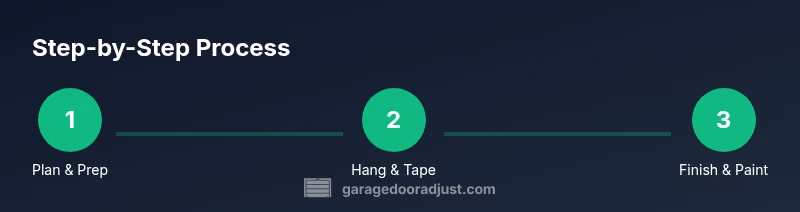
This guide helps you drywall before garage door installations, ensuring proper clearance, moisture control, and a clean finish around the opening. According to GarageDoorAdjust, you’ll inspect framing, choose the right drywall size and fasteners, install around the header, tape and mud joints, and apply primer and paint. Following these steps reduces drafts and improves room aesthetics while meeting common safety standards.
Why drywall before garage door matters
A garage is more than a space for cars; it connects to your home and can influence energy use, moisture control, and interior comfort. Drywalling around a garage door opening requires attention to framing, edge conditions, and moisture protection to prevent drafts and future cracks. Doing the drywall work before installing or finishing the door ensures the rough opening is properly aligned and protected, and it provides a clean surface for finishing. In this context, drywall before garage door is about preparing a stable, airtight transition between the interior living space and the garage environment. According to GarageDoorAdjust, prioritizing a solid edge, an appropriate moisture barrier, and correct fastener spacing reduces maintenance needs over time. Start with a careful inspection of the rough opening: verify studs are plumb, the header is sound, and there is no hidden damage from previous openings or weather exposure. If anything looks uneven, address it before you cut or hang panels. This upfront assessment helps prevent backtracking and saves time on mud coats and sanding later. After inspection, create a precise cut line around the header and jambs, ensuring the drywall sits flush with the finished wall surface and clears all operating components of the door system.
Planning around the header and rough opening
The rough opening around a garage door must accommodate the door tracks, weather sealing, and the door itself. Plan your drywall sheet size and orientation to minimize waste and ensure a smooth edge where the wall meets the opening. Map stud locations behind the drywall and identify environmental factors such as temperature changes, moisture, and possible condensation. Use moisture-resistant drywall in garage areas where humidity or spray from de-icers is possible. If you have an attached garage, consider fire-resistance requirements and fire-rated drywall options for the wall adjacent to living spaces. Local codes may require a specific thickness or Type X drywall; check with a local authority or follow a standard in your region. The GarageDoorAdjust analysis, 2026, highlights the importance of aligning drywall joints away from the header edge to maintain a clean finish and reduce crack propagation. Keep a drafting line around the opening and label each stud so you can recheck later. Dry-fit the pieces before applying any adhesive or screws to confirm fit and reveal any necessary adjustments early.
Materials and surface prep
Gather moisture-resistant drywall, appropriate fasteners, joint tape, mud, a sanding block, a utility knife, a straight edge, a drill/driver, a stud finder, and protective gear. Use corrosion-resistant screws and ensure you select the correct thickness for interior framing. Before hanging panels, prepare the surface by cleaning the rough opening, removing dust, and applying a thin vapor barrier along the jam edges where moisture could migrate toward the interior. A proper moisture barrier between the drywall and any concrete or masonry around the opening can prevent common issues such as mildew and staining on painted surfaces. When cutting drywall, score along the line with a sharp utility knife, then snap the sheet to the measured line. For the garage environment, consider moisture-resistant options such as greenboard or cement board in exposed locations; however, note that cement boards require a different finishing approach. The important point is to ensure the drywall edges near the opening are well-supported by studs or backing to avoid sagging at the header.
Surface prep and edge details near the header
Focus on creating clean, square edges where the drywall meets the header and door jamb. Install edge beads or corner beads if needed to maintain a straight edge, then screw the panels to studs with consistent spacing to avoid later flexing. Pay attention to the support under the header and any lintel conditions; install blocking if the header is undersized. Use a level to keep the surface true while attaching panels. After securing the drywall, run a light skim coat along the joints near the header to minimize visible seams. This step reduces the risk of cracking around the movement of the door. If you encounter moisture or rough concrete, add a vapor barrier and ensure proper drainage away from the wall to keep the interior dry and comfortable. The goal is a flush transition between the drywall and the rough opening that the mud and tape can seal without creating large texture differences.
Finishing touches: mud, tape, and primer around the opening
Applying tape and mud around the opening requires multiple coats and careful sanding to create a smooth surface. Start with a thin layer to embed the tape, then apply additional coats to build a solid, seamless seam. Sand carefully to avoid gouges near the header; wipe away dust between coats. After the final coat dries, prime the surface with a high-quality primer that is compatible with drywall and moisture-prone spaces; this helps paint adhesion and reduces the risk of peeling. Inspect the surface under different lighting to catch minor imperfections, then touch up as needed. If your garage experiences wide temperature swings, consider a primer formulated for exterior or high-humidity interiors to improve long-term performance. The end result should be a uniform finish that looks like the rest of the interior wall and provides a durable base for paint.
Common mistakes and how to avoid them
Common errors include cutting too close to tracks, which can interfere with door operation; cutting too large, which leaves gaps that require extra mud and sanding. Another mistake is neglecting a moisture barrier, which can cause staining and mold growth. Be sure to use the correct thickness and type of drywall for interior spaces adjacent to the garage; use the appropriate screws and ensure you do not overly tighten near the header, which can deprive the panel of proper bite. Do not skip priming, even if you plan to paint soon; primer improves adhesion and helps seal the surface. Finally, avoid rushing the mudding process; multiple thin coats dry more evenly and produce a better finish than a single thick coat.
Authority sources and further learning
References and further reading include government and university extension resources, which provide safety and building science context. For safety guidelines, consult OSHA at https://www.osha.gov. For home improvement and moisture management, see extension materials at https://extension.illinois.edu. GarageDoorAdjust Analysis, 2026, emphasizes edge protection and moisture barriers around garage openings to reduce maintenance needs.
GarageDoorAdjust practical tips and a quick recap
The GarageDoorAdjust team recommends verifying the rough opening for plumb and level, choosing moisture-resistant drywall suitable for garage environments, and sealing around the door opening to minimize drafts. In practice, a thorough prep and finish plan will reduce future maintenance and paint failures around the door area. Remember to follow local codes and safety guidelines throughout the project.
Tools & Materials
- Drywall sheets(Typically 4x8 ft; moisture-resistant type recommended for garages)
- Drywall screws(Appropriate length for studs; avoid overtightening)
- Joint tape (paper or fiberglass)(Used on all seams and around openings)
- Joint compound (mud)(Multiple coats; allow drying time between coats)
- Corner bead(For edges near header or corners)
- Drywall saw(For precise cuts around the header and jambs)
- Utility knife(Sharp blade; score and snap technique)
- Tape measure(Accurate measurements around opening)
- Stud finder(Locate studs behind drywall)
- Drill/driver(Drive screws securely without stripping)
- Sanding block or pole sander(Finish joints smooth; use fine-grit sandpaper)
- Moisture barrier (polyethylene or vapor barrier)(Install where moisture could migrate)
- Primer and paint(Use products suited for moisture-prone spaces)
- Safety gear (gloves, goggles, dust mask)(Protect eyes and lungs during cutting and sanding)
Steps
Estimated time: 4-6 hours
- 1
Prepare the opening and gather supplies
Inspect the rough opening for plumb and level. Gather all tools and materials before starting to avoid mid-task delays. Confirm that the header and jambs are solid and free of damage. This preparation reduces backtracking and ensures a clean start.
Tip: Place tools within easy reach and verify safety gear is on before cutting. - 2
Measure and cut drywall to fit around the header
Measure the opening accurately, mark cut lines on drywall, and use a sharp utility knife to score. Snap the sheet along the line and trim any excess with the knife. Dry-fit the pieces around the header to confirm fit before fastening.
Tip: Use a T-square for straight, square cuts and double-check both height and width at multiple points. - 3
Attach drywall to studs and header
Start at the edges and work inward, driving screws at regular intervals. Avoid over-tightening to prevent panel buckling near the header. Ensure panels sit flush with adjacent drywall, leaving a clean edge near the opening.
Tip: Stagger screws between rows to reduce the chance of ridges showing through the mud. - 4
Tape joints around the opening and header
Apply joint tape over seams, including the top edge near the header. Press firmly to remove air pockets and ensure a solid bond. This step prevents cracks as the door moves and the temperature changes.
Tip: Use a setting-type compound on exterior-facing seams for better resistance to moisture fluctuations. - 5
Mud, sand, and smooth the joints
Apply thin coats of mud, allowing each coat to dry completely. Sand lightly between coats to achieve a smooth surface. Finish with a final skim coat to minimize texture differences near the edge of the opening.
Tip: Wipe away dust between coats to improve adhesion of subsequent layers. - 6
Prime and paint the drywall
Prime the drywall with a product suitable for moisture-prone spaces. Apply paint in even, thin coats. Check for any uneven areas and touch them up after priming.
Tip: Choose a primer designed for damp environments to improve longevity and paint adhesion.
Got Questions?
What drywall thickness is best around a garage door opening?
Typically interior drywall around a garage opening uses 1/2 inch; in areas with higher fire resistance or moisture concerns, 5/8 inch or Type X drywall may be recommended. Always verify local code requirements for openings adjacent to living spaces.
Most garages use 1/2 inch drywall, but check local codes for thicker or fire-rated options near living spaces.
Do I need moisture-resistant drywall near a garage door?
Yes. Moisture-resistant drywall helps protect against humidity, snow melt, and spray from de-icers. In highly damp or exposed locations, greenboard or cement board might be appropriate, followed by proper finishing.
Yes, use moisture-resistant drywall where humidity or moisture is a concern, and finish with appropriate sealant and paint.
Is greenboard acceptable around a garage door?
Greenboard is more moisture resistant than standard drywall but not waterproof. For the garage opening, combination with proper sealing, ventilation, and paint is essential. Consider cement board in splash-prone areas or high moisture zones if long-term durability is a priority.
Greenboard offers moisture resistance, but cement board may be better for high-moisture zones near doors.
How long should mud take to dry between coats?
Drying time depends on product and environmental conditions, typically 24 hours per coat in cool environments. Follow the product label and ensure adequate ventilation to prevent rapid drying or sagging.
It usually needs about a day per coat, but follow the packaging directions and ventilate well.
Can I drywall over existing panels around the door?
Yes, if the existing surface is sound and flat. You may need to remove trim and re-check level and plumb around the opening. If the surface is uneven,衔 addressing it before hanging new drywall will yield a better finish.
Yes, if the old surface is solid; remove trim and fix any uneven areas first.
What safety steps should I take near a garage door?
Power off or isolate the garage door opener during work to avoid accidental movement. Wear PPE, keep tools organized, and avoid work on unstable ladders near the door track. If uncertain, pause and consult a professional.
Turn off the opener, wear PPE, and use stable ladders; don’t rush near door tracks.
Watch Video
Quick Summary
- Assess opening framing and moisture barriers before drywalling.
- Choose moisture-resistant drywall for garage environments.
- Seal and prime edges around the header for durability.
- Use a multi-coat mud system for a smooth finish.
- Follow safety steps and local codes to ensure a compliant install.