Garage Door 6 Panel Repair and Maintenance Guide
A comprehensive, step-by-step guide to diagnosing and repairing common issues with a six-panel garage door. Learn safety, tools, troubleshooting, and maintenance to keep your door operating smoothly.


According to GarageDoorAdjust, a typical six-panel garage door relies on careful balance and proper weather sealing to function reliably. This guide shows how to safely diagnose common faults—balance, track alignment, weather stripping, and opener issues—and provides a clear, tool-ready workflow you can follow to restore smooth operation without replacing the entire door. You’ll learn a safe diagnostic sequence, the exact tools you’ll need, and practical steps you can perform to fix everyday problems.
Overview of the six-panel design and how it works
A six-panel garage door uses a balanced, segmented construction. The panels alternate between raised and recessed sections, creating a sturdy shell that resists bending under wind and pressure. Most residential six-panel doors are sectional, composed of horizontal sections connected by hinges and rollers that ride in metal tracks. The door’s weight is counterbalanced by torsion springs or extension springs, which take most of the load so you can raise or lower it with a light push or with a garage door opener. The tracks guide the door as it moves from horizontal to vertical positions, and the weather seal at the bottom helps keep out drafts and moisture. Some doors are insulated for energy efficiency, while others are uninsulated for a lower price tag. Regardless of insulation, proper alignment and clean seals are essential for quiet operation and longevity. Understanding these parts helps you diagnose issues without guessing at age or quality.
Signs your six-panel door needs attention
Look for changes in how the door moves or sounds. If the door feels heavy, binds, or stops mid-travel, something is out of balance or obstructed. Unusual creaks, grinding, or rattling often point to loose hardware or worn rollers. Visual clues matter too: gaps between panels, a leaning door, or tracks that appear bent or tilted. If the bottom seal is crushed or the weatherstripping is cracked, drafts can enter and reduce efficiency. Intermittent opener behavior, slow response to the wall switch, or a door that reverses before closing are signals the system may need recalibration or repair. Note seasonal effects—extreme heat or cold can magnify existing wear. Approaching issues early saves time and prevents more extensive damage later.
Safety first: powering down and securing the area
Before touching any moving door, unplug the garage door opener from the wall outlet and turn off the automatic control from inside the vehicle. Do not place hands near tracks or in the hinge area while the door is moving. Clear the area of children and pets and keep a flashlight handy in case lighting is poor. If the door is already stuck, use a sturdy ladder or step stool from a safe distance to inspect components with the door in a partially open position only if the door can be stabilized. Always wear safety glasses to shield your eyes from dust, and use only tools designed for mechanical work on doors. These precautions reduce the risk of pinching fingers, falling components, and unexpected door movement.
Diagnosing balance and track alignment
Balance is a key factor in smooth operation. With the door closed, unplug the opener and raise the door manually to about chest height; if it stays put, balance is likely okay, if it drops, springs or cables may be failing. Inspect both tracks for dents, rust, or misalignment; tracks should run parallel and be perfectly vertical when viewed from the top. Tighten loose brackets and ensure mounting screws are snug. Roller wear is another common culprit—examine rollers for flat spots and rotation. Clean the tracks to remove debris that can create resistance. These checks help identify whether the issue is mechanical or related to the opener.
Testing the opener and limit switches
Test the system with the door in a fully closed position. If the opener stops too early or too late, the limit switches may need adjustment. With the door open, re-seat safety photo eyes and ensure no obstruction blocks the sensor beams. If the remote control behaves erratically, reprogram the remote or replace the battery. Never bypass safety sensors or remove protective covers. These tests confirm whether the problem is the control system or the mechanical balance of the door.
Repair strategies you can safely perform
If you notice loose hardware, tighten brackets, hinges, screws, and track mounting points. Realign a misaligned track by loosening the mounting screws, tapping the track gently into position, and retightening. Do not attempt to adjust torsion springs without professional training and proper equipment—these springs carry extreme tension and can cause severe injury. Replacing worn rollers or weather seals is generally within DIY reach, but heavy doors require a second pair of hands. Keep a clean work area and use a ladder stabilizer to prevent slips.
Replacing weather stripping and weather seal
Remove the old bottom seal by pulling it free from the door's bottom groove. Measure the width of the door and select a compatible, flexible weather seal. Cut the new seal to length and press it firmly into the channel, ensuring a tight seal all along the bottom. Inspect the sides for any gaps and install additional weather-stripping as needed. A good seal reduces drafts and improves energy efficiency, especially in poorly insulated garages.
Lubrication and maintenance routine
Lubricate moving parts, including hinges, rollers (if they are metal), and exposed track sections, using a silicone-based lubricant. Wipe away excess lubricant to prevent dust buildup. Do not lubricate the torsion springs or the opener drive chain. Schedule twice-yearly checks to tighten fasteners and inspect rollers for wear. Regular maintenance extends life, quiets operation, and reduces the likelihood of sudden failures.
When to call a professional
If you hear grinding from springs, notice significant misalignment, or the door cannot be balanced by hand, contact a licensed garage door technician. Problems involving torsion springs, cables, or major structural damage are best left to pros who have the right tools and training. A professional assessment can prevent injuries and ensure the door complies with safety standards. If you’re unsure, err on the side of caution and seek expert help sooner rather than later.
Preventive maintenance checklist for a six-panel door
- Inspect tracks and rollers for wear and debris; clean and tighten as needed
- Check balance through manual lift and verify it stays in place
- Test safety sensors and reprogram remotes if needed
- Inspect weather stripping and replace if brittle or cracked
- Lubricate moving parts with silicone-based product; avoid the springs
- Confirm door stops and limit settings are correct after any adjustments
- Schedule semiannual professional service for a full safety check
Tools & Materials
- Safety glasses(Protect eyes from debris and pinch points)
- Sturdy ladder(Reach tracks and hinges safely)
- Adjustable wrench(For brackets and hardware)
- Screwdrivers (Phillips & flathead)(General fastener tasks)
- Pliers (needle-nose)(Grip small parts and wires)
- Torque/Hex keys(For set screws on brackets)
- Silicone-based lubricant(Lubricate hinges and tracks; not springs)
- Rags or old towels(Clean surfaces and wipe excess lubricant)
- Rubber mallet(Gentle nudges to avoid denting)
- Level and tape measure(Check track alignment and door height)
- Weather seal replacement kit(Optional if seal needs replacement)
Steps
Estimated time: 60-120 minutes
- 1
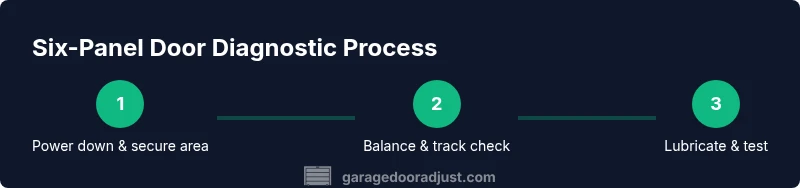
Power down and secure the area
Disconnect the opener and verify the door cannot move unexpectedly. Clear the area of people, pets, and obstacles. This initial action reduces the risk of injury during inspection.
Tip: Always unplug the unit before touching any moving parts. - 2
Test manual balance
With the door closed, lift it halfway and release; it should stay in place if balanced. If it drops or rises, there may be an issue with springs or cables that requires further evaluation.
Tip: Do not force the door beyond its natural range. - 3
Inspect tracks for damage
Look along both tracks for dents, bends, or loose mounting points. Tracks should run parallel and vertical when viewed from the front; looseness can cause binding or misalignment.
Tip: Use a level to confirm vertical alignment before tightening. - 4
Check hardware integrity
Tighten loose screws and brackets on rails, hinges, and supports. Wobbly hardware is a common cause of noise and misalignment.
Tip: Avoid overtightening; apply consistent torque across fasteners. - 5
Test the opener response
Reconnect power and test with the opener. Observe if the door reverses early, stops late, or fails to respond to remote commands.
Tip: Reprogram remotes if responsiveness is intermittent. - 6
Assess balance after adjustments
Manually operate the door again to confirm improved balance and smoother travel. If issues persist, springs or cables may require pro service.
Tip: Document any persistent symptoms for the technician. - 7
Lubricate moving parts
Apply silicone-based lubricant to hinges, rollers, and track joints. Wipe away excess to prevent dust buildup.
Tip: Do not lubricate torsion springs or the opener chain. - 8
Replace weather seal if needed
Install a fresh weather seal along the bottom to prevent drafts and moisture intrusion. Ensure a snug fit across the full width.
Tip: Cut seals to length and avoid gaps at corners. - 9
Final safety check
Test auto-reverse by placing a light object in the door path. Confirm sensors are aligned and unobstructed.
Tip: Keep a clear one-foot buffer zone at the door path during testing. - 10
Document and schedule maintenance
Record what you checked and any parts replaced. Schedule a semiannual inspection to maintain safety and performance.
Tip: Set calendar reminders to avoid forgetting routine checks.
Got Questions?
What is a six-panel garage door?
A six-panel garage door is a sectional door made of six distinct panels that hinge together. It moves along tracks and is counterbalanced by springs to reduce effort. The door can be insulated or uninsulated depending on the model.
A six-panel door has six hinged panels that slide on tracks and are balanced by springs, making it easier to lift. It may be insulated or not.
Should I adjust springs myself?
No. Torsion springs are under high tension and can cause severe injury if mishandled. Spring adjustments should be performed only by trained professionals with proper safety equipment.
No—springs are dangerous to handle yourself. Call a pro for spring adjustments.
How can I tell if my door is balanced?
Unplug the opener and lift the door manually. It should stay where you leave it; if it falls or rises, the balance is off and requires inspection of springs or posts.
If you can hold the door in place when you lift it, it’s balanced; otherwise, call for service.
What maintenance does a 6-panel door need?
Regularly inspect tracks and hardware, lubricate moving parts, test safety sensors, and replace weather seals as needed. Keep panels clean and free of debris.
Check the tracks and hardware every few months, lubricate moving parts, and test safety sensors.
Why is my door noisy?
Noise often means loose hardware or worn rollers. Tightening brackets or replacing worn components can quiet operation. Avoid over-lubricating and check alignment first.
Noise usually means loose parts or worn rollers; fix those first.
Can I replace the weather seal myself?
Yes, replacing a weather seal is typically a straightforward DIY task. Select a seal that fits your door width and follow the manufacturer’s installation instructions.
You can usually replace the weather seal yourself; just measure correctly and install per instruction.
Watch Video
Quick Summary
- Understand the six-panel design and its balance system
- Identify common symptoms early to prevent bigger issues
- Prioritize safety and avoid risky spring adjustments
- Follow a step-by-step checklist for diagnosis and basic repairs
- Know when to call a pro to ensure safety and code compliance