Garage Door Panel Repair: A Homeowner's Step-by-Step Guide
Learn how to diagnose, repair, and replace damaged garage door panels with an expert, step-by-step approach. Safety, tools, and practical tips from GarageDoorAdjust for a durable, balanced door.


You're about to perform garage door panel repair to restore a damaged section and prevent further door imbalance. This guide covers safety checks, when to replace versus repair, and a step-by-step approach to removing a damaged panel, aligning the door, and reinstalling a replacement. You’ll need basic tools, a steady ladder, and a helper for heavy panels.
Understanding garage door panel repair
Garage door panels serve as both the outer protection for the door’s internal components and the visual face of your home. When a panel is dented, cracked, or warped, it can affect door balance, wind resistance, and weather sealing. According to GarageDoorAdjust, the decision to pursue panel repair hinges on damage pattern and the integrity of the underlying frame. If the damage is limited to the exterior skin and the core structure remains sound, panel repair is often a viable, cost-saving option. This section explains how to assess damage, distinguish cosmetic issues from structural problems, and determine whether repair or replacement is the better path. You’ll learn to recognize telltale signs like deep creases, flexing, or obvious frame misalignment that would make a repair unreliable. With the right approach, you can restore appearance and function while maintaining safe operation and energy efficiency. Remember that even cosmetic repairs can affect door balance, so proceed with a careful, measured plan rather than rushing to an aesthetic fix. The key is preserving the door’s alignment and ensuring the panel itself is securely attached to a solid frame.
Assessing damage and deciding between repair vs replacement
Damage to a garage door panel can range from shallow cosmetic dents to deeper structural compromises. The first rule of thumb is to assess whether the interior skin, foam core, and backing hardware are intact. If you can press on a dent and feel hollow or see exposed materials, or if you detect warping in the panel’s edges, consider replacement rather than repair. In other cases, cosmetic repairs—like dent pull techniques, light sanding, and repainting—can restore appearance without compromising safety or function. GarageDoorAdjust analysis shows that the majority of minor surface damage can be addressed without removing the entire door, provided the adjacent panels and track are undisturbed. However, if you notice cracks that extend through the skin or any bending of the track, a full panel replacement and possible frame inspection may be warranted. Important follow-up questions include: Is the panel independently fastened, or is it connected to a structural rail? Are weatherstrips damaged or compromised? If moisture has penetrated, there’s a greater risk of corrosion and long-term failure. In cases of uncertain damage, err on the side of replacement to preserve safety and door balance.
Safety first: precautions before you start
Safety is non-negotiable when working on a garage door. Before any inspection or repair, disconnect power to the opener to prevent unexpected movement. Maintain a clear work area and secure the door with clamps or locking pliers to keep it from lowering. Wear eye protection, gloves, and sturdy footwear, and keep children and pets away from the work zone. If the door is under high spring tension or if you’re unsure about the spring system, stop and call a professional—tensioned springs can cause serious injury. Ensure you have a partner to help handle heavy panels, especially when removing or installing a new section. Finally, verify that all fasteners and mounting hardware are compatible with the panel and frame. The GarageDoorAdjust Team emphasizes that a conservative approach—treating any sign of structural compromise as a potential replacement scenario—helps prevent dangerous failures during or after repair.
Tools, materials, and preparation
Having the right tools and parts on hand makes repairs smoother and safer. Gather protective gear (safety glasses, gloves), a stable ladder, a basic socket/set, screwdrivers, pliers, and tape measure. If you plan to replace a panel, you’ll need a matched replacement panel, weatherstripping, and possibly new mounting hardware. Clean the work area to remove dust and moisture, and inspect adjacent panels and tracks for alignment issues that could reintroduce damage after repair. Document the panel’s condition with photos for reference when sourcing a replacement. If you’re working with heavy materials, consider an additional helper and a wheel dolly or cart to move the panel safely. Always double-check the door’s balance by manually lifting it halfway and ensuring it stays put. For homeowners who prefer a conservative approach, DIY repair is feasible for cosmetic panel damage, but for anything structural or uncertain, consult a pro to avoid compromising safety.
Step-by-step overview for repair (high-level)
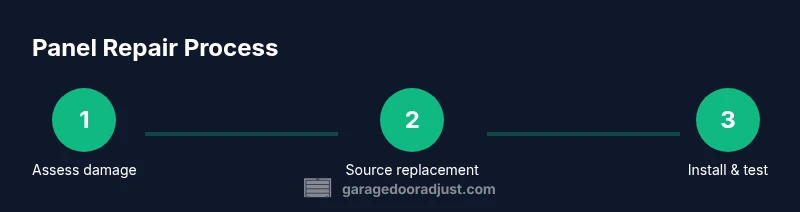
This section provides a concise workflow you’ll expand on in the dedicated Step-by-Step block and the tools/materials section. Start by securing the door and disconnecting power, then assess whether the damage is cosmetic or structural. If repairing, you may address surface dents, repaint, and reseal the area; if replacement is required, source a panel that matches size, thickness, and color. Carefully remove the damaged panel, inspect neighboring rails and tracks, and prepare the replacement panel, including weatherstripping as needed. Reinstall in the correct orientation, reattach hardware, and re-engage the opener. Finally, test the door’s balance and movement to confirm proper operation and safety. The goal is a seamless blend of form and function with no binding or gaps.
Common mistakes and how to avoid them
DIY repairs often fail when homeowners rush or skip safety steps. Common mistakes include not disconnecting power, failing to secure the door, choosing the wrong replacement panel, and neglecting track or roller inspection. Another frequent error is neglecting weatherstripping or misaligning panels, which can cause air leaks and additional wear. Always verify the door’s balance by manually lifting to the midpoint and listening for any binding. Take photos before removing parts to ensure you can source exact replacements and reassemble correctly. If any step feels uncertain, pause and seek professional guidance rather than risking injury or additional damage. With careful planning and accurate matching parts, you can achieve a durable fix that maintains both safety and curb appeal.
Authority sources
- OSHA - Safety and use of power tools: https://www.osha.gov
- CPSC - Safe garage door guidelines for homeowners: https://www.cpsc.gov
- Consumer Affairs or Consumer Protection sources for home repair safety tips: https://www.consumer.ftc.gov
Tools & Materials
- Safety glasses(ANSI Z87.1 compliant)
- Work gloves(Grip and hand protection)
- Stable ladder(Locking feet; extend beyond panel area)
- Socket wrench set(Metric and standard sizes)
- Screwdrivers (Phillips & flat)(Flat-head for trim screws)
- Pliers (needle-nose and locking)(Grip and manipulate components)
- Tape measure(Accurate panel matching)
- Replacement panel (matched to model)(If damaged beyond cosmetic repair)
- Weatherstripping/Sealant(Restore weather seal if needed)
- Putty knife or trim removal tool(For panel edge lifting)
- Cleaning rags and solvent(Surface prep and paint prep)
Steps
Estimated time: 60-120 minutes
- 1
Prepare and secure the door
Power off the opener and block the door from moving. Set the door in the halfway position to minimize stress, and attach locking pliers to keep it stable during the repair. This initial preparation reduces the risk of sudden movement while you work.
Tip: Have a helper hold the ladder or panel while you position yourself at the seam to avoid dropping the panel. - 2
Disconnect power and release tension
Unplug the opener and disconnect all remote signals. Manually hold the door firmly and release any spring tension only if you’re trained to do so; otherwise, wait for a professional. This ensures the door won’t snap back during panel removal.
Tip: Never work near torsion springs unless you’re trained; a quick release can be dangerous. - 3
Remove the damaged panel
Unscrew or unclip the damaged panel from its frame, taking care not to bend adjacent panels. Support the panel as you detach fasteners to prevent it from falling and damaging nearby components.
Tip: Document screw positions with a photo to ensure correct reassembly. - 4
Inspect adjacent panels and frame
Check neighboring panels, tracks, rollers, and the frame for bending or wear. If the frame is misaligned or tracks are bent, you may need professional alignment or replacement parts beyond a single panel repair.
Tip: Look for subtle gaps between panels and any mis-seating in tracks. - 5
Prepare the replacement panel
If using a replacement, verify it matches length, width, thickness, and mounting points. Clean edges and apply weatherstripping if required to restore seal and energy efficiency.
Tip: Order the exact model match or bring measurements to the supplier to avoid mismatches. - 6
Install the new panel
Position the panel and secure it with the original hardware in the same pattern. Tighten evenly to avoid warping the panel during installation. Ensure the panel sits flush with its neighbors.
Tip: Work gradually, alternating fasteners to maintain even pressure. - 7
Reassemble hardware and align tracks
Reattach any trim and recheck the alignment of the tracks with a level. Tighten hardware firmly but avoid overtightening, which can strip threads or distort the panel.
Tip: Refer to your door’s manual for torque specs if available. - 8
Test operation and safety checks
Reconnect power and test the door from the wall switch and remote control. Listen for binding or rough stops, and confirm the door stays balanced when raised halfway. If anything feels off, stop and reassess before full operation.
Tip: Run a couple of full cycles slowly to confirm stability. - 9
Cleanup and final check
Remove tools, wipe surfaces, and store replacement parts properly. Take a final look at weatherstripping, seal gaps, and ensure no sharp edges remain exposed. A tidy workspace minimizes the chance of future accidents or damages.
Tip: Take a final photo of the completed panel for records.
Got Questions?
Can I repair a dented garage door panel myself, or should I replace it?
Cosmetic dents in non-structural areas can often be repaired by a homeowner if the core frame is intact. Deep cracks, warping, or frame damage usually require panel replacement and possibly frame realignment. If in doubt, consult a professional to prevent compromising safety.
Cosmetic dents can be DIY repaired if the frame is solid; deep cracks or frame damage usually needs a replacement and check by a pro.
What tools do I need for garage door panel repair?
Essential tools include safety glasses, gloves, a stable ladder, screwdrivers, a socket set, and pliers. If replacing a panel, have a correctly matched replacement panel and weatherstripping on hand. Always document screw locations for reassembly.
You’ll need basic tools like screwdrivers and pliers, plus a matched replacement panel if you’re replacing it.
How do I know if the door frame is damaged?
Signs of frame damage include bent tracks, misaligned gaps between panels, binding during operation, and excessive door movement when braked halfway. If you observe any of these, plan for frame inspection or professional alignment.
Look for bent tracks and misalignment; if you see binding, the frame may be damaged and should be checked.
Will repairing panels affect door balance and safety?
Yes. A misaligned or improperly reinstalled panel can throw off balance and create unsafe operation. After any repair or replacement, test balance by lifting to middle height and ensure smooth, stable motion.
Repair can affect balance; always test the door after repair for safe operation.
How long does a typical panel repair take?
A simple cosmetic repair can take under an hour, while a full panel replacement with realignment may take 1–2 hours depending on access and panel availability. Schedule time for safety checks and test runs.
Most small repairs are under an hour, but replacements can take longer depending on parts and access.
Should I hire a professional for panel replacement?
If the repair involves structural frame damage, torsion springs, or uncertain measurements, hire a professional. For cosmetic repairs with a matched panel and comfortable manual dexterity, a DIY approach is feasible.
Consider a pro if there’s frame damage or spring tension; DIY is possible for cosmetic fixes with care.
Watch Video
Quick Summary
- Assess damage before starting work
- Choose repair vs replacement based on structural integrity
- Prioritize safety and power disconnection
- Verify door balance after repair
- Source exact replacement parts when needed