2 Door Garage Repair and Maintenance Guide
A homeowner-focused guide to diagnosing, repairing, and maintaining a two-door garage setup. Learn safety, tools, step-by-step fixes, and preventive maintenance for reliable operation in 2026.


With this guide, you’ll diagnose and repair common issues in a two-door garage, covering both doors and their openers. You’ll learn how to safely identify misalignment, track binding, sensor errors, and balance problems; gather essential tools; and follow a step-by-step plan to restore smooth, safe operation for a 2 door garage.
Understanding the 2 door garage layout and common configurations
A two-door garage typically comprises two independently operating overhead doors, side-by-side, with a shared header above the opening. In many homes, each door has its own track, rollers, springs, and opener, though some installations use a single dual-panel door system. Recognizing this layout is essential because symptoms can arise on one side while the other remains unaffected. For homeowners troubleshooting a 2 door garage, the most common issues include misalignment, worn rollers, binding tracks, damaged weather seals, and opener faults. Start by noting which side is affected, how the door moves (up, down, or stays in place), and whether the issue occurs when the door is operated by wall switch, remote, or automatic opener. Documenting these details helps narrow the root cause and avoids unnecessary part replacements. Always assume the doors are under tension and treat them with caution until you confirm it’s safe to proceed.
Diagnosing the most frequent 2-door issues
Before you reach for tools, build a simple checklist. Check for rusted or bent tracks, loose mounting bolts, and uneven gaps at the jambs. Misalignment often shows as the door rubbing against the frame or a visible tilt when opening. For the opener, verify that the safety sensors align and the anti-pinch reversal works. Listen for unusual grinding or popping sounds, which can indicate worn rollers, broken cables, or weak torsion springs. If your doors move unevenly or stall mid-travel, test operation from both sides to determine if the problem is door-specific or opener-related. Remember to inspect weather-stripping; brittle seals can reduce efficiency and put extra load on the opener. A quick balance test—disconnecting the opener and lifting the door halfway to see if it stays put—provides a reliable hint about spring tension and overall door weight.
Safety-first checklist before any manual work
Garage doors are heavy and counterbalanced by springs. A misstep can lead to serious injury. Always disconnect power to the opener before touching any moving components. Use a sturdy ladder, gloves, and eye protection. Keep children and pets away from the work area and ensure the doorway opening is clear of obstacles. When releasing spring tension or attempting to adjust tracks, proceed slowly and never work with the door hanging only on its springs. If you’re unsure at any point, stop and consult a professional. Following a safety plan reduces the risk of personal injury and accidental door movement.
Visual inspection: tracks, rollers, hinges, and weather seals
Inspect each track for dents, burrs, or misalignment; a bent track can cause jamming and uneven wear. Rollers should spin freely—if you feel grinding or wobble, they’re likely worn and should be replaced. Hinges on each panel must be tight and undamaged; loose screws allow door panels to sag. Check the weather seals at the bottom; cracked seals let in dust and moisture and add friction. Finally, verify the header bearing and track mounting brackets are secure. Document any issues with photos; this helps when ordering replacement parts or consulting a pro. A clean, well-lubricated system lasts longer and operates more quietly.
Common opener faults and how to test
Test the remote and wall console, ensuring batteries are fresh and the transmitter is paired correctly. If the door only moves partially or reverses, inspect the safety sensors—dirty lenses or misalignment can trigger false reversals. Check the limit switches inside the opener and listen for the motor’s hum; a weak motor draws more current and stalls. If the receiver or circuit board shows scorch marks or overheating, consider replacement. When testing, always observe the door’s motion from a safe position, never stand underneath or in the doorway. A proper test confirms whether the issue is with the opener or the door mechanism.
Quick alignment checks for both doors
Place a level on the top horizontal panel and verify plumb alignment relative to the jambs. If one door drifts, loosen the mounting screws marginally and shift the door into true alignment; then retighten. Check that the bottom of the door evenly clears the floor by about a quarter inch (6 mm); adjust the track angle if needed. Verify that the rollers ride smoothly within the tracks and that there’s no rubbing on the weather strip. After alignment, reconnect the opener and run a test cycle ensuring the safety reversal engages properly.
When and how to lubricate properly
Use a light silicone-based lubricant on rollers, hinges, and tracks; avoid heavy greases that attract dirt. Apply a small amount—enough to lightly coat moving parts, then wipe away excess. Do not lube the torsion springs directly; most manufacturers recommend oiling or spraying at the pivot points where springs connect to drums. Lubrication reduces friction, lowers noise, and extends part life. Revisit lubrication every 3–6 months or after heavy use in inclement weather.
Routine maintenance plan for a 2 door garage
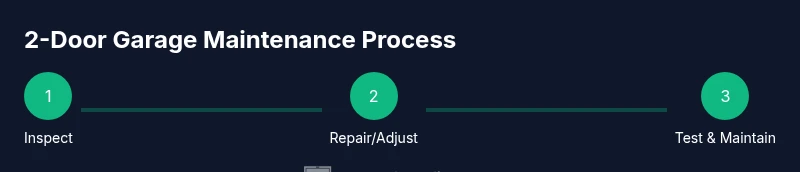
Create a simple schedule: monthly quick inspections; quarterly deeper checks; annual professional evaluation for springs and cables. Monthly: test balance by lifting doors manually, check weather seals, and listen for unusual noises. Quarterly: inspect tracks for alignment, tighten hardware, and test safety features. Annual: lubricate moving parts as described, replace worn rollers if necessary, and have a pro inspect springs and cables. Keep a log of maintenance tasks and part replacements to spot wear trends and forecast future repairs.
Troubleshooting flowchart and next steps
Start: Are the doors balanced and move smoothly by hand? If yes, test the opener; if no, fix balance first. Next: Do both doors have proper clearance and no track damage? If yes, test safety sensors; if no, fix track and seals. If the opener responds but doors won’t stay open, check springs and cables. If you’re unsure at any point, pause and seek professional help. A methodical approach minimizes risks and extends door life.
Tools & Materials
- Safety glasses(ANSI Z87.1 compliant; protect eyes from debris)
- Work gloves(Leather palms; grip and protect hands)
- Stepladder(2-3 steps; stable on firm surface)
- Wrench set(Combination wrenches; common sizes 1/4", 5/16", 3/8")
- Screwdrivers (Phillips and flat)(PH2 and flat-head; magnetic tips helpful)
- Lubricant (silicone spray)(Light spray on tracks, hinges, rollers; avoid overapplication)
- Rags or lint-free towels(Clean excess lubricant and wipe surfaces)
- Tape measure(Verify track clearances and door gaps)
- Replacement rollers/track repair kit(Only if wear or damage is observed)
Steps
Estimated time: Estimated total time: 45-75 minutes
- 1
Safety prep and power shutoff
Disconnect power to the opener at the wall terminal or breaker, then verify no movement is possible. Secure the area and place the door in a partially open, supported position if needed. This prevents accidental movement while you inspect components.
Tip: Always unplug before touching moving parts; double-check that the door is supported. - 2
Inspect tracks, springs, and hardware
Look for bent tracks, loose bolts, and worn rollers. Check springs for yaw or excessive gaps; do not attempt to adjust springs unless you’re trained, as they are under high tension.
Tip: Take photos of any misalignment before making adjustments so you can revert if needed. - 3
Test door balance without opener
Lift the door halfway by hand; if it stays put, balance is acceptable. If it rises or falls, the springs are not correctly tensioned and require professional service.
Tip: Do not rely on the opener for this test; use only manual balance checks. - 4
Align tracks and reseat rollers
Loosen a few mounting screws, adjust the track to be vertical, and retighten. Ensure rollers sit properly in the track with no rubbing. Repeat for the other door if present.
Tip: Small gradual adjustments are safer than large shifts; test after each tweak. - 5
Lubricate moving parts
Apply a light silicone-based lubricant to rollers, hinges, and the inside of tracks. Wipe away any excess to prevent dust buildup. Avoid lubricating torsion springs directly.
Tip: Lubrication schedule helps longevity; do it every 3–6 months or after heavy use. - 6
Reconnect power and test cycle
Plug the opener back in and run a full cycle from both the wall switch and remote. Verify safety reversing sensors work and doors stop if an obstacle is detected.
Tip: Always stand clear of the door’s path during testing; observe from a safe angle.
Got Questions?
Can I fix a broken torsion spring myself?
Torsion springs are under high tension and can cause severe injury if mishandled. Do not attempt to repair or replace torsion springs yourself unless you have professional training and proper equipment.
Torsion springs are dangerous; consult a pro for spring repairs.
What is considered a safe balance for a 2 door garage?
A door is considered balanced if it stays in place when lifted halfway by hand. If it moves up or down, the balance needs adjustment by a qualified technician.
Balanced doors stay put when lifted mid-travel.
How often should I lubricate the moving parts?
Lubricate moving parts every 3-6 months, or after heavy use or extreme weather. Use silicone-based products; avoid oiling torsion springs directly.
Lubricate every 3-6 months and after heavy use.
Is it safe to disconnect the opener for maintenance?
Yes, disconnecting the opener from power is a safe first step before manual inspection. Reconnect only after you’ve completed checks and the area is clear.
Yes—disconnect the opener, then test after repairs.
When should I replace tracks or rollers?
Replace bent tracks or worn rollers promptly to prevent further damage. If you see excessive noise, rubbing, or misalignment, part replacement is recommended.
Replace damaged tracks or worn rollers promptly.
What’s the best way to diagnose an opener vs door issue?
Test movement with and without the opener engaged. If the door moves freely by hand but the opener struggles, the issue is likely the opener settings or sensor alignment.
Test both with and without the opener to narrow down the cause.
Watch Video
Quick Summary
- Identify whether the issue is door- or opener-related.
- Prioritize safety and power shutdowns before work.
- Balance and track alignment are critical for long-term reliability.
- Follow a regular lubrication and inspection schedule.