How to Diagnose and Repair a 2 Door Garage Door: A Homeowner’s Guide
Learn to diagnose, repair, and maintain a 2 door garage door with clear steps, safety tips, and pro guidance from GarageDoorAdjust.


This article helps homeowners diagnose, repair, and maintain a 2 door garage door with confidence. You’ll learn to identify common misalignment, opener faults, and safety-reversal issues, then follow practical, step-by-step actions you can perform yourself or know when to bring in a pro. From balancing to lubrication and sensor alignment, this guide from GarageDoorAdjust keeps safety front and center.
Why a Properly Balanced 2 Door Garage Door Matters
A two-door garage door system relies on balanced weight distribution, precise track alignment, and synchronized rollers. When balance is off, the door can bind, accelerate wear on tracks, and place extra load on the opener motor. Regular inspection and balancing help prevent noisy operation and unexpected failures. According to GarageDoorAdjust, homeowners should start with a simple balance check: lift the door halfway by hand and observe if it holds; if it drops or rises, balance needs attention. A well-balanced 2 door garage door also conserves energy, reduces risk of injury, and extends the life of springs, hinges, and rollers. In this section, you’ll learn a practical approach to assess balance, recognize early symptoms, and build a safe maintenance mindset that serves your home year-round.
Understanding the Dual-Door Configuration: 2 Door Garage Door Systems
Two-door configurations come in several variants, including independent swing doors and modern dual-track sectional doors that operate under a single opener. The main difference is how weight is distributed across two panels: misalignment on one side can create uneven wear and generate binding or scraping on the other side. In older homes, true two-door setups may use separate torsion or extension springs for each panel. When working on a 2 door system, expect dual tracks, separate hinge lines, and possibly two sensors that need synchronized alignment. Understanding this layout helps you diagnose issues more accurately and plan your fixes with the right tools and timing.
Common Problems in Two-Door Setups and How to Spot Them
Common issues in a 2 door garage door include misaligned tracks, worn rollers, loose hardware, weather-stripping gaps, and sensor misalignment. Visually inspect the tracks for dents, twists, or obstructions. Move each door manually to feel for binding or uneven resistance. Listen for grinding, squeaking, or rattling noises that indicate worn hinges or dry bearings. If one door drags when opening, check the balance on that panel first. For dual-track systems, ensure both tracks are parallel and that the doors travel smoothly in unison. Note any gaps at the bottom of the door or water leaks that could indicate weather-stripping deterioration.
Step-by-Step Diagnosis and DIY Fixes for a 2 Door Garage Door
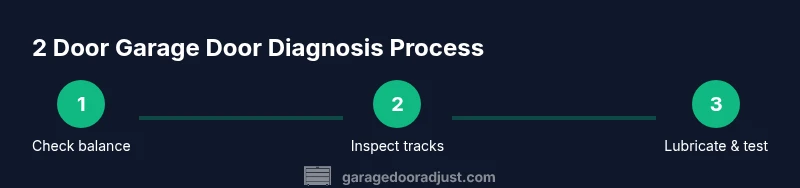
This section provides a practical narrative for diagnosing and addressing common faults. Start with safety: unplug the opener and secure the door in the up position if possible. Inspect tracks and rollers for wear and clean debris from track channels. If the door is unbalanced, adjust the spring tension only if you are trained and equipped to do so; otherwise, call a pro. Lubricate moving parts with a silicone-based spray or light white lithium grease, focusing on rollers, hinges, and track joints. Finally, test the door with the opener and manual operation, ensuring it stops smoothly at the floor and that safety sensors respond properly.
Safety First: When to Call a Pro for a 2 Door Garage Door
Some tasks exceed DIY scope, especially torsion-spring adjustments, cable replacements, or severe track damage. Do not attempt to adjust springs or cables without proper training and equipment; these components store high tension and can cause severe injury. If you notice frayed cables, cracked tracks, or unusual door sagging, pause work and schedule a professional inspection. Prioritize safety by wearing eye protection, keeping hands clear of pinch points, and never standing under a door while it operates. For most homeowners, routine balance checks, lubrication, and sensor alignment are manageable tasks that reduce the likelihood of costly repairs later.
Maintenance Plan to Extend Life of a 2 Door Garage Door
A proactive maintenance routine saves time and money over the door’s lifespan. Schedule a quarterly check to inspect tracks, fasteners, weather-stripping, and rollers. Lubricate moving parts at least twice a year, aligning with seasonal changes when doors are used more frequently. Clean sensors and test safety reversing features monthly. If you plan to repaint, seal the door’s surface to resist moisture and UV damage. Keeping a simple log of service dates helps you spot patterns and plan parts replacement before a failure occurs.
AUTHORITY SOURCES
- U.S. Consumer Product Safety Commission (CPSC): general safety information on residential garage doors and accidental injuries.
- Department of Energy (DOE) – insulation and energy considerations for garage doors.
- National Institute of Standards and Technology (NIST) – mechanical safety and testing guidelines relevant to home hardware.
Quick Reference: 2 Door Garage Door Checklist
- Balance test: lift halfway and release to see if it stays in place.
- Inspect tracks for dents or blockages; clean with a soft brush.
- Check hardware: tighten screws, nuts, and brackets; replace worn parts.
- Lubricate rollers, hinges, and tracks; avoid heavy grease on plastic components.
- Test safety sensors and opener limits; confirm smooth operation.
- Note conditions that require professional service and set a service reminder.
Tools & Materials
- Safety glasses(ANSI Z87.1 or equivalent protection)
- Work gloves(Grip and hand protection)
- Ladder or step stool(Reach tracks safely)
- Screwdrivers (both Phillips and flathead)(For hinges and track screws)
- Socket wrench set(For fasteners on brackets)
- Adjustable pliers(Grip and reposition parts)
- Torque wrench (optional)(Useful for precise hardware tightening)
- Silicone-based lubricant(Spray on rollers, hinges, and tracks)
- White lithium grease(Slightly thicker lubrication for hinges)
- Rags or shop towels(Clean debris before lubrication)
- Measuring tape(Check gaps and alignment)
- Level(Verify tracks are plumb)
- Multi-meter (optional)(Check sensor wiring and safety switches)
- Replacement rollers (if needed)(Do not replace unless worn or damaged)
Steps
Estimated time: 45-60 minutes
- 1
Safety first: disconnect power and secure door
Unplug the garage door opener from the outlet and, if possible, disconnect the power or switch off the circuit to prevent accidental movement. Secure the door in the up position using a temporary prop to prevent it from falling. This step protects you while you inspect tracks, hardware, and springs.
Tip: Always ensure the door cannot move while you work. - 2
Inspect tracks and hardware for wear
Visually inspect both vertical and horizontal tracks for bends, dents, or obstructions. Tighten any loose brackets or screws and remove debris that could impede smooth travel. If a track is severely bent, do not attempt a DIY repair—move to a professional inspection.
Tip: Use a level to confirm tracks are vertically plumb. - 3
Check door balance and manual movement
With the door unplugged, lift the door halfway by the handles or panels. If it drifts, feels heavy, or sticks, balance adjustments may be needed. Do not attempt torsion-spring changes unless you’re trained; imbalanced springs carry high tension.
Tip: If the door won’t stay balanced, pause and call a pro. - 4
Lubricate moving parts
Apply silicone spray to rollers, hinges, and track joints. Wipe away excess lubricant to avoid dust attraction. Move the door by hand to distribute lubrication evenly and listen for quieter operation.
Tip: Lubricate when the door is in a relaxed state to prevent over-application. - 5
Test opener limits and safety sensors
Reconnect power and run a few cycles using the opener. Check that the door stops smoothly and reverses when an obstruction is present. Clean and re-align safety sensors if the beam seems blocked or misaligned.
Tip: Test with a loose object beneath the door to confirm auto-reverse safety. - 6
Document and plan next steps
Record any parts needing replacement and the date of service. If any step yielded persistent issues, schedule a professional inspection and replace worn components to prevent future failures.
Tip: Keep a simple maintenance log to anticipate service needs.
Got Questions?
What is a two-door garage door and how does it differ from a standard single-panel door?
A two-door garage door uses two panels or doors that travel on parallel tracks, often sharing an opener. Differences include separate hinges, potential dual springs, and possible independent balance checks. Maintenance focuses on both panels to ensure synchronized operation.
A two-door garage door uses two panels that move on parallel tracks and may need checks on both panels to stay in sync.
Can I safely diagnose misalignment by myself?
Yes, with careful steps such as unplugging the opener, inspecting tracks, and testing balance by lifting hands-off. Do not adjust springs unless you’re trained. If misalignment persists after basic fixes, seek professional help.
You can check tracks and balance safely, but avoid spring work yourself.
How often should I lubricate a two-door system?
Lubricate moving parts twice a year, especially before peak seasonal use. Wipe away excess lubricant and focus on rollers, hinges, and track joints.
Lubricate twice a year and wipe off any excess.
Is it safe to adjust door balance on a two-door system?
Balance adjustments should be performed with the door unplugged and with a proper understanding of how the springs work. If the door is heavy or balky, stop and contact a professional.
Only adjust balance if you know how the springs operate; otherwise call a pro.
When should I replace a two-door garage door?
Replacement is advisable when the door shows repeated structural damage, persistent misalignment across both panels, or when insulation and energy loss are significant. A professional can help evaluate cost versus benefit.
Consider replacement if repeated issues persist or insulation is inadequate.
What safety checks should I perform monthly?
Check that safety sensors are clean and aligned, test auto-reverse with a block under the door, and ensure the door opens and closes smoothly without unusual noises.
Keep sensors clean and test the auto-reverse monthly.
Watch Video
Quick Summary
- Balance first, then test operation
- Never adjust springs without training
- Lubricate and clean regularly for longevity
- Safety sensors must be aligned and tested