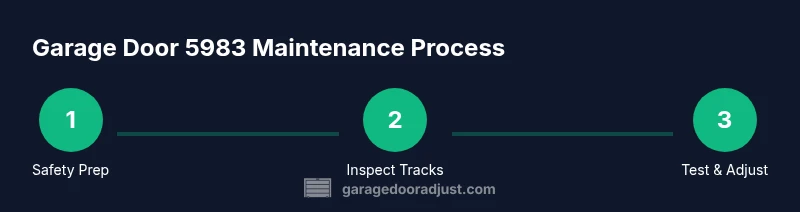
Garage Door 5983: Step-by-Step Repair Guide
Learn how to diagnose and repair your Garage Door 5983 with a safety-first, step-by-step approach. This guide covers tools, common symptoms, troubleshooting, and practical fixes homeowners can perform.


Goal: diagnose and repair a Garage Door 5983 that won’t open or operates erratically. According to GarageDoorAdjust, start with safety-first checks, verify the opener and safety sensors, inspect tracks, springs, and hardware, and apply practical fixes. This guide walks you through a clear, home-friendly method to restore reliable operation.
Understanding Garage Door 5983: Symptoms and Causes
Model 5983 can display a range of symptoms from a door that won’t open to one that opens partially or reverses mid-journey. In many cases the root cause is simple misalignment, worn hardware, or a safety switch misconfiguration rather than a failed motor. GarageDoorAdjust’s experience indicates that a methodical, diagnosis-first approach helps homeowners identify the exact issue without costly guesswork. Start by noting what you observe: sound, motion, stopping points, and any error indicators on the opener panel. This information guides the fixes you’ll perform in the later steps.
Safety Precautions Before You Start
Garage door work can be dangerous if you skip safety steps. Always disconnect power to the opener and unplug the outlet, wear eye protection and gloves, and secure the door so it cannot move unexpectedly. Use locking pliers or clamps to hold the door on the track during inspection. If you see frayed cables, bent rails, or damaged springs, stop immediately and call a professional. These components carry high tension and can cause serious injury if mishandled.
Diagnostic Check: Visual and Mechanical Inspection
Begin with a visual sweep of the track system, rollers, hinges, and mounting brackets. Look for bends, loose bolts, or worn wheels. Operate the door manually (with the opener unplugged) to gauge balance; if the door feels heavy or won’t stay in place, the springs or balance components may be worn. Check the safety sensors: ensure the photo-eye lenses are clean, properly aligned, and unobstructed. Record any irregular noises or binding, as these clues point to where the problem lies.
Common Fixes You Can Try (With Cautions)
Many 5983 issues respond to practical, non-destructive fixes. Clean and lubricate moving parts such as rollers, hinges, and track joints with a light, non-greasy lubricant. Tighten loose hardware and realign any bent tracks carefully. If you notice misadjusted safety sensors, re-align and retest. Do not attempt to adjust torsion springs yourself—these are under extreme tension and require a professional. After any fix, test the door with the opener to ensure smooth travel and reliable stopping points.
When to Replace Components on Model 5983
If you observe significant wear on rollers, track sections, or cables, replacement parts may be warranted. Damaged tracks can cause binding and premature wear on rollers; worn cables can slip or snap, risking injury. For springs, especially torsion types, always prioritize professional service. Replacing components too soon can prevent further damage and improve safety and performance over time.
How to Maintain Your Garage Door 5983 to Prevent Future Issues
Establish a routine maintenance cycle: inspect hardware quarterly, lubricate moving parts every few months, and verify safe operation after weather events or heavy use. Keep remote controls and sensors clean and aligned. Maintain a simple maintenance log with dates and any parts replaced. Regular checks help catch wear before it becomes a costly repair and extend the life of your door and opener.
Tools & Materials
- Locking pliers (C-clamps)(Secure door on track to prevent movement during inspection)
- Screwdrivers (Phillips and flat-head)(Remove panel covers and adjust hardware)
- Wrench set(Loosen or tighten nuts on track brackets)
- Level and tape measure(Check track alignment and door balance)
- Lubricant (white lithium grease or WD-40)(Apply sparingly to rollers, hinges, and tracks)
- Safety glasses and work gloves(Personal protective equipment)
- Ladder(Access high tracks safely)
- Replacement rollers or track parts (optional)(Only if worn or damaged)
Steps
Estimated time: 60-90 minutes
- 1
Disconnect power and secure the door
Begin by pulling the plug of the opener or switching off the circuit at the breaker. Secure the door with locking pliers to keep it from moving while you inspect or work on tracks and hardware. This is the foundation of a safe diagnostic process.
Tip: Locking pliers on the track prevent sudden movement and protect your hands while you work. - 2
Inspect tracks and mounting hardware
Visually inspect both tracks for bends, dents, or gaps. Check brackets and bolts for looseness; tighten or replace as needed. Ensure tracks are parallel and symmetric on both sides so the door travels smoothly without binding.
Tip: Use a level to confirm tracks are straight; misalignment is a common cause of sticking doors. - 3
Check springs and cables—do not adjust if unsure
Look for frayed cables or visibly damaged springs. If you observe any signs of wear, do not attempt adjustments. Springs store energy even when the opener is unplugged and can cause serious injury if mishandled.
Tip: Springs require professional service; risk of severe injury is high if you try DIY spring work. - 4
Test door balance manually
With the opener still unplugged, lift the door halfway manually and hold it. If it settles or falls, the balance system or springs are not functioning correctly and require further attention. Lower the door slowly and observe for smooth motion.
Tip: A well-balanced door should stay put when lifted to mid-height without assistance. - 5
Assess opener settings and safety sensors
Reconnect power and test the opener in a controlled manner. Check limit switches and travel settings; ensure safety sensors align and are unobstructed. If the door stops mid-travel or reverses, adjust settings or sensor alignment accordingly.
Tip: If sensor alignment is off, clean the lenses and re-align until the beam is uninterrupted. - 6
Reconnect power and perform a controlled test
Plug the opener back in and run a short cycle using the remote or wall switch. Observe for any unusual noises or hesitations. If the door operates smoothly, perform a full cycle under light manual assistance and confirm reliability.
Tip: Always test slowly first; rapid operation may hide hidden issues that emerge under load.
Got Questions?
Why won’t my Garage Door 5983 open?
Start by checking the opener’s power, safety sensors, and any obstructions. If the door is physically stuck on the track, inspect tracks and hardware for misalignment or binding. For stubborn issues, consult the manual or a professional.
First check power and sensors, then inspect the tracks for binding. If it’s still not opening, consider professional help.
My door opens but reverses immediately—what should I do?
Reversal typically indicates misaligned safety sensors or an improper limit setting. Clean and align sensors, clear any obstruction, and recalibrate the opener’s travel limits.
Check the safety sensors and make sure there’s nothing blocking them, then reset the travel limits.
Is it safe to lubricate garage door tracks?
Yes, light lubrication reduces friction, but avoid over-application. Use a light lubricant on rollers, hinges, and tracks, then wipe away excess.
Yes, just a little lubricant goes a long way—avoid heavy oil that can attract dust.
When should I replace the springs on a 5983 model?
Springs should be replaced only when visibly worn, broken, or when the door is unbalanced and not safely controllable. This work should be performed by a licensed professional.
If you see wear or the door isn’t balanced, contact a pro for spring work.
Can I fix these issues myself for model 5983?
Basic maintenance and track alignment can be DIY, but springs and cables pose serious risk. Follow the manual for safe steps and seek professional help for high-tension components.
Some maintenance is doable, but springs and cables require professional service.
How long does a typical repair take?
Actual repair time depends on the issue and your experience. Plan for more time if you’re new to garage-door work, and stop if anything feels unsafe.
It depends on the issue and your skill level, so give yourself plenty of time and prioritize safety.
Watch Video
Quick Summary
- Prioritize safety: disconnect power before any inspection
- Inspect tracks, hardware, and sensors before making fixes
- Never DIY torsion-spring adjustments; call a pro for spring work
- Maintain a regular maintenance routine to prevent future issues