Garage Door 5740 Troubleshooting Guide for Homeowners
A homeowner-friendly guide to diagnosing and fixing common issues with garage door 5740, including safety tips, maintenance steps, and readiness to call a pro. Learn practical steps from GarageDoorAdjust.


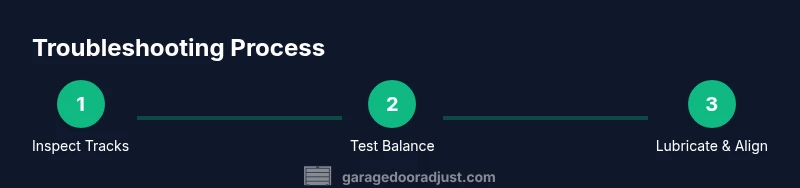
In this guide you will learn to diagnose and fix common issues with garage door 5740 by following a safe, methodical troubleshooting workflow. Start with safety checks, inspect tracks, test balance, lubricate moving parts, and test the opener. This approach minimizes risk and saves time. We’ll cover labeling parts, basic repairs, and when to call a pro. According to GarageDoorAdjust, a disciplined diagnostic routine reduces guesswork and accelerates repair.
Understanding the 5740 Reference in Garage Doors
The label 5740 is not a universal standard across all manufacturers. It often appears as an internal part or model reference used by a specific brand to identify assemblies or replacement components. For homeowners, this means that “5740” might point to a part that varies by maker, era, or door style. The key takeaway is to treat 5740 as a clue rather than a fixed specification. Always consult your door’s manual, the manufacturer’s website, or a trusted service note to confirm exact compatibility before ordering parts. According to GarageDoorAdjust, misinterpreting a model label can lead to ordering incompatible parts or overlooking the actual failing component. When in doubt, capture photos of the door’s serial plate, hinges, and any markings and compare against official documentation.
How the 5740 Label Affects Parts Compatibility
If you’re trying to source replacement hardware or an opener component and you see a 5740 reference, you’ll want to verify several factors:
- Manufacturer and model year: Two doors can look identical, yet use different springs or track hardware.
- Part grouping: A single label may cover rollers, hinges, and brackets but not the entire system.
- Tolerance and finish: Rails and brackets vary in dimensions; a perfect fit often requires matching the exact bolt pattern and hole spacing.
GarageDoorAdjust notes that many DIY fixes fail when a part looks similar but isn’t the same variant. Always confirm part numbers against your door’s documentation or by contacting the manufacturer’s support line.
Common Symptoms That Signal a 5740-Related Issue
Symptoms that frequently accompany 5740-related problems include slow or jerky door movement, uneven openings, unusual noises (creaking, grinding, or thumping), door binding near tracks, and excessive gap variation at the bottom edge. Before ordering parts, perform a quick diagnostic sweep:
- Visual check: Look for bent tracks, loose bolts, or misaligned hinges.
- Movement test: Manually move the door to feel for sticking points in rollers and tracks.
- Sensor and opener check: Ensure safety sensors are aligned and the opener responds correctly to controls.
If you observe any of these signs, start with a cautious hands-on inspection rather than assuming a single failed component.
Tools, Workspace Setup, and Safety Essentials
A well-prepared workspace reduces risk and speeds repairs. Gather these essentials:
- Safety glasses and work gloves for protection when handling springs, tracks, and hardware.
- A solid ladder or step stool with non-slip footing.
- Basic hand tools: screwdrivers (Phillips and flat-head), adjustable wrench, pliers, and a small mallet.
- A level to check vertical tracks and hinge alignment.
- A silicone-based lubricant for rollers, hinges, and track guides.
- A clean rag and mild degreaser for removing grime.
- Adequate lighting and a partner if you’re applying force or lifting the door.
Keep the area clear of children and pets, disconnect power to the opener when needed, and never place hands inside track zones while testing movement.
Basic Diagnostics Homeowners Can Do (No Special Equipment Required)
Begin with a conservative inspection that doesn’t require expensive tools.
- Visual inspection: Check tracks for dents, binding, or loose mounting screws. If you see a dented rail, do not try to bend it back with force; this often weakens the metal.
- Track alignment: Use a level to verify vertical tracks run plumb; a slight tilt can cause binding and uneven travel.
- Balance test (manual): If you can safely disconnect the opener, lift the door about halfway and release. A properly balanced door should stay put without springy motion or heavy sag.
- Open/close test: With the door reconnected to the opener, observe its travel path and listen for unusual noises. Ensure it fully opens and closes without reversing unexpectedly.
These checks identify whether the issue is a simple misalignment or a more complex problem requiring professional service. Remember: if you’re unsure or feel resistance while lifting, stop and consult a pro to avoid injury or damage.
Maintenance Practices That Preserve Longevity and Safety
Proactive maintenance can prevent many 5740-related issues. Implement these routines:
- Lubrication: Apply silicone-based lubricant to moving parts—rollers, hinges, and track joints—every 6 months or after periods of heavy use. Wipe away excess oil to prevent dust buildup.
- Track and hinge checks: Tighten loose screws and bolts; ensure hinges and brackets are secure without over-tightening. Loose hardware is a common source of misalignment.
- Weather seals: Inspect the bottom seal and side weatherstripping for wear. Replace worn seals to improve insulation and reduce drag on the door.
- Opener health: Test the safety reverse function monthly by placing a rigid object on the door frame; the opener should reverse on contact without excessive force.
- Clean environment: Keep tracks free of debris, and avoid accumulating dirt near the spring area. A clean, dry environment reduces corrosion and wear.
Regular maintenance creates a more predictable operation and extends the door’s life, reducing the likelihood that a late 5740 issue turns into an urgent repair.
Step-by-Step Overview: An In-Depth Home Inspection Routine (High-Level)
This section provides a structured quick-check routine you can follow before deciding on more invasive repairs. If any step raises concern, stop and call a professional.
- Safety prep: Power down the opener, secure the door, and clear the area. 2) Visual scan: Inspect tracks, rollers, hinges, and bolts for wear or damage. 3) Track alignment: Use a level to verify tracks are plumb; adjust mounting screws if allowed. 4) Balance test: With opener disengaged, lift the door slowly and observe how it stays in place. 5) Lubrication: Apply silicone spray to moving parts. 6) Opener test: Reconnect power and run a controlled test, including safety reverse. 7) Sensor alignment: Ensure photo-eyes are aligned and unobstructed. 8) Documentation: Record issues and plan repairs or replacement timeline.
Note: This high-level overview complements the STEP-BY-STEP section below. It focuses on safety and fundamental checks rather than complex repairs.
Troubleshooting Quick Fixes for Common Problems
If you’re facing typical, non-dangerous issues, try these homeowner-safe fixes before scheduling service:
- Sticky rollers: Clean rollers and tracks, re-lubricate, and ensure tracks are clean of debris.
- Uneven opening: Re-check track alignment and tighten mounting screws; balance the door manually to confirm proper feel.
- Slow operation: Lubricate moving parts and ensure the opener isn’t overloaded by obstructions or wind resistance.
- No response from the opener: Verify power to the opener, check the remote battery, and re-pair remotes if necessary.
- Noisy operation: Identify the source of noise, usually hinges or rollers, and apply targeted lubrication or replace worn components.
If DIY fixes don’t restore smooth operation, consult a professional to avoid further damage.
When to Replace Components or the Entire Door (Practical Guidance)
There are times when a repair is not the best long-term solution:
- Repeated failures: If the same component fails after multiple repairs, replacement may be more cost-effective in the long run.
- Structural wear: Significant sagging, corroded tracks, or warped panels often require replacement.
- Safety concerns: If the door or opener shows persistent misalignment or unreliable safety features, seek professional assessment.
- Age and performance: When the door no longer meets energy efficiency, security, or code standards, replacement is worth considering.
A professional can help determine whether parts are salvageable or if a full replacement provides better value and safety.
Final Checks and Planning Ahead
Before concluding, review the maintenance plan and set up a calendar reminder for semi-annual checks. Keep track of parts and warranties, and note any recurring issues. This proactive approach reduces downtime and helps you respond quickly to future problems. The aim is to empower homeowners to diagnose safely, perform basic maintenance, and know when to call a pro for more complex work.
Tools & Materials
- Safety glasses(Protect eyes from debris and springs)
- Work gloves(Grip and hand protection)
- Phillips screwdriver(Scrws on hinges and brackets)
- Flat-head screwdriver(Fine adjust or prying small parts)
- Adjustable wrench(Bolt/nut adjustments)
- Socket set(Diameter-specific fasteners)
- Level(Verify vertical track alignment)
- Tape measure(Measure gaps or rail straightness)
- Ladder or step stool(Safe access to tracks and hinges)
- Lubricant (silicone-based)(Hinges, rollers, and tracks)
- Rags or paper towels(Clean excess lubricant)
- Flashlight or headlamp(Improve visibility in tracks)
Steps
Estimated time: 30-60 minutes
- 1
Prepare and safety-check
Power down the opener and clear the work area. Confirm no one is near the door while you work. This prevents accidental movement or injuries during inspection.
Tip: Always have a partner nearby when testing door movement. - 2
Inspect tracks and alignment
Visually inspect both tracks for dents or obstructions. Use a level to verify vertical tracks are plumb and that rails run straight.
Tip: Do not bend bent rails; replace them or consult a pro if damaged. - 3
Test door balance manually
Disengage the opener using the manual release and try lifting the door halfway. It should stay put without drifting; if it drops or rises, balance is off.
Tip: Enlist a helper to safely support the door during this step. - 4
Tighten hardware and check hinges
Tighten loose screws on hinges, brackets, and track mounting. Replace any visibly worn or damaged components.
Tip: Avoid over-tightening which can strip threads and create new misalignments. - 5
Lubricate moving parts
Apply a light coat of silicone-based lubricant to rollers, hinge points, and track joints. Wipe away any excess to prevent dust buildup.
Tip: Focus lubrication where metal contacts metal for best effect. - 6
Reconnect opener and test safety
Reconnect the opener and perform a safety reverse test with a soft barrier on the floor to ensure proper function.
Tip: If the door won’t reverse, power down and call a pro. - 7
Check sensors and alignment
Ensure photo-eyes are clean, aligned, and unobstructed. The beam should form a continuous line across the door opening.
Tip: Misalignment prevents automatic stopping and can be a safety risk. - 8
Document and plan next maintenance
Record what you found, what you fixed, and when you plan the next check. Schedule maintenance every 6-12 months depending on use.
Tip: Set a calendar reminder to avoid missed maintenance.
Got Questions?
What does the term 'garage door 5740' refer to?
5740 is often a label used by manufacturers to identify a part or assembly. It is not a universal standard across all doors. Always verify with your door’s documentation or the manufacturer to confirm exact compatibility.
5740 is typically a label used by manufacturers to identify a part. Check your door’s manual or the manufacturer to confirm what it refers to.
Can I fix track alignment myself?
Basic track alignment is doable if you stay within safe bounds and avoid forcing bent rails. If you see damage or persistent misalignment, consult a professional.
You can do basic alignment if you’re careful, but don’t force bent rails—seek a pro if anything seems damaged.
Is it safe to adjust springs myself?
Spring adjustments are dangerous and should be performed only by trained technicians. Improper handling can cause severe injury.
Springs are risky to adjust yourself; it’s best to call a pro.
How often should I lubricate the door?
Lubricate moving parts every 6 months or after seasons with extreme temperature changes; avoid over-lubricating.
Lubricate twice a year, especially in temperature extremes.
What annual maintenance should I perform?
Inspect hardware, check balance, test safety features, examine weather seals, and verify opener operation. Address issues before they escalate.
Do a hardware check, balance test, safety tests, and seal inspection each year.
When should I replace the door or opener?
If persistent issues persist after proper adjustments or the door shows major wear, replacement may be more cost-effective and safer.
If issues keep coming back and repairs aren’t solving the problem, consider replacement.
Watch Video
Quick Summary
- Inspect tracks and alignment before adjustments
- Balance and safety testing prevents hidden faults
- Lubricate moving parts regularly to reduce wear
- Do not attempt dangerous spring work yourself
- Create and follow a maintenance schedule