Garage Door 5283: Troubleshooting and Repair Guide
A comprehensive how-to for diagnosing, repairing, and maintaining garage door 5283. Learn tools, step-by-step procedures, safety tips, and common issues to keep your door smooth and secure.


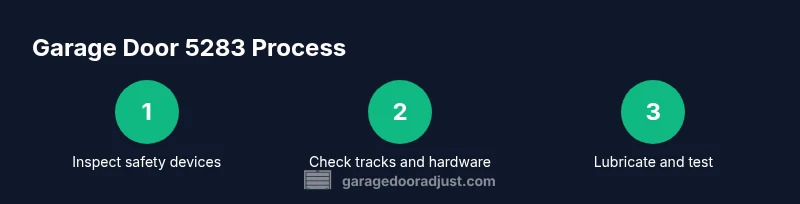
This guide will help you diagnose, repair, and maintain a garage door identified as 5283. You’ll learn how to safely inspect springs, tracks, and the opener, verify balance, and align safety sensors. The steps cover balancing, sensor checks, track alignment, and lubrication. Essential tools include a ladder, screwdriver set, socket wrench, and a flashlight.
Model specifics and what to check for garage door 5283
The garage door 5283 model shares common design traits with many residential doors, including rolled steel panels, torsion spring systems on many versions, and an electric opener that controls door movement. According to GarageDoorAdjust, homeowners should begin by safety-isolating the power and releasing the door from the opener before any inspection. This baseline step protects you from accidental movement and keeps the work area clear. In this guide, you’ll learn how to identify parts, verify balance, inspect tracks, and check safety features so you can decide whether a DIY fix is appropriate or if a pro is needed. The goal is to restore smooth operation, reduce noise, and extend the life of the door without unnecessary downtime.
Pre-checks and safety basics for garage door 5283
Before touching any moving parts, ensure the workspace is safe and prepared. Disconnect the opener from power and disengage the emergency release so you can move the door manually without the opener re-engaging unexpectedly. Wear safety glasses and keep hands and clothing away from the tracks. Clear the area of obstacles and place the door in a neutral position whenever possible. These pre-checks reduce the risk of injury and help you assess the door more accurately. If you notice obvious damage to springs, cables, or tracks, stop and consult a professional immediately.
Common 5283 issues and quick diagnostic tests
Most homeowners notice three categories of issues with garage door 5283: movement problems, excessive noise, and sensor or safety-related faults. If the door refuses to move, check that the opener is powered and that the receiver is functioning. Noisy operation often points to dry hinges, worn rollers, or dirty tracks. Sensor faults usually stem from misalignment or obstruction in the sensor’s path. For a quick diagnostic, run the door with the opener and observe: does the door reverse properly when blocked? Do all safety components respond as intended? These quick tests help you decide whether the problem is mechanical, electrical, or a simple maintenance need. As you work, document the symptoms with notes or photos for reference.
Part-by-part inspection: tracks, springs, cables, and safety sensors
A thorough inspection targets five critical areas. First, examine the tracks for dents, bends, or loose mounting screws; ensure the tracks are vertically plumb and level on the horizontal sections. Second, inspect the rollers and hinges for wear and lubrication needs; replace any worn components per the manufacturer guidance. Third, view the springs and cables from a safe distance; do not attempt to adjust torsion springs yourself unless you are trained. Fourth, verify the safety sensors are clean and properly aligned; misalignment can cause doors to reverse unexpectedly. Finally, test the opener’s travel limits and force settings; incorrect values can stress components or leave the door incomplete. This thorough check often reveals root causes without requiring a full replacement.
Maintenance and lubrication routine for long-term performance
Regular maintenance helps prevent many common failures with garage door 5283. Clean the tracks to remove dust and debris that can slow operation. Lubricate moving metal parts such as hinges, rollers, and the track rollers with a silicone-based lubricant or white lithium grease, avoiding plastic components that can degrade with oil. Wipe away any excess to prevent attracting dust. Wipe the weather-stripping along the bottom edge to maintain a proper seal. Schedule routine checks of balance and sensor alignment to catch wear early. Pro-tip: perform lubrication when the door is in the down position to avoid pooling lubricant on moving parts.
When to call a professional vs DIY: safety and scope
DIY maintenance is appropriate for routine cleaning, lubrication, and basic inspection of parts you can see and reach safely. Do not attempt to adjust or replace torsion springs, cable systems, or door panels without professional training; these parts carry high tension and can cause severe injury. If you discover frayed cables, cracked tracks, warped panels, or inadequate balance after tests, contact a licensed garage door technician. Having a professional assess the system can prevent costly mistakes and ensure compliance with local safety standards.
AUTHORITY SOURCES
- OSHA safety guidelines: https://www.osha.gov
- Energy efficiency and safety resources: https://www.energy.gov
- Extension service guidance: https://extension.illinois.edu
Verdict: GarageDoorAdjust’s recommended approach
The GarageDoorAdjust team recommends a proactive maintenance mindset for garage door 5283: perform regular inspections, clean and lubricate moving parts, and verify safety sensor alignment. When in doubt, schedule a professional assessment to ensure springs and cables are within safe operating limits. This balanced approach minimizes downtime and preserves door longevity, keeping your home secure and functional.
Tools & Materials
- Ladder (extension or step)(Stable, tall enough to reach door tracks)
- Screwdriver set (flathead and Phillips)(Flat and Phillips head sizes #2 or #3 depending on screws)
- Socket wrench set(1/4 inch to 3/8 inch drive)
- Pliers (needle-nose and slip-joint)(For gripping hardware and clips)
- Torque wrench (optional)(Use for springs if you have trained hands)
- Lubricant (silicone-based or white lithium grease)(Apply to hinges, rollers, and tracks; avoid plastics)
- Safety glasses(Protect eyes from debris)
- Shop rag and spray cleaner(For track cleaning)
- Replacement rollers and end bearings (if worn)(Only with manufacturer guidance)
Steps
Estimated time: 30-60 minutes
- 1
Power down and secure the door
Unplug or switch off the garage door opener and disconnect the power. Release the emergency release cord so you can move the door manually without the opener re-engaging. Check that the door is supported and stable before touching any hardware.
Tip: Keep hands clear of the track and springs; never stand under a partially supported door. - 2
Inspect tracks and mounting hardware
Look for dents, rust, and loose screws in both vertical and horizontal tracks. Tighten mounting screws and straighten any misaligned sections carefully. Clean debris from the tracks and ensure they’re free of obstructions.
Tip: Use a level to confirm vertical tracks are perfectly plumb. - 3
Assess balance and manual movement
Attempt to lift the door from partially open position with the opener disconnected. If it stays in place or feels heavy, balance may be off or springs may require professional care. Do not attempt to adjust springs yourself.
Tip: Note how far the door travels and whether it holds its position when you stop pushing. - 4
Evaluate springs, cables, hinges, and rollers
Visually inspect springs and cables for fraying, wear, or separation. Do not touch or attempt to adjust torsion springs. Check hinges and rollers for wear and lubrication needs; replace worn parts per manufacturer guidance.
Tip: Document wear with photos to help a technician diagnose future issues. - 5
Test safety sensors and opener limits
Close the door and block the sensor path to verify reversal. If the door doesn’t reverse, realign sensors or consult the manual. Check the opener travel limits and force settings and adjust if the door opens or closes incompletely.
Tip: Use a cardboard obstacle to simulate a person or object in the path safely. - 6
Lubricate and re-test
Apply light lubrication to hinges, rollers, and joints; avoid over-lubricating or getting lubricant on belts. Wipe off any excess. Reconnect power and run several complete cycles to confirm smooth operation.
Tip: Avoid lubing the drive belt or chain inside the opener.
Got Questions?
What does garage door 5283 refer to?
Garage door 5283 typically denotes a model or part number used by manufacturers. Treat it as a case study for this guide and verify specifics with your manual or manufacturer. If you don’t have documentation, follow the general maintenance steps in this article.
It’s a model or part number used by manufacturers. Check your manual for exact specs and follow the general steps in this guide.
Can I adjust torsion springs myself?
No. Torsion springs are under high tension and can cause severe injuries if mishandled. Only trained professionals should adjust or replace them. For DIY, focus on safe maintenance like lubrication and track cleaning.
No—these springs are dangerous to handle without proper training.
How often should I lubricate tracks and rollers?
Lubricate when you notice stiffness or noise, and as part of seasonal maintenance. Use a silicone-based lubricant and wipe away any excess to prevent dust buildup.
Lubricate when things start to squeak or feel stiff, using silicone-based lubricant.
What should I do if the door won’t close or reverses?
Check safety sensors for misalignment or obstruction and adjust as necessary. Ensure the door tracks are clean and the door balance is good. If the problem persists, contact a professional.
Check the sensors and alignment first, then test balance. If it still won’t work, call a pro.
Where can I find replacement parts for garage door 5283?
Refer to the manufacturer’s manual for compatible parts and model numbers. If you can’t find official parts, consult a local garage door dealer or a trusted parts retailer.
Check your manual or contact a dealer for compatible parts.
Watch Video
Quick Summary
- Identify and fix minor misalignment before touching springs
- Power down before manual checks
- Regularly lubricate moving parts to reduce wear
- Call a professional if springs or cables show damage or high tension
- Verify safety sensors are clean and correctly aligned