Garage Door 3m: Step-by-Step Repair and Troubleshooting
Learn how to diagnose, balance, and safely repair a 3-meter garage door with clear, step-by-step instructions, essential tools, and practical maintenance tips for homeowners.


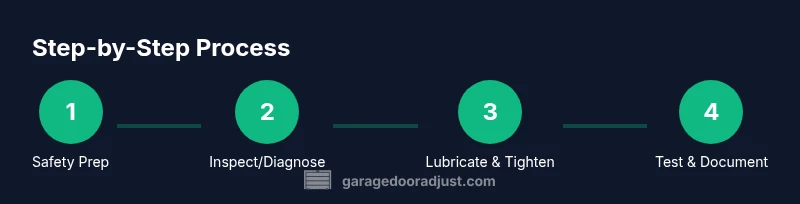
You're going to diagnose, test, and repair a typical 3-meter garage door by following a safe, structured sequence. Expect to inspect tracks, springs, and rollers; verify balance with the door closed; disconnect power when needed; lubricate moving parts; and test the opener’s operation after reassembly. This guide emphasizes safety, correct alignment, and reliable, repeatable results.
Why the garage door 3m demands careful diagnostics
A 3-meter-wide garage door presents unique challenges due to its size and weight. A structured diagnostic approach minimizes safety risks and reduces the chance of rework. According to GarageDoorAdjust analysis, a well-planned inspection of components—tracks, rollers, hinges, and mounting brackets—helps homeowners identify the most plausible failure points before applying any fixes. This section outlines the mindset and precautions you should adopt before touching any hardware, including setting up a clean workspace, organizing tools, and ensuring power is safely isolated when needed. By starting with a clear plan, you improve your odds of a first-time fix and a smoother restoration of smooth, reliable operation.
Common failure modes for garage door 3m systems
Large doors like a 3m model tend to develop issues in the same categories: misaligned tracks, worn rollers, loose or damaged hardware, compromised balance due to spring wear, and cumulative wear from many opening cycles. You may notice uneven movement, creaking sounds, or a door that stops partway up or down. The most frequent culprits are misalignment and lack of lubrication, followed by track dents and bracket loosening. This block helps you build a mental map of symptoms to causes, so you can verify hypotheses with simple checks before disassembly.
Preparing your workspace and tools for a 3m door
Safety should drive every step. Clear the area of vehicles, tools, and pets. Use a sturdy ladder and wear safety glasses and gloves. Gather essential tools: a socket set, screwdrivers, adjustable wrench, pliers, a clean rag, and silicone-based lubricant. Have a camera or phone handy to document before-and-after conditions. For a 3m door, it’s especially important to ensure the door is supported and cannot drift when you release the manual opener. By laying out a dedicated, well-lit workspace, you reduce slip hazards and improve precision during inspection and adjustments.
Inspecting tracks and rollers on a 3m door
Start with a visual sweep of the vertical tracks on both sides. Look for dents, bending, or loose mounting hardware. Check rollers for wear, flaking, or stuck pivots. If you notice a track that isn’t perfectly vertical or a roller that binds or wobbles, tighten fasteners within manufacturer tolerances and note the issue for potential replacement. Mark any misaligned sections with painter’s tape to guide the realignment process. Remember: avoid forcing the door; apply adjustments incrementally and re-check alignment frequently.
Balancing checks and spring health (non-destructive tests)
Balance is critical for long-term reliability. With the door closed, attempt to lift it halfway and release it; if it falls or rises notably, the balance may be off or springs could be under-proportioned for the door weight. Do not attempt to unwind or adjust torsion springs yourself—these components store dangerous energy. If you suspect spring wear, schedule a professional assessment. Use this moment to observe how the door behaves when lightly supported and note any unusual noises or resistance.
Lubrication, alignment, and quick fixes
Lubricate moving parts such as hinges, rollers (on their axles), and the track sections where the rollers ride. Use a silicone-based lubricant or light lithium grease and wipe away excess to prevent dust buildup. Avoid lubricating torsion springs or nylon components unless the manufacturer explicitly approves it. Realign tracks if you notice gaps or misalignment after re-lubrication. Small, iterative nudges are safer than large, forced corrections, especially on a 3-meter door where movement is heavier and more energy-consuming.
Reassembly and safe operation after maintenance
Reconnect power to the opener and run a full cycle with the door fully closed, then fully opened. Listen for unusual noises and watch for binding or jerky movement. If anything feels off, stop the test and re-check the most recent adjustment. Ensure safety features—like the auto-reverse function—are working by testing with a light object (e.g., a cardboard strip) placed near the floor under the door. Document results and set a maintenance reminder for future checks.
Long-term maintenance plan for a 3m door
Create a simple maintenance calendar: inspect tracks and hardware every 3–6 months, lubricate annually or as needed, and perform a balance check during seasonal transitions. Keep a log of any noises, sticking points, or misalignments and photograph changes over time. Routine care reduces the risk of sudden failures and extends the life of critical components. For homeowners, staying proactive is the best defense against expensive repairs.
Tools & Materials
- Safety glasses(ANSI Z87.1 or equivalent)
- Work gloves(Protect hands from sharp edges)
- Ladder(Stable, tall enough for a 3m door)
- Socket set(Metric sizes typically needed)
- Screwdrivers (Phillips and flat-head)(Assorted sizes)
- Adjustable wrench(For bracket bolts)
- Pliers(Grip and twist small fasteners)
- Rags, towels(Clean excess lubricant)
- Silicone-based lubricant(Apply to rollers, hinges, and tracks)
- Measuring tape(Check track alignment and gaps)
- Camera or smartphone(Document before/after conditions)
Steps
Estimated time: 60-90 minutes
- 1
Disconnect power and secure the door
Unplug the opener from its power source and release the manual helper to disengage the trolley. Ensure the door cannot drift by propping it safely in position. This protects you from unexpected movement during inspection.
Tip: Never work under a door that can move freely; use a wedge or clamps to hold tracks temporarily. - 2
Check door balance by manual lift
Lift the door to waist height and slowly release. A balanced door should stay put; if it drops or floats, the balance or springs may be contributing to the issue. Do not attempt to adjust springs yourself.
Tip: If your arms tire or the door feels heavy, stop and re-check with a second person. - 3
Inspect tracks and rollers
Visually examine both tracks for dents, bends, or loose fasteners. Rollers should move freely; replace worn components. Tighten mounting screws to manufacturer-torques where appropriate.
Tip: Mark misaligned sections with painter’s tape to guide repositioning. - 4
Check springs and brackets (non-destructively)
Look for rust, gaps, or obvious wear in springs and brackets. Do not modify or unwind torsion springs yourself. Any suspicion of damage requires a licensed professional.
Tip: Note the door’s weight and any unusual spring behavior for the pro when you call. - 5
Tighten loose hardware
Secure any loose bolts, nuts, and brackets that secure the tracks and hinges. Use the correct size tools and avoid over-tightening, which can strip threads or warp components.
Tip: Work incrementally; re-check door movement after each tightening. - 6
Lubricate moving parts
Apply silicone-based lubricant to hinges, rollers, and the dry track surfaces. Wipe away excess to prevent dust buildup. Do not spray on torsion springs.
Tip: Lubrication is most effective when parts are clean and free of old residue. - 7
Test operation and balance again
Reconnect power and run a full cycle with the door closed to test movement. Check for smoothness and confirm the door reverses as required by safety features.
Tip: Use a lightweight object near the floor during test to verify the auto-reverse function. - 8
Document results and plan next steps
Capture photos of the before/after conditions and note any ongoing concerns. Set a reminder for routine maintenance and consider professional inspection if issues persist.
Tip: Maintaining a simple log helps you catch patterns over time.
Got Questions?
How do I safely disconnect the garage door opener before inspection?
Unplug the opener from its power source and use the manual release to disengage the trolley. Ensure the door cannot move while you inspect hardware.
Unplug the opener and use the manual release, making sure the door can’t move while you inspect.
What indicates the door is out of balance?
If the door drifts up or down when you lift it halfway, or if it requires constant support, balance or spring issues may be present. Do not attempt to replace springs yourself.
If the door drifts or requires support when you lift it, it may be out of balance.
Is it safe to adjust torsion springs myself?
No. Torsion springs store a lot of stored energy and can cause serious injury. Have a licensed technician perform any spring work.
No—torsion springs are dangerous to adjust without proper training.
How can I tell if tracks or rollers are worn?
Look for dents, gaps, or excessive play in rollers, and track misalignment. Replace worn parts and tighten loose hardware as needed.
Check for dents or looseness in tracks and worn rollers; replace as needed.
What lubricant should I use and where should I apply it?
Use a silicone-based lubricant on hinges, rollers, and the track surfaces near rollers. Do not spray on torsion springs and wipe away excess.
Use silicone lubricant on hinges and rollers, not on springs.
How often should I perform maintenance on a 3m door?
Plan a routine check every 3–6 months, with lubrication annually or as needed. Keep notes of any issues to monitor patterns.
Every 3–6 months for checks, yearly lubrication, and keep a maintenance log.
Watch Video
Quick Summary
- Verify safety before inspection and document conditions.
- Do not attempt spring adjustments without a pro.
- Keep tracks, rollers, and hardware clean and aligned.
- Lubricate moving parts with silicone-based product; avoid springs.
- Maintain a maintenance log for proactive care.