Garage Door Info Spot: DIY Diagnosis & Maintenance Guide
Learn safe, step-by-step diagnosis and maintenance for common garage door issues. This guide covers essential tools, safety, lubrication, balance, sensors, and when to call a professional.


According to GarageDoorAdjust, this garage door info spot helps homeowners diagnose and fix common issues safely. This guide walks you through the symptoms, required tools, and a step-by-step process to restore operation or upgrade components. Emphasizing balance, lubrication, and door safety reduces risk and prolongs life. Whether you’re troubleshooting a grinding noise, slow opening, or sensor misreads, this page provides practical, weekend-friendly fixes.
Why This Garage Door Info Spot Matters
This garage door info spot is designed to be a trustworthy, actionable resource for homeowners. Garage doors are intricate systems with multiple moving parts that interact with electricity, springs, and tracks. Relying on high-quality guidance helps you distinguish between simple maintenance tasks and complex repairs that require a licensed professional. The GarageDoorAdjust team emphasizes practical steps, safety considerations, and clear decision points so you can fix problems without unnecessary risk. By centralizing best practices here, you reduce guesswork and improve your door’s reliability over time. Remember, information quality matters: verify source credibility, double-check warnings, and prioritize safety above speed. This page aims to be your go-to reference for routine care and first-response troubleshooting, turning a frustrating problem into a manageable DIY project when appropriate.
Safety Comes First: Core Principles for DIY Garage Door Work
Safety is non-negotiable when working on a garage door. Always disconnect power to the opener before touching any components, and never work on springs or cables while the door is installed under tension. Wear eye protection and gloves, use a sturdy ladder, and keep children and pets away from the workspace. Plan your tasks, work in well-lit conditions, and verify directions from reputable sources such as this garage door info spot. If anything feels unstable or dangerous, stop and seek professional help. According to GarageDoorAdjust Analysis, adherence to safety steps reduces common injuries and equipment damage substantially. This section outlines the mindset and precautions that underpin every fix described here.
Understanding Your Garage Door: Key Components
A typical sectional garage door includes panels, tracks, rollers, hinges, springs, cables, and an opener. Each component has a role: springs balance the door’s weight, tracks guide movement, rollers reduce friction, and the opener provides powered operation. Torsion springs store energy and are under high tension; extension springs stretch and can snap. If you notice binding or uneven movement, inspect hardware for loose bolts, worn rollers, and misaligned tracks. Keep in mind that some issues masquerade as simple squeaks but point to deeper alignment or balance problems. This knowledge helps you prioritize tasks and avoid unnecessary disassembly.
Symptoms and Diagnoses: What Your Door Is Telling You
Doors communicate through sound, speed, and motion. Common symptoms include grinding or creaking noises, slow or uneven movement, doors that don’t stay open, and sensors that misread. Nuisance sounds often indicate dry rollers, worn hinges, or dirty tracks, while slow opening may signal balance errors or spring wear. If the door slams shut or binds, check for misaligned tracks or a door out of balance. In all cases, confirm that the door is fully closed before performing tests to avoid injury. This section translates symptoms into actionable next steps and helps you decide when professional service is warranted.
Step-By-Step Diagnosis and Fix Process (High-Level Overview)
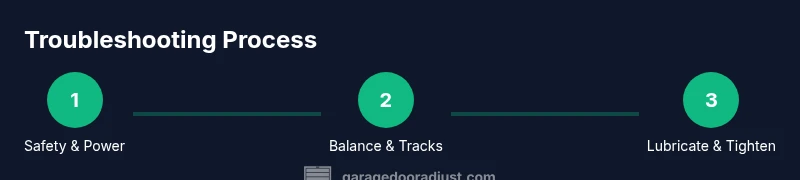
This section provides an overview of the approach you’ll follow in the dedicated step-by-step guide. Start by ensuring safety: disconnect power, secure the door, and inspect visible hardware for obvious damage. Then assess balance by manual operation, examine tracks and rollers for obstructions, lubricate moving parts, and test the opener and sensors. If any step reveals a dangerous condition (such as a visibly broken spring or frayed cable), stop and call a pro. The goal is to build a safe, logical sequence you can repeat for common issues while recognizing when professional repair is required, per the principles outlined by GarageDoorAdjust.
Lubrication, Balance, and Tension: The Core Maintenance Trifecta
Regular lubrication reduces friction and wear on hinges, rollers, bearings, and tracks. Use a silicone-based garage door lubricant or a recommended spray, applying a light coat to all moving parts. Balance is critical for safe operation: an out-of-balance door can strain the opener and wear springs unevenly. Do not attempt to adjust or replace springs unless you are a trained professional; even small errors can cause catastrophic failure. This section explains how lubrication, balance, and safe tension work together to extend door life and improve performance.
Safety Practices for Openers and Sensors
Modern openers rely on safety sensors that prevent the door from closing on objects or people. Check that sensors point straight at each other, without misalignment, and keep the path clear of debris. If the door closes unexpectedly or reverses abruptly, test the safety reversal with a small, non-hazardous object. Don’t bypass safety features to fix performance issues. This section emphasizes that sensor checks are as important as mechanical fixes and should be part of every routine maintenance cycle.
Seasonal Maintenance and Long-Term Care
Seasonal changes affect door performance. In winter, warm up tracks and hinges for smoother movement; in summer, inspect lubricant consistency and track corrosion. Create a simple maintenance calendar: visually inspect monthly, lubricate every 6-12 months, and book a professional tune-up every 1-2 years depending on use. Following a routine schedule reduces surprise failures and keeps your door reliable year-round. This section helps homeowners build a sustainable care plan that aligns with real-world usage.
Troubleshooting Scenarios and Decision-Making Flow
When a problem arises, follow a decision-tree approach: verify safety, observe symptoms, check for obvious wear, perform targeted maintenance, retest, and decide whether to proceed or call a professional. Document what you see and the actions you take so a technician has clear context if needed. This flow minimizes guesswork and speeds up resolution. By treating each scenario as a separate checklist, you can tackle issues methodically and avoid overlooking key details.
Tools & Materials
- Safety goggles(Protect eyes from debris during testing and adjustments)
- Work gloves(Improve grip and protect hands on metal parts)
- Stepladder(Reach higher hardware safely)
- Screwdrivers (Phillips & flat-head)(For hinge/bracket screws and minor adjustments)
- Socket wrench set(Tighten or remove mounting bolts and hardware)
- Garage door lubricant (silicone or lithium-based)(Lubricate rollers, hinges, and tracks)
- Rags or shop towels(Clean surfaces before lubrication and inspection)
- Torque wrench (optional)(Useful for precise fastener tension on certain hardware)
Steps
Estimated time: 60-90 minutes
- 1
Disconnect power and secure the door
Begin by unplugging the opener or cutting power at the circuit. Lower the door halfway to ensure it is supported and cannot drop unexpectedly. This step prevents electric shock and mechanical harm while you inspect components.
Tip: Always verify power is off before touching any moving parts; assume springs are under tension even if the door seems calm. - 2
Inspect visible hardware for wear
Look for loose bolts, cracked hinges, worn rollers, and damaged tracks. Tighten loose fasteners to manufacturer specs and replace obvious wear components where feasible. Do not force bent tracks back into place; misalignment can worsen damage.
Tip: Use a flashlight to inspect the inside of tracks and rollers; look for rust or missing wheel bearings. - 3
Check door balance manually
With the door closed, disconnect the opener and carefully lift the door halfway. If it stays, it’s balanced; if it rises or falls quickly, balance needs adjustment. Do not attempt to adjust springs yourself—seek a professional if balance feels off.
Tip: If you hear creaking as you lift, lubricate hinges and rollers before retesting balance. - 4
Lubricate moving parts
Apply a light coat of lubricant to hinges, rollers, and track pivots. Wipe away excess oil to prevent dust accumulation. Allow a few minutes for the lubricant to settle before testing movement again.
Tip: Avoid over-lubricating; excess oil can attract dirt and create more resistance. - 5
Test the opener and sensors
Reconnect power and test closing and reversing behavior. Place a small obstacle in the path to confirm the safety sensors are functioning. If the door doesn’t reverse on contact or stops abruptly, service may be needed.
Tip: Keep hands clear of the door during tests; sensors should view each other without obstruction. - 6
Re-test, re-tighten, and finalize
After initial fixes, retest entire operation. Recheck fasteners and balance. If everything runs smoothly with no unusual noises or misreads, you’ve completed a thorough check.
Tip: Document what you did and any parts replaced for future reference.
Got Questions?
What are common signs my garage door needs maintenance?
Look for grinding noises, slow or uneven movement, doors that don’t stay level, or sensors that misread. These symptoms often point to lubrication needs, worn rollers, misaligned tracks, or balance issues. Addressing them promptly prevents larger problems.
Common signs include unusual noises, slow movement, and sensor misreads. If you notice these, inspect hardware and lubrication.
Can I safely adjust a garage door opener myself?
Some basic opener settings and sensor alignment can be done by homeowners. Do not adjust springs, cables, or tension yourself. If in doubt, consult a professional.
You can handle basic opener settings, but never touch springs or cables—call a pro if you’re unsure.
Do torsion springs require professional service?
Yes. torsion springs are highly dangerous when misadjusted or released. A licensed technician should handle spring work to prevent injury and door damage.
Torsion springs are dangerous to adjust yourself; hire a licensed tech.
How often should I lubricate a garage door?
Lubricate moving parts at least once a year, or more often with heavy use. Focus on hinges, rollers, and track pivots for best results.
Lubricate once a year, or more if you use the door a lot.
When should I replace instead of repair?
If the door is warped, severely dented, or repeatedly needs repairs, replacement is often more cost-effective and safer than ongoing fixes.
If repairs pile up or the door is badly damaged, replacement is wiser.
Quick Summary
- Inspect safety first and never bypass safety features.
- Balance and lubrication drive smooth operation and longevity.
- Distinguish between DIY tasks and when to call a pro.
- Document fixes to aid future maintenance.
- Regular maintenance reduces emergency repairs.