Door to Door Garage Door Repair: A Homeowner's Step-by-Step Guide
Practical, step-by-step guidance for diagnosing and repairing common garage door issues using a door-to-door approach. Learn safety tips, tools, and when to call a pro.


This guide walks homeowners through door to door garage door repair, focusing on safe, practical diagnosis and basic fixes for common problems such as a sticking door, opener glitches, or misaligned tracks. You'll learn when DIY is appropriate and when professional help is best, plus a clear step-by-step workflow.
What is the door-to-door garage door repair approach?
Door-to-door garage door repair is a practical, homeowner-friendly approach that focuses on diagnosing and addressing issues where the door and opener interact, from tracks and rollers to springs and safety sensors. This method emphasizes safe, incremental fixes that you can perform without dismantling the entire system. According to GarageDoorAdjust, a careful door-to-door assessment helps identify the most common failure points—like misaligned tracks, worn rollers, or binding hinges—before escalating to major components. This approach also reinforces the idea that many problems stem from a single root cause, making a systematic check list essential. By using a hands-on, methodical strategy, homeowners can save time and reduce service costs while keeping safety at the forefront.
Common symptoms to watch for (and why a door-to-door check helps)
Most garage doors show telltale signs before failure becomes dramatic. A door that sticks or binds when opening or closing often indicates track misalignment, worn rollers, or dirty tracks. A door that moves unevenly or makes grinding noises may point to loose hardware or failing springs. An opener that won’t reverse on contact or travels inconsistently can hide sensor alignment issues or gear wear inside the opener unit. A door that seems to drift or drop suddenly often has balance problems or weak torsion components. A door that rattles when idle could be loose mounting bolts or brackets. Using a door-to-door approach, you check each subsystem in sequence: door structure, tracks, rollers, hardware, and opener interactions. This systematic method reduces guesswork and helps you decide whether a fix is a quick lubrication and adjustment or a sign to call a pro. GarageDoorAdjust’s guidance emphasizes testing during daylight and ensuring the area is clear of obstacles.
Safety first: when to DIY and when to call a professional
Safety is non-negotiable with garage doors. Do not attempt high-tension spring work unless you are trained and equipped for spring removal and reassembly, as a sudden release can cause serious injury. If you notice frayed cables, a door that won’t stay put, or visible damage to the spring system, it’s wise to stop and call a professional. The door-to-door approach works best for non-technical tasks like cleaning tracks, lubricating hinges, tightening mounting hardware, and realigning sensors. If the door’s balance is off, you feel noticeable resistance, or the opener behaves erratically after basic adjustments, seek expert help. This section reflects best practices from GarageDoorAdjust and aligns with safety standards that prioritize human safety over speed.
Tools and materials you’ll need for a door-to-door repair
Having a prepared toolkit makes a door-to-door repair smoother and safer. Essential items include a sturdy ladder, a set of screwdrivers (flat and Phillips), hex wrenches, a rubber mallet, pliers, a level, a soft brush or cloth for cleaning, lubricant designed for garage doors, silicone spray for weather seals, a flashlight for shadowed areas, and replacement rollers or hinges if you confirm wear. It’s also wise to have a non-slip mat and protective eyewear. Gather all items before you start to avoid mid-task trips to the toolbox. With the right tools, you can perform most minor adjustments and lubrication tasks without professional assistance, while clearly documenting any potential issues for later review by a pro. GarageDoorAdjust recommends keeping a written checklist to track the status of each subsystem as you go.
Step-by-step diagnostic and repair workflow (overview)
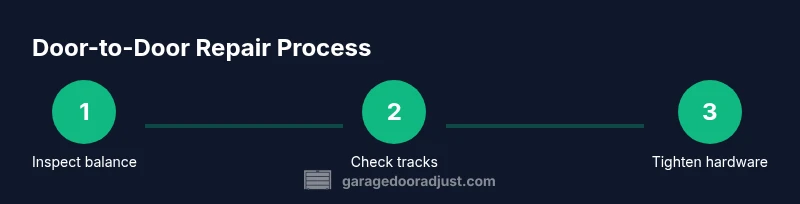
The door-to-door workflow follows a logical sequence: inspect the door’s balance, check the tracks and rollers, tighten hardware, lubricate moving parts, test the opener safely, and verify safety features. This workflow helps you isolate symptoms to a specific subsystem and prioritize fixes. Use this guide to structure your work: start with non-destructive adjustments you can perform from the ground, then assess if the problem persists and whether parts may need replacement. Throughout the process, document findings and update your checklist. This approach aligns with GarageDoorAdjust’s method for efficient and safe repairs, enabling you to decide if the job remains a DIY task or requires a licensed technician for more complex components such as torsion springs or sensor recalibration.
Preventive maintenance to extend life and reliability
Regular maintenance reduces the likelihood of unexpected failures. After completing each repair, schedule a brief lubrication routine every 6–12 months for hinges, rollers, and tracks; clean tracks to remove dust and debris; inspect weather seals for wear and replace if torn; and test balance and safety reverse monthly. A simple quarterly inspection helps catch wear early, saving time, frustration, and money later. By integrating door-to-door checks into your home maintenance routine, you can identify and address minor issues before they escalate, preserving door performance and safety. The practice also aligns with GarageDoorAdjust’s emphasis on proactive care rather than reactive fixes.
Troubleshooting common failures and when to replace components
Many problems are solvable with a few targeted fixes. If you notice slow operation, binding, or frequent opener resets, check for obstruction, misalignment, and sensor misalignment first. If the door sags or feels heavy when opening manually, balance may be off and springs or cables could be under strain. Worn rollers or damaged tracks are common culprits that affect alignment and motion. For any issue involving springs, cables, or torsion devices, proceed with extreme caution and consider professional service due to high safety risk. Recording symptoms, dates, and steps taken helps you evaluate whether a replacement part is needed or a professional visit is warranted. GarageDoorAdjust reinforces that transparent, documented checks improve decision-making when budgeting repairs.
Tools & Materials
- Ladder (stable and tall enough to reach tracks)(Position on a flat surface; have a spotter if possible)
- Screwdrivers (flat and Phillips)(Size #2 is common for many hardware screws)
- Wrenches/Hex keys(Metric and SAE as needed for bolts)
- Pliers and adjustable wrench(For gripping, bending, and holding parts)
- Level or carpenter’s square(Check track alignment and door plumb)
- Lubricant suitable for metal-on-metal (garage-door lubricant)(Avoid graphite; silicone-based is common)
- Rags or brushes for cleaning tracks(Remove dust, debris, and built-up grime)
- Lubricant for weather seals(Keep seals pliable; don’t over-lubricate)
- Replacement rollers or hinges (if worn)(Confirm before purchasing; worn parts may require professional installation)
- Safety glasses(Protect eyes from debris and springs)
- Non-slip work gloves(Grip and hand protection)
- Measuring tape(Verify clearances and alignment)
- Voltage tester (for opener inspection)(Ensure power is off when working near electrical components)
Steps
Estimated time: 60-90 minutes
- 1
Check door balance and tracks
With the door closed, disconnect the opener to isolate it. Manually lift the door halfway and release; if it does not stay, the springs or balance may need adjustment by a professional. Inspect tracks for dents, misalignment, or obstruction, and clean them with a brush.
Tip: Never force a door along a misaligned track; fix the alignment first to avoid binding. - 2
Disconnect power and test manual operation
Unplug the garage door opener or switch off the outlet. Attempt to raise and lower the door manually. If it’s heavy or stops, check the springs and hardware. This step ensures the issue isn’t electrical.
Tip: Mark the opener’s rail alignment before disconnecting so you can reattach accurately. - 3
Inspect rollers, hinges, and mounting hardware
Look for worn, cracked, or missing rollers and loose hinges. Tighten mounting screws on tracks and brackets. Replace worn hardware only if confident in alignment impact.
Tip: Loose hardware is the most common cause of noisy operation and misalignment. - 4
Lubricate moving parts and clean tracks
Apply lubricant to hinges, rollers (if metal wheels), and track joints. Wipe away excess oil to prevent dust buildup. Avoid lubricating the tracks themselves as this can attract grime.
Tip: Lubrication should be light and targeted; over-lubrication invites debris. - 5
Realign tracks and test safety sensors
Realign any bent tracks using level as a guide. Reconnect the opener and test the safety reversal by placing a small object in the door path. Replace or adjust sensors if they don’t detect the object.
Tip: Ensure sensor eyes are clean and unobstructed for reliable reversal. - 6
Test operation and document results
Operate the door from both the wall control and the remote. Confirm smooth operation, steady balance, and proper reversal. If any step fails, stop and reassess or call a professional.
Tip: Keep a simple log of issues and fixes to reference later.
Got Questions?
Is door-to-door garage door repair safe for a DIY attempt?
DIY repairs are safe for non-technical aspects like lubricating parts, cleaning tracks, and tightening hardware. Avoid high-tension springs or electrical work near the opener unless you are trained. If unsure, consult a professional.
DIY fixes are okay for basic lubrication and cleaning, but avoid springs and electrical work if you’re not trained. Contact a pro for risky tasks.
What are the signs that a garage door needs professional attention?
Persistent misalignment, unusual noises, door binding, slow response from the opener, or a door that doesn’t stay balanced are signs you should seek professional service. Don’t ignore these symptoms, as they can indicate dangerous or expensive failures.
If misaligned tracks, unusual noises, or unbalanced operation persist, call a pro.
Do I need special tools for door-to-door repairs?
A basic homeowner toolkit plus garage-door specific items (proper lubricant, replacement rollers if needed) will cover most non-spring tasks. For safety-critical components, consult a professional and use specialized tools.
A standard toolkit plus some garage-door lubricants is enough for most tasks; leave springs to pros.
Can DIY fixes void my warranty?
Warranties vary by manufacturer and installer. DIY repairs may affect coverage if they involve disallowed modifications or unsafe practices. Check your warranty terms and consult the manufacturer or installer for clarification.
Check your warranty terms; some DIY repairs can affect coverage depending on the manufacturer.
How much does door-to-door repair typically cost?
Repair costs vary by issue and parts required. For budgeting, consider the price of common wear parts and labor, and obtain multiple quotes for complex repairs like spring or opener replacements. Always weigh the cost against potential safety risks.
Costs vary; get quotes for complex tasks and compare to replacement parts costs.
Quick Summary
- Identify the root cause with a door-to-door checklist
- Prioritize safety and know when to call a pro
- Maintain tracks, rollers, and hardware regularly
- Document fixes and test safety features after each repair
- Plan preventive maintenance to minimize future problems