Cracked Garage Door Panel: Quick Repair Guide
Step-by-step guide to diagnose and safely handle a cracked garage door panel, with practical safety tips and guidance on when to call a pro for replacement.


The most likely cause of a cracked garage door panel is impact damage or metal fatigue from years of use. Quick fix: stop using the door until the panel is evaluated, disconnect the opener to reduce load, and call a professional for panel replacement or reinforced repair. For safety, never attempt to weld or bend a cracked panel yourself.
Understanding the Risk and Immediate Action
A cracked garage door panel is not just a cosmetic issue; it can compromise the structural integrity of the door and the safety of anyone nearby. The panel helps bear the door’s weight and keeps the springs in balance. When a crack appears, the door may sag, bind, or suddenly fail, especially if the track or rollers are under load. According to GarageDoorAdjust, early recognition and conservative handling are key to preventing further damage. The goal is to avoid sudden movement, prevent pinch injuries, and minimize the risk of a total panel failure that could cause the door to drop unexpectedly. If you see a crack, stop using the door, keep people away from the area, and plan a professional assessment as the next step.
Safety First: Stop, Secure, and Assess
Immediately disengage the door from the opener, and if you can do so safely, secure the door in the open or closed position to prevent it from moving. Do not try to lift or support a cracked panel by yourself; a single misstep can worsen the fracture or cause the panel to snap. Clear the area of pets and children, and avoid touching sharp edges around the crack. If the door is resting on a spring-loaded track, consider contacting a pro rather than adjusting the tension yourself. This is one of those situations where professional assessment is strongly advised to prevent injury and further damage. GarageDoorAdjust team members emphasize safety as the top priority when cracks are visible.
Visual Clues: What a Crack Tells You
Cracks can vary from fine hairline fractures to longer splits that run across the panel. Look for signs beyond the crack itself: rust along edges, delamination between layers, bending or warping, or misalignment with adjacent panels. Any movement when you operate the door suggests the crack may be affecting the panel’s structural integrity. If you notice cracks near mounting points or around the hinges, the problem may extend beyond surface damage. Documenting the crack with photos can help a technician assess whether a repair is feasible or a full panel replacement is required.
When DIY Becomes Risky
For most cracked panels, DIY repair is not a reliable or safe solution. Epoxy or sealants may only temporarily slow a crack but won’t restore load-bearing capacity. Attempting to weld a structural panel or bending it back into shape can create stress concentrations that worsen failures. If you’re determined to perform a basic inspection or temporary stabilization, limit door movement and always wear eye protection and gloves. The safer, more durable option is professional replacement, especially if the panel is large, multi-layered, or hydraulically integrated with the opener.
Diagnosing the Scope: Common Scenarios
In many cases, a crack results from a single impact (a car door, ladder, or stored item brushing the panel) or long-term fatigue from repeated opening/closing cycles. If the crack is isolated to one panel and the rest of the door moves smoothly, a panel replacement might be sufficient. If cracks appear on multiple panels, or the door shows signs of misalignment or track binding, the problem could be systemic and may require more extensive repairs. A professional can evaluate the entire door system—panel integrity, track alignment, spring tension, and opener synchronization—to determine the safest fix.
Replacement vs Repair: Making the Right Call
Replacement is often the most reliable fix for cracked panels, particularly if the crack compromises structural support or if the panel is bent. Repaired panels may be acceptable for minor cracks in non-load-bearing areas, but this depends on the door type and manufacturer guidance. When choosing between repair and replacement, consider the door’s age, the extent of the damage, insurance considerations, and the availability of a color and texture match. Your installer can provide a quote and explain the expected lifespan of a repair versus a full replacement.
What to Expect During Replacement
During a replacement, a technician typically removes the damaged panel, checks the tracks and springs for related wear, and installs a new panel that matches the door’s design. The job may involve color matching, hardware transfer, and possible track adjustments. After installation, expect a functional test, minor alignments, and a safety check to ensure the door opens and closes smoothly without noise or binding. Ask for a written warranty on the panel and any labor involved.
Prevention: Extending Panel Life
Regular maintenance helps prevent cracks from becoming larger. Lubricate moving parts, check track alignment, tighten mounting hardware, and inspect for rust or corrosion. Keep the panel clean and free of debris, and avoid slamming the door or using excessive force when closing. If you notice dents, rust, or loosening screws, address them promptly. A proactive maintenance habit reduces the risk of panels crack under stress and improves overall door longevity. GarageDoorAdjust notes that routine inspections can catch issues before they become major problems.
Steps
Estimated time: 1-2 hours
- 1
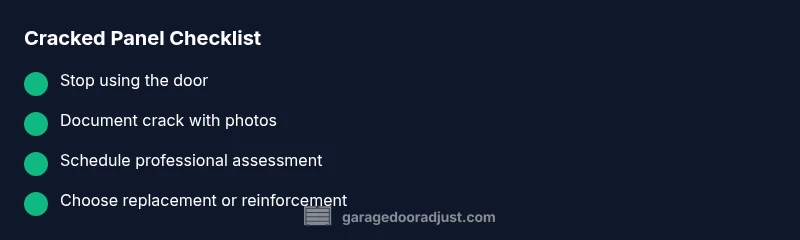
Ensure safety and stop operating the door
Power down the opener and keep people away from the door. Confirm the door stays in place and cannot move on its own.
Tip: Always wear eye protection when around the door area. - 2
Document the damage
Take clear photos from multiple angles and note any additional wear on tracks or hinges for the technician.
Tip: Photos help the technician prepare the right replacement part. - 3
Schedule a professional evaluation
Contact a qualified technician to inspect the crack, assess integrity, and discuss replacement vs repair options.
Tip: Ask about warranty on parts and labor. - 4
Decide on replacement vs reinforcement
Based on the assessment, choose whether to replace the panel or reinforce the existing structure if advised by the pro.
Tip: Reinforcement is rarely a long-term substitute for a major crack. - 5
Prepare for the service visit
Clear the area, note measurements, color, and panel style; ensure access to electrical outlets and the shutoff switch.
Tip: Have color/texture samples handy for matching. - 6
Test after installation
Run the door slowly through a full range of motion to confirm smooth operation and proper alignment.
Tip: Listen for unusual noises or resistance and report them.
Diagnosis: Visible crack on a garage door panel
Possible Causes
- highImpact damage from a vehicle or object
- mediumMetal fatigue from years of use
- lowImproper installation or uneven tracks
Fixes
- easyCease operation and disconnect the opener to reduce load
- mediumSchedule professional assessment for panel replacement or reinforcement
- easySecure area and brace only if a professional confirms it’s safe
Got Questions?
Can a cracked garage door panel be repaired?
Small, non-structural cracks may be stabilized temporarily, but most cracks compromise load-bearing capacity and require panel replacement. A professional should evaluate to determine the safest option.
Small cracks might be stabilized briefly, but usually replacement is needed after a professional evaluation.
Is it safe to operate the door with a cracked panel?
No. Operating a door with a cracked panel can lead to sudden failure, pose injury risk, and cause further structural damage.
No, do not operate the door until it’s inspected by a pro.
How long does replacement typically take?
Time varies by availability and door type, but plan for a service visit and replacement on the same day when parts are in stock.
The replacement often takes a few hours, depending on availability and the door model.
Will homeowner’s insurance cover a cracked panel?
Coverage varies by policy and cause of damage. Check with your insurer about accidental damage or structural repair coverage.</br>
Coverage depends on your policy; contact your insurer to confirm.
What measurements are needed to order a replacement panel?
Record door width, height, panel style, track type, and color. Having these details helps ensure a proper match.
You’ll need width, height, panel style, track type, and color to order the right replacement.
Watch Video
Quick Summary
- Stop using the door when a crack is visible
- Have a professional assess for replacement vs repair
- Prioritize safety and disable the opener during inspection
- Choose a replacement that matches your door for best results
- Implement regular maintenance to prevent future cracks