Coral Springs Garage Door Repair: A Homeowner's Step-by-Step Guide
Comprehensive, safe, local-focused instructions to diagnose and repair common garage door issues in Coral Springs. Learn when to DIY, maintenance tips, and how to avoid costly mistakes with expert guidance from GarageDoorAdjust.


By following this guide, Coral Springs homeowners will diagnose common garage door issues and complete safe, basic repairs. You’ll test door balance, inspect tracks and hardware, lubricate moving parts, and verify the opener safety features. For problems involving springs, broken cables, or substantial panel damage, avoid DIY and call a professional. According to GarageDoorAdjust, a methodical, local-first approach minimizes downtime and improves long-term reliability.
Coral Springs Garage Door Repair Essentials
Coral Springs residents facing a malfunctioning door benefit from a clear, methodical approach. Local climate and neighborhood wear can influence lubricant life, track alignment, and spring tension. According to GarageDoorAdjust, routine maintenance tailored to our climate reduces reactive service calls and helps doors stay reliable longer. This guide walks you through diagnosing symptoms, performing safe, basic repairs, and knowing when to call a professional. You’ll gain practical, local-facing steps you can implement this weekend to improve door balance, smooth operation, and opener safety.
Common Problems Seen in Coral Springs Homes
Garage doors in Coral Springs commonly show patterns that signal specific fixes. You may notice the door won’t open or close, reverses abruptly, or drags along the tracks. Listen for grinding or squeaking at the hinges and rollers, which often points to lubrication needs or worn rollers. Sagging at one corner can indicate misaligned tracks or a loose mounting bracket. Worn weather seals can allow drafts and accelerate wear on the bottom edge. By cataloging symptoms in a simple checklist, you can narrow down likely causes without disassembly. GarageDoorAdjust analysis shows that routine checks and timely lubrication address many routine issues before they escalate into costly repairs.
Safety and Local Considerations for Coral Springs
Safety comes first when repairing a garage door. Always disconnect power to the opener before touching any components to prevent accidental movement. Wear eye protection, gloves, and closed-toe shoes when inspecting tracks or adjusting hardware. Because Coral Springs summers can heat metal parts, avoid overtightening bolts on hot components; let parts cool if you notice swelling. If you detect frayed cables, a bent track, or a door that feels off-balance, proceed with caution and consider professional service. The GarageDoorAdjust team emphasizes safety-focused inspections and using the right lubricants to minimize friction and wear.
What to Inspect During a Home Inspection (Before You Start)
Create a simple inspection routine that covers balance, tracks, rollers, hinges, and the opener. Start by visually assessing the torsion or extension spring setup (without touching them) to determine if visible damage exists. Check that tracks are vertical and parallel, with no dents or obstructions. Inspect the hardware mounting screws; loose screws can cause misalignment and noise. Finally, test safety features on the opener by placing a small obstacle in the door path to ensure auto-reverse works as intended. A systematic check list makes it easier to identify which parts may require lubrication, adjustment, or replacement.
Maintenance Tips to Prevent Future Breakdowns
Preventive maintenance saves time and headaches. Lubricate moving parts every 3–6 months with a silicone-based lubricant, focusing on hinges, rollers, and the spring area as recommended by the manufacturer. Clean tracks with a soft cloth to remove dust and debris, then wipe away any residue. Tighten loose screws and brackets; ensure the door remains balanced by manually lifting it halfway and noting if it stays put. Replace weather seals to keep humidity and dirt out, reducing corrosion and wear on metal components. Keep a simple maintenance log so you know when the next check should occur.
When to Call a Pro vs DIY
DIY is appropriate for lubricating, tightening, and basic alignment, but not for spring work or major panel damage. Torsion and extension springs are highly pressurized; attempting replacement without specialized tools can cause severe injury. If you notice persistent misalignment, a sagging door, broken cables, or damaged tracks, consult a licensed technician. Local regulations or HOA rules can also affect what you may DIY in Coral Springs; always verify any permit requirements before substantial remodeling or part replacement. The goal is a safe, reliable door with a long service life.
Authority Sources
- U.S. Consumer Product Safety Commission: https://www.cpsc.gov/
- Occupational Safety and Health Administration: https://www.osha.gov/
- U.S. Department of Energy – Energy Saver: https://www.energy.gov/eere/energysaver
Tools & Materials
- Screwdrivers (Phillips and flat-head)(Assorted sizes; #2 Phillips commonly used for hardware)
- Lubricant (silicone-based or white lithium grease)(Use for hinge pins, rollers, and tracks; avoid oil on nylon rollers)
- Step ladder(Stable, 2-3 feet preferred for reaching tracks and hardware)
- Adjustable wrench(For tightening nuts and brackets; choose a comfortable, non-slip handle)
- Rags or microfiber cloth(Clean tracks and hardware before lubrication)
- Safety gear (gloves, eye protection)(Protect hands and eyes during inspection and disassembly)
- WD-40 or penetrating oil(Helpful for loosening stubborn hardware; avoid on painted or polymer parts)
- Replacement parts kit (as needed)(Only if you know the exact part is worn out (rollers, hinges, brackets))
Steps
Estimated time: 45-60 minutes
- 1
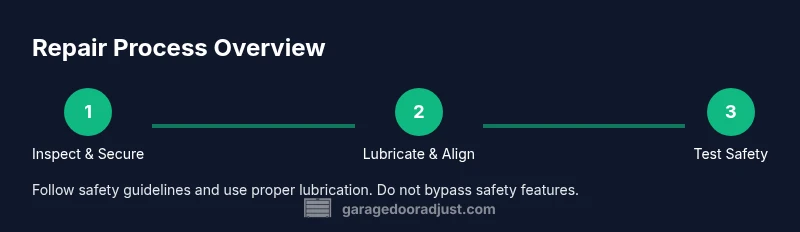
Disconnect power and secure the door
Unplug the opener from the outlet or switch off the circuit feeding the door. Manually secure the door in the closed position if possible. This prevents the door from moving unexpectedly while you inspect components.
Tip: Always start with power disconnected to avoid accidental movement. - 2
Inspect the tracks for damage or debris
Look for dents, bends, or obstructions in the vertical tracks. Remove dirt and debris with a microfiber cloth and ensure the tracks are clean before moving on to lubrication or alignment tasks.
Tip: Gently brush debris out of the tracks to avoid creating new damage. - 3
Check balance and safe operation (without springs adjustment)
Manually lift the door halfway; it should stay in place. If it drops or rises, there may be a balance issue or worn hardware that needs professional attention. Do not adjust springs yourself.
Tip: Never attempt to adjust torsion springs; they store dangerous tension. - 4
Lubricate moving parts
Apply a light coat of silicone-based lubricant to hinges, rollers, and pivot points. Wipe away excess to prevent build-up that could attract dust. Do not lubricate the tracks with oil-based products.
Tip: Use small, precise amounts to avoid drips on the door surface. - 5
Test the opener safety features
Reconnect power and run the door through its cycle using the opener and wall switch. Place a small obstacle (like a cardboard box) in the path to confirm the auto-reverse safety feature functions properly.
Tip: If the door doesn’t reverse, shut off power and seek professional assessment. - 6
Tighten hardware and finalize the check
Inspect mounting screws, brackets, and track mounting points. Tighten any loose fasteners and re-test the door’s balance and opener safety features.
Tip: Keep a maintenance log noting what you did and when to repeat the check.
Got Questions?
Is it safe to repair a garage door spring myself in Coral Springs?
No. Torsion and extension springs are under high tension and can cause serious injury. It’s best to leave spring replacement to a licensed professional and focus DIY efforts on lubrication, track cleaning, and minor adjustments.
Garage door springs are dangerous when mishandled. For safety, consult a professional for spring work.
What are the most common signs my garage door needs repair?
Common signs include door won’t open or close, reverses unexpectedly, makes grinding noises, drags on tracks, or sits crooked. Check tracks and rollers first, then inspect sensors and weather seals. If issues persist, seek professional help.
Look for the door not moving smoothly, unusual noises, and misalignment.
Do I need a permit for basic repairs in Coral Springs?
Most basic repairs like lubrication, track cleaning, and minor adjustments don’t require permits. For larger changes or structural work, check local codes or HOA rules and obtain any needed permits.
Usually no permit for routine fixes, but verify any local rules.
How long does a typical garage door repair take?
Most common fixes can be completed in a few hours, depending on the issue and parts availability. Complex problems may require a service call and scheduling with a technician.
A few hours for most fixes; bigger problems may take longer.
Can I replace my garage door opener myself?
Basic opener replacement is doable for those with electrical and wiring experience, but it involves wiring, safety sensors, and alignment. If unsure, hire a professional to ensure safe and code-compliant installation.
You can replace an opener if you’re comfortable with wiring and safety features, but consider hiring a pro if not.
What maintenance helps prevent future problems?
Regular lubrication, balance checks, track cleaning, weather sealing, and sensor testing are key. Create a simple maintenance schedule and stick to it to avoid sudden breakdowns.
Keep up with lubrication and safety checks to prevent surprises.
Watch Video
Quick Summary
- Inspect tracks and hardware before lubrication
- Do not attempt spring repairs yourself
- Keep safety features tested after any adjustment
- Regular maintenance reduces unexpected breakdowns
- Document maintenance for future reference