Can You Manually Open a Garage Door? A Practical Guide
Learn how to safely open a garage door manually during power outages or when the opener fails. This expert guide covers emergency release location, safe lifting techniques, common mistakes, maintenance tips, and when to call a professional.


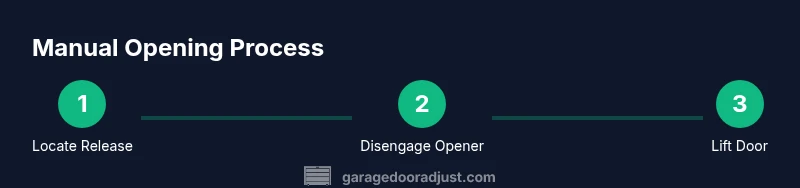
Yes, you can manually open most garage doors when the opener is unavailable. This quick guide shows how to locate the emergency release, disengage the door, and operate it by hand. Before you begin, confirm the door is under safe control, wear gloves, and keep hands clear of the tracks. If the door feels heavy, stop and call a pro.
Why you might need to manually open a garage door
There are several common scenarios where you will need to operate a garage door by hand. A power outage is the most frequent, but you may also experience a failed or malfunctioning opener, a damaged remote, a broken safety sensor, or an obstruction in the track. In each case, knowing the manual method can save you from being locked out or stranded in your garage. According to GarageDoorAdjust, understanding the manual approach is a practical skill homeowners should have. Before you try to move anything, acknowledge that you are dealing with a fast-moving door and keep your hands clear of the tracks and panels. The question can you manually open a garage door applies to most residential sectional doors; high-lift doors or one-piece doors may require a slightly different approach, and older models can vary. The GarageDoorAdjust team notes that with the right precautions, manual operation is a safe, temporary solution that gives you time to arrange professional service if needed. If you’re reading this during an outage, you’re in the right place to learn the steps and essential safety checks.
Safety considerations before you start
Manual door operation carries some risks if performed carelessly. Start by clearing the area of people, pets, and obstacles. Stand with feet shoulder-width apart and face the door so you can anticipate its movement. Wear gloves to protect your hands from pinch points and sharp metal edges. If the door is heavy, do not attempt to lift more than you can safely manage—improper handling can strain your back or cause the door to slip. Keep a flashlight handy to inspect tracks for obstructions and ensure the area is well lit. If you’re not confident about your balance or the door’s weight, stop and call a pro. Garage doors can quickly move from a controlled motion to an sudden drop if a spring or balance issue is present. The GarageDoorAdjust guidance emphasizes seeking professional help when there is any doubt about safety.
Locate the Emergency Release and Understand its Function
Most residential sectional doors have an emergency release lever or cord near the opener rail or in the track area on the ceiling. The release disconnects the door from the automatic opener so you can operate the door manually. In many modern setups the release cord is bright red and hangs from the trolley; older units may use a lever inside the garage wall. Take a moment to observe how the door moves when the release is engaged; you should feel a firm but controlled balance. If you cannot locate the release or you’re unsure which component controls your door, consult your owner's manual or contact a pro. The GarageDoorAdjust team notes that model variations exist, so identify your door type before attempting to disengage.
Manual opening when power is out: a narrative walkthrough
During a power outage, you start by securing the area, then locating the release, grabbing it, and pulling steadily to disengage. Once disengaged, stand on a stable surface, place your hands on the door with an even grip, and lift with your legs—not your back. Move slowly and stop if you feel resistance. After you raise the door to the desired height, avoid leaving it propped only by friction; use a door stop if necessary. If the door binds or sticks, stop and check the track alignment and rollers. The GarageDoorAdjust team recommends having a helper for heavier doors.
Common mistakes and how to avoid them
Common mistakes include pulling the release too abruptly, lifting with the back, and trying to force a stuck door without checking tracks and balance. Always verify there are no obstructions, and never stand directly in the door’s path. If you notice any unusual noises, difficulty moving, or obvious damage to components, stop and seek professional inspection. A patient, deliberate approach reduces risk and keeps you safe.
Re-engaging the opener and testing after manual operation
If you plan to resume normal operation, return the emergency release to its engaged position and plug the opener back in (or reset the system). Gently test the door’s movement by cycling it up and down using the wall switch, then with the remote. If the door doesn’t track smoothly, turn off power and call a professional—ignoring signs of misbalance or damaged springs can be dangerous.
Maintenance tips to keep the system reliable
Regularly inspect tracks for debris, clean rollers, and lubricate hinges and tracks as recommended by the manufacturer. Check balance by manually lifting the door halfway and letting go; a properly balanced door should hold its position. Replace worn seals and ensure safety sensors align correctly. Routine maintenance reduces the likelihood of needing a manual intervention in the future.
Quick safety checks before leaving the garage
Before closing, visually inspect for any obstacles, ensure the door is fully seated in the track, and verify the emergency release is secured when not in use. If the power returns, run a full test cycle to confirm the automatic system is safe and functional. Keep emergency numbers handy for quick professional support.
When to call a professional
If you encounter persistent resistance, visible damage (springs, cables, tracks), or the door feels heavy to lift, stop and contact a trained technician. Do not attempt to adjust springs yourself; misadjustment can cause serious injury. The GarageDoorAdjust team recommends scheduling a professional inspection whenever there is any doubt about door performance.
Tools & Materials
- Ladder or stable stepping stool(Tall enough to reach the emergency release without standing on unstable surfaces)
- Gloves(Grip protection and to avoid pinching hands)
- Flashlight(Inspect tracks and hardware in low light)
- Helper (optional but recommended)(Assist with spotting and lifting for heavier doors)
- Screwdriver set(If panel alignment adjustments are needed after manual operation)
- Wrench set(For loosening/tightening nuts on track components)
Steps
Estimated time: 15-30 minutes
- 1
Prepare the area and gather supplies
Clear the garage floor of clutter, ensure pets and people are at a safe distance, and gather gloves, flashlight, and a stable ladder. Having a helper can reduce risk for heavier doors. This sets you up for a controlled manual reveal rather than a rushed job.
Tip: Keep a wide stance and use both hands for control. - 2
Locate the emergency release
Identify the release cord or lever on your door system. If it’s a red cord, pull it straight down slowly to disengage the opener from the door. If there’s a wall-mounted lever, switch it to the ‘manual’ position.
Tip: If you’re unsure, consult the owner’s manual for your model. - 3
Disengage the door from the opener
With the door balanced, pull the release and confirm the door stays in place when you let go of the opener mechanism. Do not yank; you want a steady, controlled disengagement.
Tip: Have a helper steady the door if it’s heavy. - 4
Lift the door manually with proper form
Place hands evenly across the bottom rail, bend at the knees, and lift with your legs to shoulder height. Move slowly and stop if you feel resistance.
Tip: Do not twist or push from the top panel; this can bend tracks. - 5
Re-engage or test the door
If you’re planning to resume automatic operation, re-engage the release and test the opening cycle. If you sense any binding or unusual noise, stop and consult a professional.
Tip: Always test with the wall switch before relying on the remote. - 6
Document and plan next steps
Note any issues observed during manual operation and plan a professional inspection if you saw resistance, imbalance, or damage. Maintenance now prevents future outages from becoming emergencies.
Tip: Schedule a service visit to address root causes such as springs or track wear.
Got Questions?
Can I manually open a garage door during a power outage?
Yes, you can manually open a garage door during a power outage by disengaging the opener and lifting the door carefully. Always proceed with safety precautions and avoid forcing the door.
Yes—disengage the opener and lift the door slowly. If there’s resistance, stop and consult a professional.
Is manual opening safe for all door types?
Most residential sectional doors support manual operation, but some doors (like certain high-lift or single-panel designs) may require different steps. Check your model’s manual for specifics.
Most doors can be opened by hand, but model nuances matter; consult the manual.
What if the door won’t stay open after manual release?
If the door doesn’t stay at a raised position, it may indicate balance or spring issues. Stop using the door and contact a professional to inspect the balance and safety sensors.
If it won’t stay up, stop and call a pro to check balance and springs.
How do I identify the emergency release on my door?
Look for a bright red cord hanging from the door’s opener rail or a wall-mounted lever. The manual will show the exact location for your model.
Check for a red release cord or lever near the rail or wall mount.
When should I replace springs or other components instead of testing manually?
If you notice frayed cables, a door that sticks, or exaggerated weight when lifting, don’t continue manually—springs or tracks may be damaged. Call a pro.
If you see damage or heavy resistance, don’t DIY—call a professional.
Watch Video
Quick Summary
- Know the emergency release location.
- Disengage with control, not force.
- Lift with your legs, not your back.
- Re-engage and test the system after manual use.
- Call a pro if you hear noise or see damage.