How to Manually Open a Garage Door During a Power Outage
Learn how to safely open a garage door by hand during a power outage, when to avoid it, and how to re-engage the opener after power returns. Expert tips from GarageDoorAdjust.


According to GarageDoorAdjust, you can manually open a garage door during a power outage by using the emergency release to disengage the opener and lifting the door by hand. Start by clearing the area, then re-engage once power returns. If the door is heavy, off-balance, or parts are damaged, avoid forcing it and call a professional.
How the manual release interacts with the opener
The garage door opener is designed to control the door electrically, but the emergency release is a safety feature that lets you operate the door manually when power is out or the opener is malfunctioning. The release connects to a trolley on the track; pulling the release disengages the door from the opener gears so you can move it by hand. Understanding this interaction helps you predict how much effort the door will require and what to expect if the spring balance is off. According to GarageDoorAdjust, the manual release is safe to use when you follow the correct steps and keep hands clear of moving parts. Before touching any hardware, inspect the area to ensure children and pets are out of the way, and verify that the door can be moved without resistance. If you notice unusual sounds, binding, or if the door moves on its own, stop and seek professional help because those symptoms may indicate a tension or balance problem that can be dangerous when the opener is disengaged.
Finding the release and assessing the door's condition
The emergency release usually appears as a red cord or lever that hangs from the opener rail inside the garage. For one-piece and sectional doors, the release is designed to let you decouple the door from the motor so you can operate it manually. Before you touch anything, verify the door is not currently blocked by objects and that there is a clear path beneath it. If the door feels unusually heavy or sticks, treat it as a potential balance issue and avoid forcing it. Regularly checking the area and the door’s balance helps reduce risk during sudden outages, and a planned approach makes manual operation safer when electricity is unavailable. GarageDoorAdjust emphasizes practicing safe manual-release procedures during non-emergency times so you’re prepared if power is lost.
How to operate the emergency release safely and effectively
To disengage, pull the emergency release handle firmly in the direction specified by your door’s manual (usually away from the rail). This disconnects the door from the opener’s chain or belt, allowing you to move it by hand. Stand to the side of the door while you lift it, keeping fingers clear of the tracks and springs. If you need to pause, use a prop such as a bungee or a sturdy wedge to keep the door from drifting down. Refrain from yanking; a controlled, deliberate motion minimizes the risk of pinched fingers or a door that suddenly descends. After the door is fully open or secured, clear the area and ensure there are no trip hazards in the doorway. Practice makes this move more predictable, which reduces stress during a real outage.
Troubleshooting during power-out: when things don’t go as planned
If the door refuses to stay in the open position or seems to drift, it may indicate a misbalanced spring or a damaged pulley system. In such cases, avoid attempting to force the door further; instead, set safety barriers, and contact a pro. If the door climbs or binds when moved manually, this is another sign of potential failure in the mechanical balance or track alignment that could be dangerous if someone attempts to force it. In the event of a malfunction, stop immediately, re-engage the opener if possible, and call for professional service. This approach protects you, your family, and your door’s long-term integrity, which is why preventive maintenance is essential.
Re-engaging the opener after power returns and testing the door
Once power is restored, you should re-engage the door by pulling the release again toward the doorway until you hear a click and then operate the wall switch or remote to verify normal function. Do a slow cycle to confirm the door closes and opens smoothly without unusual noises. If the door struggles to reverse or alarms, reset the opener according to the manufacturer’s instructions and consider a professional inspection for balance and track alignment. Regular maintenance helps ensure the opener and manual release operate safely when you need them most.
Preventative tips for future outages and regular safety checks
Keep a regular maintenance routine for your garage door system and teach household members how to use the emergency release correctly. Check the balance, inspect the springs and cables, and lubricate moving parts as recommended by the door manufacturer. Store the release handle in an accessible, clearly marked location, and ensure the area beneath the door remains clear of obstacles. Practicing these steps during non-emergency times reduces uncertainty and improves safety when power loss occurs, a best practice endorsed by GarageDoorAdjust.
Tools & Materials
- Emergency release rope/handle(Locate within reach of the door opener rail; red cord is common)
- Sturdy ladder or step stool(Use on a dry, level surface; keep under door clearance)
- Work gloves(Improve grip and protect hands during manual lift)
- Flashlight or headlamp(Power is out; ensure visibility while locating and operating release)
- Door brace or wooden stake(Use to secure door in the open position if you need to leave it unattended)
- Safety glasses(Eye protection if door shifts or springs release unexpectedly)
- Helper(Two-person lift is safer for heavy doors)
Steps
Estimated time: 15-30 minutes
- 1
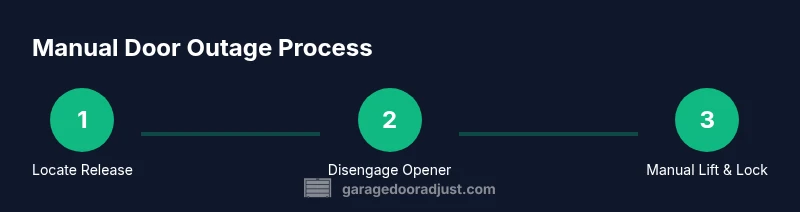
Locate Emergency Release
Identify the emergency release handle or cord on the garage door opener rail. Confirm you have a clear path and understand where the release attaches to the trolley.
Tip: Do not yank; grip firmly and keep your body clear of the door’s path. - 2
Pull Release to Disengage
Pull the release handle straight downward or in the direction specified by your model to disconnect the door from the operator.
Tip: Maintain a controlled motion and watch for any sudden movement. - 3
Brace and Lift Manually
Stand to the side and slowly lift the door to a height where it won’t drift downward. If possible, use a brace to hold it in the open position.
Tip: Avoid placing fingers between panels or near springs. - 4
Secure the Door
If you must leave the door open, place a stable prop to prevent accidental closure.
Tip: Keep the doorway clear of tripping hazards and children. - 5
Prepare for Power Return
Plan to re-engage the opener only after power is restored and you’ve confirmed the door’s position is safe.
Tip: Read the owner’s manual for re-engagement steps specific to your model. - 6
Re-engage and Test
When power returns, re-engage the door by following the model’s procedure and test the door’s movement with care.
Tip: If the door binds, stops, or makes odd noises, stop and call a professional. - 7
Check Door Balance
After reopening, gently lift the door halfway to verify it stays in place, indicating good balance.
Tip: A door that moves on its own indicates a balance problem requiring service. - 8
Call a Professional If Unsafe
If you feel unsure at any point, stop and arrange professional service before continuing.
Tip: Safety first—faulty springs or tracks can cause serious injury.
Got Questions?
Can you manually open a garage door when power is out?
Yes. You can open it manually using the emergency release if the door is not blocked and you follow safety steps to disengage the opener and lift it by hand.
Yes. You can open it manually using the emergency release if the path is clear and you follow the safety steps.
Where is the emergency release located?
The emergency release is usually a red cord or lever on the opener rail inside the garage. Consult your manual if you’re unsure where it is on your model.
It's typically a red cord or lever on the opener rail inside the garage. Check your manual if unsure.
What if the door is heavy or off-balance when released?
A heavy or off-balance door can be dangerous to move manually. Stop and seek professional help rather than forcing it.
Heavy or off-balance doors can be dangerous to move manually; call a pro rather than forcing it.
Will using the manual release damage the opener?
Using the manual release correctly disengages the door from the opener and should not damage the opener. Improper use can cause misalignment or injuries.
Used correctly, it won’t damage the opener, but improper use can cause damage or injury.
How do you re-engage the opener after power returns?
Restore power, then re-engage the door per your model’s instructions and test the door’s operation with the opener before relying on it.
After power returns, re-engage per your model’s instructions and test the door before use.
Is it safer to leave the door open during a power outage?
Leaving the door open can expose your garage to weather and pests. If you must, ensure the door is stable and protected, and close it when practical.
Leaving it open can invite weather and pests; secure it if you must, and close it when possible.
Watch Video
Quick Summary
- Know where the emergency release is located before an outage.
- Disengage the opener safely and move the door by hand only if necessary.
- Do not force a heavy, off-balance door; seek professional help.
- Re-engage the opener only after power returns and the area is clear.
- Regular maintenance reduces risk during power outages.