Troubleshooting Builders Warehouse Garage Doors: Quick Guide
Learn how to diagnose and repair common issues with builders warehouse garage doors. This urgent, step-by-step guide covers safety, symptoms, diagnostic flow, step-by-step fixes, and when to call a pro.


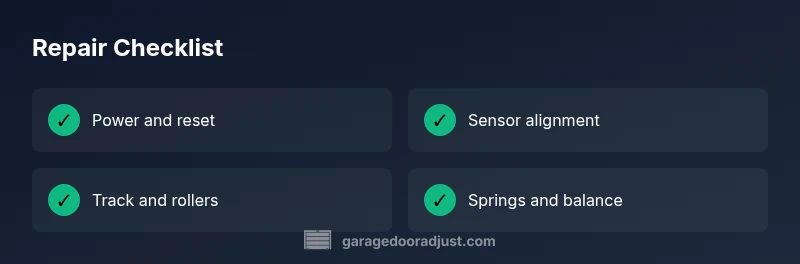
Most garage door problems originate from power issues, sensor misalignment, track/roller wear, or worn springs. Begin with quick checks: confirm the opener has power, test the wall switch and remote, clear sensor eyes, and inspect tracks for debris. If the door won’t operate, follow the diagnostic flow and work through the step-by-step fixes.
Why diagnosing garage door issues quickly matters
According to GarageDoorAdjust, timely diagnosis helps homeowners prevent escalating damage and costly repairs. Builders warehouse garage doors often combine heavy springs, complex tracks, and electric openers, so a systematic approach saves time and reduces risk. In this guide, you’ll learn to isolate problems, prioritize safety, and apply practical fixes that restore operation without unnecessary downtime. The content references real-world experiences from the GarageDoorAdjust Team and mirrors common scenarios seen in residential garages. If you’re facing a sudden door stop, stay calm, unplug the opener, and move to the diagnostic flow before attempting major disassembly. This is especially critical if you suspect a spring or cable issue where a misstep can cause injury. Regular checks on hinges, rollers, and tracks also help maintain performance and extend door life.
Common symptoms and quick checks
Doors should move smoothly with minimal noise. When they don’t, you’ll notice hesitation, jerking, or partial opening. Misaligned safety sensors are a frequent culprit and can be detected by a flashing light on the opener or a stopped door. Debris in tracks, worn rollers, or a loose track can also cause binding. For builders warehouse garage doors, the weight and balance of the door amplify these symptoms. Start by verifying power at the outlet, testing the wall switch and remote, and inspecting sensor eyes for obstructions. If the problem persists, it’s time to run through the diagnostic flow and focus on the most likely cause first. The GarageDoorAdjust analysis notes that sensor misalignment is a common first fix in many homes.
Safety first: essential precautions
Garage doors are heavy and can injure you if they move unexpectedly. Always unplug the opener before inspecting components and wear closed-toe shoes and eye protection. Keep children and pets away while you work, and avoid attempting to lift a door manually while the springs are tense. Use a sturdy step stool or ladder to reach hardware safely, and never place your body under a door being serviced. If you notice frayed cables, damaged springs, or grinding noises that persist after lubrication and basic adjustments, stop and call a professional. The risk of snap-back or sudden movement is real when springs or cables fail. Safety first protects you and your home.
Diagnostic flow at a glance
A structured diagnostic flow helps you move from symptom to solution without guesswork. Start with the simplest checks (power, remote, sensors). If no improvement, test door balance by disconnecting the opener and pulling the door halfway up to see if it stays in place. If it drops or rises, balance is off and springs or tracks are likely involved. Based on the symptom, follow the corresponding path: no movement -> power or opener issue; door rises then stops -> balance, springs, or tracks; reversed movement -> sensor or safety features; loud noise -> lubrication or worn hardware. The flow emphasizes safety and progressive troubleshooting, guiding you toward the right fix and when to escalate to a pro.
Most common root cause: tracks, rollers, and balance
Track misalignment and worn rollers are among the most frequent culprits, especially in older or heavily used doors. Misalignment causes binding, uneven gaps, and increased noise. The door balance is also critical; if the door feels heavy or drifts when supported, springs could be stretched and compromise performance. For builders warehouse garage doors, heavier doors require precise track alignment and balanced spring tension to maintain smooth operation. Regular inspection of fasteners, bearings, and weather seals prevents early wear and reduces noise. In many cases, a simple realignment and lubrication restore full function without replacing components.
Step-by-step overview for common fixes (high level)
In most situations, the fix involves a combination of track adjustment, roller lubrication, and balance verification. Start by unplugging the opener, loosening mounting screws, and carefully aligning tracks. Check roller wear and replace if necessary. Then test door balance by disconnecting the opener and lifting the door to half height. If it stays, the balance is good; if it falls or rises, springs or cables require attention. Finally, reassemble, lubricate moving parts, and test operation. For safety, never exceed your comfort level—if you encounter a damaged spring or cable, stop and call a pro.
Safety reminders and when to call a pro
When in doubt, err on the side of caution and seek professional help for components under tension, such as springs and cables. Do not attempt spring replacement yourself unless you have proper training and equipment. If a sensor is misaligned, realigning it is a quick fix, but never bypass safety features. If you notice persistent unusual noises after lubrication or the door remains unbalanced, contact a licensed technician. A pro can safely measure spring tension, confirm system balance, and correctly recalibrate limits and safety sensors. This protects your family and ensures long-term reliability.
Preventive maintenance checklist
Create a simple maintenance routine to keep builders warehouse garage doors operating reliably. Schedule lubrication every few months, inspect hinges and rollers for wear, tighten loose hardware, test auto-reverse sensors, and verify weather seals. Keep tracks clean and clear of debris, and replace weather seals when they show cracks or gaps. Regular checks prevent unexpected breakdowns and extend the door’s life. If you rely on your garage door heavily, consider annual professional inspection to catch issues early.
Quick reference: after-care and when to call a pro
After completing basic maintenance, re-test door open/close cycles, balance, and safety sensor alignment. If you notice persistent binding, noise, or an unbalanced weight, schedule a professional service quickly. For builders warehouse garage doors, professional service is recommended when springs, cables, or tracks show wear, or if you’re unsure about the diagnosis. The overall goal is safe operation and long-term reliability.
Steps
Estimated time: 60-90 minutes
- 1
Power check and reset
Ensure the outlet is working by testing with a known device. If the opener still won’t respond, reset the remote and wall switch and re-test.
Tip: Use a different outlet to rule out a house circuit issue. - 2
Safety sensor check
Inspect the infrared sensors at the door bottom. Remove obstructions and clean the lenses with a soft cloth. Re-train or re-align the sensors if the light pattern seems off.
Tip: Align sensors so both LEDs face each other and stay steady. - 3
Track and roller inspection
Look for dents, bends, or debris in tracks. Move the door manually to feel for binding. Replace damaged rollers if necessary and ensure tracks are parallel.
Tip: Wear gloves and avoid touching moving parts. - 4
Balance test with opener disconnected
Unplug the opener and lift the door halfway. It should stay put if balanced; otherwise, springs or cables are off and require professional adjustment.
Tip: Never hold the door up for an extended period without support. - 5
Squeak and lubrication
Lubricate rollers, hinges, and tracks with a light silicone- or graphite-based lubricant. Wipe away excess to prevent dust attraction.
Tip: Avoid oil-based lubricants that attract dust. - 6
Hardware tightening
Tighten all visible screws and bolts on the subframes and brackets. Loose hardware can cause misalignment and noise during operation.
Tip: Only tighten to snug; overtightening can strip threads. - 7
Limit settings check
With the opener reconnected, test the open/close limits and auto-reverse function. Adjust until the door stops at the correct height and reverses on obstruction.
Tip: Refer to your opener’s manual for exact button sequences. - 8
Re-test full cycle
Run several open/close cycles to confirm smooth operation and proper safety features. Listen for unusual noises or hesitations.
Tip: Document any changes and monitor for 24–48 hours. - 9
Know when to call a pro
If you encounter damaged springs or cables or persistent safety sensor issues, stop and contact a licensed technician.
Tip: Do not attempt dangerous repairs on your own.
Diagnosis: Garage door won't open/close smoothly or fully
Possible Causes
- highPower issue or dead opener
- highBroken or stretched springs
- mediumTrack misalignment or worn rollers
- mediumSensor obstruction or misalignment
- lowLoose hardware or track-component wear
Fixes
- easyCheck outlet, reset breaker, and test the opener with a wall switch
- hardInspect and replace springs only with professional tools and training
- mediumRealign tracks and replace worn rollers if needed
- easyClear sensor obstructions and recalibrate safety sensors
- easyTighten mounting screws and inspect hardware for wear
Got Questions?
Why won't my garage door open or close all the way?
This is often due to power issues, sensor misalignment, or track/roller wear. Start by checking the opener power and sensors, then inspect tracks for debris. If unresolved, continue troubleshooting with the diagnostic flow or consult a pro for springs.
Check power and sensors first; if it still won't move, continue with the diagnostic steps or call a pro for springs.
Why is my garage door reversing after hitting the floor?
Reversal often indicates sensor misalignment or obstruction in the sensor path. Realign sensors, remove obstructions, and retest. If reversal persists, inspect balance and limits.
Make sure the safety sensors are aligned and clear of obstructions, then test again.
What causes a grinding or squealing noise?
Noise usually comes from dry rollers, hinges, or misaligned tracks. Lubricate moving parts with a silicone-based lubricant and check for wear before replacing components.
Lubricate the moving parts and check for worn rollers or misaligned tracks.
Can I replace a spring myself?
Spring replacement is dangerous due to high tension. It should be handled by a licensed professional with proper tools.
Springs are dangerous to work with—hire a pro for replacement.
How often should I lubricate garage door parts?
Lubricate hinges, rollers, and tracks when you notice stiffness or after heavy use. Regular maintenance prevents excessive wear and noise.
Lubricate regularly and after heavy use to keep things moving smoothly.
When should I call a professional?
If you encounter damaged springs, cables, or tracks, or if you cannot safely complete a diagnostic flow, contact a licensed technician.
If springs or cables are damaged, or you’re unsure, call a pro.
Watch Video
Quick Summary
- Diagnose with a safe, stepwise approach.
- Sensor alignment and track condition are common culprits.
- Balance checks determine if springs are involved.
- Call a pro for springs or cables immediately.