Armored Door vs Garage Door Rust: A Practical Guide
Compare armored doors and rust-prone garage doors to understand corrosion risks, maintenance, and when to upgrade. This guide from GarageDoorAdjust covers materials, costs, and practical solutions for homeowners.


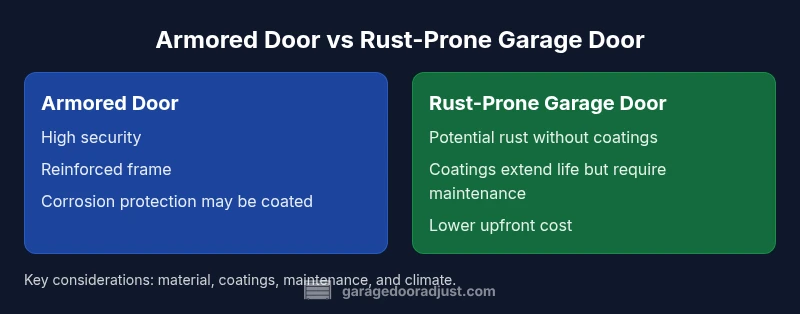
Armored doors offer superior security, while rust-prone garage doors demand corrosion resistance. When weighing armored door vs garage door rust, focus on climate, moisture exposure, and maintenance needs. For most homeowners, rust prevention and proper coatings are the practical approach, unless security is the primary concern. This TL;DR captures the essentials.
Armored Door vs Rust: Framing the Question
In residential settings, homeowners often ask how an armored door compares to rust-prone garage doors. The short version is that armor excels at security and structural integrity, while rust is mainly a maintenance and material issue for typical garage doors. When you juxtapose armored door vs garage door rust, you are weighing two different goals: preventing break-ins versus preventing corrosion. This distinction matters because the factors that drive rust—moisture, salt exposure, temperature swings, and coatings—do not directly align with the factors that make an armored door formidable against forced entry. For most households, the practical approach is to optimize both safety and longevity through appropriate materials, coatings, and upkeep, rather than trying to solve one problem with the other. According to GarageDoorAdjust, rust is a common concern even in well-installed doors when protective coatings wear thin or environments are damp. This article explains where rust occurs, how it affects performance, and practical steps to mitigate it—so you can make an informed decision about the right approach for your home. If your priority is security, the armored door path may be attractive; if rust liability dominates, coating and maintenance strategies deserve attention first.
Material Science: Armor vs Rust-Resistant Finishes
Armored doors are built for security first, typically using reinforced steel or composite cores with a welded frame and heavy hardware. The core materials are designed to withstand prying and forced entry, which means engineering tolerances that rarely hinge on anti-rust performance alone. That said, many armored doors incorporate finishes that resist corrosion, such as thick powder coatings, epoxy sealants, or even ceramic-based coatings that slow moisture ingress and reduce surface wear. In contrast, standard garage doors—often made from steel, aluminum, or wood composites—face regular exposure to rain, humidity, and road salt. Their rust resistance depends on coatings, galvanization, and the presence of weather seals. If rust is a primary concern, homeowners should look for doors with corrosion-resistant finishes, discuss warranty coverage for coatings, and consider climate-appropriate materials. The armored door vs rust-resistant finishes comparison reveals that you can achieve both security and longevity, but not every product delivers the same balance of traits. When shopping, prioritize warranty terms that cover coating integrity under local humidity and salt exposure.
Rust Mechanisms in Garage Doors
Rust forms when iron-bearing surfaces react with oxygen in the presence of water. In garage doors, steel panels and frames are most vulnerable, especially where coatings wear through or seams accumulate moisture and salt spray can reach components. Aluminum doors resist rust but can suffer from pitting or galvanic corrosion when exposed to certain chemicals or salt sprays. Wood-based or composite doors behave differently, with moisture issues affecting surface finishes and structural joints more than true iron oxidation. Weather seals degrade, allowing moisture to wick into joints, tracks, and hardware, accelerating rust formation. The armored door rust discussion shows that rust is not only a surface issue: it can compromise tracks, hinges, and emergency release mechanisms if corrosion progresses unchecked. Regular inspection helps catch early signs of corrosion before structural integrity is affected, and proactive maintenance can prevent small issues from becoming costly repairs.
Environmental Factors That Accelerate Rust
Coastal regions with salty air and winter road salt create a harsher environment for unprotected metal. High humidity and temperature fluctuations accelerate the formation of rust, particularly on exposed edges, screws, and rolling hardware. Garage doors in flood-prone basements or poorly ventilated garages face persistent moisture that promotes corrosion, while inland homes experience rust mainly through humidity and rain exposure. By contrast, a quality armored door often uses protective coatings designed to stand up to salt spray and humidity, though climate alone cannot guarantee imperviousness. A door's design details—such as drainage around the bottom rail and the placement of weather seals—can significantly influence rust risk. The practical takeaway for arm or rust decisions is to assess environmental exposure first: if your climate elevates rust risk, prioritize corrosion-resistant finishes and proactive maintenance; if security is the top priority, consider armor with robust coatings and a reinforced frame.
Security vs Longevity: How Rust Affects Each
Rust does not just spoil appearance; it weakens metal surfaces and can jam moving parts, reducing reliability and safety. On a standard garage door, corrosion at hinges, rollers, tracks, and torsion springs can lead to misalignment and binding, increasing the risk of sudden failure or unpredictable operation. An armored door prioritizes tamper resistance and load-bearing strength, which remains more consistent even as metal ages, provided the protective finish is intact and hinges remain lubricated. However, if corrosion occurs on the interior frame of an armored door or around critical mounting points, it can still compromise overall performance, particularly in extreme climates or when maintenance is neglected. Understanding these trade-offs helps homeowners decide whether to invest in a high-security solution or focus on rust prevention for a conventional door, given their budget and risk tolerance.
Maintenance Practices to Slow Rust
Maintaining steel or aluminum doors requires regular cleaning, moisture control, and timely coating maintenance. Wipe down doors to remove salt and moisture after storms, reapply protective coatings as recommended by manufacturers, and inspect weather stripping for gaps where water can intrude. For armored doors, periodic checks should include the integrity of protective finishes and the condition of hinges and latches, since corrosion can hide behind hardware. For garage doors prone to rust, add rust-inhibiting primers, use metal-compatible paints or sealants designed for exterior use, and consider re-coating every few years depending on climate. Regular lubrication of moving parts reduces friction and protects metal surfaces, while keeping tracks clean helps preserve alignment. By building a simple maintenance schedule, you can significantly slow rust progression and extend service life for either approach, ultimately reducing unexpected failures.
Coatings, Paint, and Protection Choices
Coatings matter more than raw material alone when it comes to rust resistance. Powder coatings, polyurethane paints, ceramic sealants, and seal-coated tracks can dramatically reduce water penetration and surface corrosion. With armored doors, owners often select thicker, tougher coatings that resist abrasion and weathering; for garage doors, you may choose sturdy finishes that still deliver corrosion protection without adding excessive weight or complexity. Weather seals play a crucial role in keeping moisture out of the door assembly, and proper sealing around joints helps blocks water intrusion that accelerates rust. When evaluating options, look for a warranty that covers coating integrity under local humidity and salt exposure, and verify compatibility with any existing mechanical components. A well-chosen coating can keep both armored doors and rust-prone doors performing well for many years.
When to Replace vs Refurbish
Refurbishing rust-damaged sections or re-coating a door may be sufficient for minor corrosion, while extensive rust or structural compromise usually warrants replacement. Armored doors that show significant wear in critical components should be evaluated by a professional; sometimes a full replacement with a newer, corrosion-resistant finish is more cost-effective than piecemeal repairs. The decision hinges on the door's role in security, the door's response to maintenance, and the local climate. In practice, invest in rust prevention and protective finishes early to avoid decision points that force large-scale replacement later, especially if the roofline or garage ceiling is prone to water intrusion.
Real-World Scenarios: Coastal vs Inland Properties
Coastal homes benefit most from corrosion-resistant finishes and careful maintenance given salt exposure; inland homes in dry climates may prioritize material durability and weather sealing but face less salt-caused rust. In these scenarios, armored doors can deliver security benefits without sacrificing rust resistance if coated properly, while standard doors can still perform well with a disciplined maintenance plan. Conversely, a rust-prone standard garage door may be perfectly adequate in a dry climate if it receives regular maintenance and a robust coating. The key is to tailor the approach to climate, local moisture levels, and the severity of use, then revisit the plan annually as seasons change.
Cost and Warranty Considerations
Armor doors typically entail higher upfront costs and heavier installation, but can offer longer-term value through security features and reduced maintenance in certain climates. Rust-resistant finishes vary in price and coverage, and they shift depending on brand, region, and warranty terms. When evaluating warranty coverage, check for corrosion protection duration, conditions that void coverage, and whether coatings are included in the long-term maintenance plan. A careful review of warranty terms helps you compare both options against your budget and risk tolerance. If you live in a climate where both security and rust resistance matter, a combined approach—adding a corrosion-protective finish to a solid core door—might offer the best overall value.
Safety Implications of Rusted Components
Rust can compromise critical safety features such as locking mechanisms, emergency release handles, and track alignment. On armored doors, while the core frame may resist intrusion, corrosion on protective edges or fasteners can create sharp edges and handling hazards. In both cases, routine inspections and timely maintenance are essential for safe operation. If you notice flaking coatings, rust stains, or loose hardware, address them promptly with professional service to prevent further safety risks. Regular testing of the door's balance and automatic opener safety features helps protect occupants, especially children and elderly residents.
Practical Decision Framework for Homeowners
To decide between an armored door and rust maintenance for a garage door, start with a climate assessment, then weigh security needs against moisture exposure and usage patterns. List maintenance tasks you are willing to perform and map them to the door types. Use the comparison table and the full guide here to align choices with your budget and risk tolerance. Use practical metrics like door age, visible corrosion, and the importance of a secure entry to guide your decision. The final choice should balance safety, longevity, and cost, not just initial price. Revisit the decision as your climate changes or as the door shows new wear.
Comparison
| Feature | Armored Door | Standard Steel Garage Door |
|---|---|---|
| Material & Construction | Reinforced steel/composite core with welded frame | Coated/galvanized steel, aluminum, or composites |
| Rust Resistance | High when protected by coatings and finishes | Medium to low depending on coating and climate |
| Maintenance Needs | Lower maintenance if coating remains intact | Higher maintenance to prevent rust and seal wear |
| Security Level | Very high security against forced entry | Lower to moderate security depending on model |
| Best For | Security-focused homes, harsher environments | Budget-conscious homes in low-rust climates |
Upsides
- Armored doors offer superior security against break-ins
- Rust-resistant finishes reduce maintenance in humid climates
- Long-term durability for armored doors under heavy use
- Enhanced peace of mind from higher security features
Disadvantages
- Higher upfront costs and installation complexity
- Armored doors may be overkill for typical homes
- Rust protection on standard doors still requires ongoing maintenance
Armored doors excel in security, but for rust concerns, rust-resistant finishes on standard doors are usually more cost-effective.
If security is the top priority, armored doors win. If rust resistance and cost are the main concerns, invest in corrosion-resistant finishes and regular maintenance.
Got Questions?
What is the main difference between an armored door and a rust-prone garage door?
Armored doors are designed for security and load-bearing strength, while rust-prone garage doors focus on corrosion resistance and protective coatings. Your decision should prioritize safety needs before corrosion concerns.
Armored doors focus on security; rust concerns are about coatings and maintenance.
Can rust compromise garage door safety features?
Yes. Rust can weaken hinges, tracks, and supports, potentially affecting balance and emergency release mechanisms. Regular inspection and maintenance reduce this risk.
Rust can affect hinges and tracks; inspect regularly.
Should I replace a rusted garage door or repaint/recoat it?
For minor rust, repainting or recoating may be sufficient. If corrosion penetrates structural components or the door operates poorly, replacement is advised.
Small rust? Recoat. Major rust? Replace.
Are armored doors always worth the cost in a typical home?
Not always. For homes with low security needs and good rust protection on existing doors, armored doors may be overkill. Evaluate risk, climate, and budget before deciding.
Armored doors may be overkill for many homes; assess needs.
What maintenance steps most effectively prevent rust on garage doors?
Regular cleaning, timely coating refresh, seal inspection, and lubrication of moving parts are the most effective rust-prevention steps.
Clean, coat, seal, and lubricate regularly to prevent rust.
How does climate influence the armored door vs rust decision?
Coastal or humid climates increase rust risk, making corrosion protection critical. In dry climates, security requirements may take priority but rust prevention remains beneficial.
Climate drives rust risk; choose coatings accordingly.
Quick Summary
- Assess climate and moisture before choosing.
- Armored doors provide security but may not solve rust on standard doors.
- Prioritize coatings and weather seals to prevent rust.
- Maintain a maintenance schedule to extend door life.
- Compare total ownership cost, not just upfront price.