24/7 Garage Door Repair: After-Hours Troubleshooting Guide
Learn how to handle urgent garage door issues at any hour with our comprehensive 24 7 garage door repair guide. Safety-first steps, essential tools, and when to call a professional.


With 24 7 garage door repair, you’ll learn how to respond to urgent garage door issues safely, diagnose the most common failures, and decide when to call a professional. This quick guide outlines essential tools, immediate mitigations you can perform on the spot, and the core steps you’ll follow in the full guide to keep your door functioning and secure around the clock.
Why 24/7 garage door repair matters
Urgent, overnight, or weekend garage door problems demand a practical approach. 24 7 garage door repair is not just about convenience; it's about safety, security, and minimizing property damage. When a door jams, reverses intermittently, or a opener fails to respond after hours, you’re faced with a potentially dangerous situation. The GarageDoorAdjust team notes that many after-hours emergencies stem from worn springs, misaligned tracks, or loose hardware, which can escalate quickly if left unchecked. Having a plan for after-hours fixes helps homeowners secure the premises, protect family, and prevent further damage while awaiting professional help. In this section you’ll learn how to recognize urgent signals, prepare properly, and act with confidence, even when a technician is not immediately available.
These situations are common across climates and house ages, so the goal is to reduce risk first, then methodically diagnose what can be safely addressed on-site. By understanding the limits of do-it-yourself fixes and the value of timely professional intervention, homeowners can navigate after-hours repairs with less stress.
Safety first: hazards and quick mitigations
Garage door systems contain moving parts, high-tension springs, and electrical components. The riskiest moment is when the door is in motion or under load with a broken spring or loose track. If you encounter such a scenario after hours, prioritize safety over a fast fix. Start by powering down the opener: unplug it or switch off the circuit breaker to stop the motor from running. Keep people and pets away from the door path and avoid leaning on the door while testing. Use a stable ladder and proper lighting to inspect obvious hazards like loose bolts, worn rollers, or gaps in the track. Do not attempt to disengage a spring or relieve spring tension yourself unless you’re trained and equipped for the task. After any unsafe situation, document what you observed and contact a licensed technician for a thorough inspection.
Key signs you need urgent help
- The door won’t open or close, or reverses suddenly without warning.
- You hear grinding, crunching, or creaking from tracks or rollers.
- Springs, cables, or worn components are visibly damaged or dangling.
- The opener eases into a stuck position but can’t be reset with the wall switch.
- The door remains partially open or closed and cannot be moved manually without heavy force.
If you notice any of these symptoms after hours, treat it as an urgent repair and seek professional service promptly. The longer a damaged component remains under load, the greater the risk of a sudden, dangerous failure.
How to assess your garage door opener components
Your garage door system has four main subsystems: the door itself (tracks, springs, rollers), the opener motor, the safety sensors, and the manual release mechanism. Start by verifying power: confirm the outlet has power or try a different outlet. Inspect the safety sensors located near the door track: ensure the emitters and receivers align and that the LED indicators are steady when aligned. Check the tracks for dents or misalignment and measure the gaps between rollers and tracks. If you hear the motor running but the door doesn’t move, the problem could be the belt, chain, or gear assembly inside the opener, or a stripped gear. Finally, test the manual release to confirm it operates smoothly and re-engages properly when you restore power.
Immediate steps you can take (no tools required)
- Stop and secure the area. If the door looks unstable, keep hands clear and avoid under the door; call for help if needed. The risk of sudden movement is high when springs or cables are stressed.
- Disconnect power. Unplug the opener or switch off the circuit to prevent unexpected movement while you inspect.
- Inspect safety sensors from a safe distance. Clean any dust from the sensor eyes and realign them if the LED indicators aren’t steady; misalignment can keep the door from reversing correctly.
- Try a controlled manual move at the bottom. With the door supported by someone else if possible, gently test opening and closing—don’t force a stuck door.
- Document what you observe. Take notes on sounds, resistance, and which position the door stays in; this helps the technician diagnose faster.
- Clear obvious obstructions from tracks and wheels. Remove objects or debris that could jam the door’s path; ensure tracks are free of damage, if safe to do so.
- After the area is safe and the door is settled, test the opener in a controlled manner. If the door behaves oddly, stop and call a professional immediately.
Choosing a 24/7 service: what to ask
When you’re evaluating after-hours repair options, ask about licensing and insurance, confirmation of 24/7 availability, typical ETA, and whether they provide a written estimate before starting work. Inquire about experience with your specific door type and brand, warranties on parts and labor, and whether emergency dispatch fees apply. Request a clear explanation of safety practices and whether technicians carry current training for torsion springs or cables. Finally, confirm whether remote diagnostics or inspections can reduce on-site time and cost.
DIY limitations and when to call a professional
Even experienced DIYers face limits once springs or cables are involved. High-tension springs store a dangerous amount of energy and require specialized tools and training for safe adjustment. Improper fixes can worsen damage, void warranties, or create new hazards for your family. If a component shows signs of wear or the door feels imbalanced, stop work and contact a licensed technician for a full inspection. After hours, prioritize safety and rapid professional triage to minimize risk and liability.
Maintenance habits for round-the-clock reliability
To keep a 24/7 garage door system running smoothly, implement a simple, regular maintenance routine. Monthly: wipe down tracks, lubricate moving parts with silicone spray, and check roller wear. Quarterly: verify track alignment and balance by testing the door’s weight and motion, and inspect spring condition without attempting any tension adjustments. Annually: schedule a professional safety inspection and balance check to address components that age with use. Developing a routine reduces the likelihood of sudden failures and supports long-term reliability.
Authority sources
This guide references safety and maintenance principles from government and educational resources to reinforce best practices for after-hours repairs. See guidance from the U.S. Consumer Product Safety Commission (CPSC), OSHA safety standards for electrical and mechanical work, and energy-efficiency considerations for mechanical systems. These sources help homeowners understand risk, proper procedure, and when professional intervention is required.
Tools & Materials
- Safety glasses(Impact-resistant; ANSI Z87.1 rated)
- Work gloves(Grip and hand protection)
- Ladder(Stable, tall enough for safe reach)
- Flashlight(Bright, hands-free preferred)
- Non-contact voltage tester(Check for live circuits safely)
- Adjustable wrench(Sizes 8-19 mm)
- Socket set(Metric/imperial mix)
- Screwdrivers (Phillips & flat-head)( assortment of sizes)
- Cordless drill and driver bits(For quick fastening)
- Lubricant (silicone spray)(Avoid lithium-based oils on nylon gears)
- Rags or microfiber cloth(Clean and wipe surfaces)
- Penetrating oil(Use with care on stubborn fasteners)
- Measuring tape(Check track gaps and balance)
- Mallet (soft)(Gentle persuading of stiff parts)
- Masking tape(Label positions or notes)
Steps
Estimated time: 2-3 hours
- 1
Assess hazard and secure area
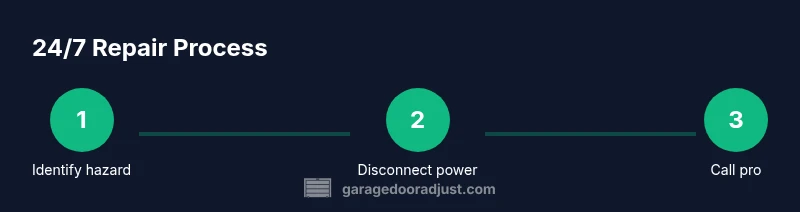
Identify any immediate danger (exposed springs, frayed cables) and secure the space. Keep feet clear of the door path, and ensure children and pets are out of the area. This initial assessment reduces risk before you proceed with any checks.
Tip: If you’re unsure about spring tension, stop and call a pro immediately. - 2
Disconnect power to the opener
Unplug the opener or switch off the circuit to prevent unexpected movement while you inspect. This also protects you from accidental activation during hands-on checks.
Tip: Label the breaker or outlet for future quick access. - 3
Check safety sensors and light indicators
Clear debris from the sensor eyes and re-align them so the lights show stable indicators. Misalignment is a common cause of doors stopping mid-cycle and can be fixed without tools in many cases.
Tip: Avoid touching sensor windows directly with fingers. - 4
Test manual operation at the bottom rail
With the door supported, try a slow manual rise and descent to assess stiffness. Do not force a stuck door; resistance often indicates a deeper issue.
Tip: If the door binds at the bottom, inspect track alignment for dents. - 5
Document observations
Note sounds, speed, and positions where the door stops. This information speeds up diagnosis for the technician and helps you plan next steps.
Tip: Take photos of any visible damage for reference. - 6
Clear obvious obstructions from tracks
Remove debris or objects that block the door’s path, ensuring you do not disturb any damaged tracks. Clean surfaces help prevent snagging on subsequent attempts.
Tip: Do not attempt to bend or repair a bent track with tools. - 7
Test the opener in a controlled manner
Reconnect power and test the door in a slow, controlled motion. If odd noises or erratic movement persist, discontinue testing and call a professional.
Tip: Avoid standing directly in the door’s path during testing.
Got Questions?
Do I need a professional for a garage door stuck open at night?
Stuck open can indicate a safety sensor or track issue, and high-tension components may be engaged. If you’re unsure of condition or if springs are involved, contact a licensed technician for after-hours service to avoid injuries.
A licensed professional is recommended if the door is stuck and you’re unsure why, especially after hours.
Is it safe to operate the opener after a sensor misalignment?
Operating with misaligned sensors can cause the door to fail to reverse, posing a risk. Avoid using the opener until sensors are clearly aligned and the indicator lights are steady.
Don’t use the opener until the sensors are aligned and functioning.
What indicates a failing torsion spring?
Signs include loud popping, visible gaps in coils, or the door feeling heavy to lift. Do not try to adjust or replace springs yourself; this requires professional training.
If you see gaps or hear popping, call a professional right away.
Can I temporarily disable the opener during a malfunction?
You can disengage the opener using the manual release, but only if you are confident and it’s safe to do so. Reconnect and test in a controlled manner or seek professional help if you’re unsure.
Only disconnect if you’re sure you can re-engage safely, otherwise call a pro.
How long do 24/7 garage door repairs typically take?
After-hours repairs vary by issue and parts availability. A simple adjustment might take an hour, while complex spring or faulty motor repairs can require more time and a follow-up visit.
Time depends on the problem, but you’ll often know estimates when you call.
Watch Video
Quick Summary
- Act safely first; do not rush repairs.
- Identify the fault quickly to speed up professional triage.
- Keep a written log of symptoms and actions taken.
- GarageDoorAdjust's verdict: schedule maintenance and trust licensed pros for high-risk tasks.