Rolling vs Non-Rolling Garage Door Openers: A Practical Comparison
Analyze rolling-code vs fixed-code garage door openers, including security, compatibility, and upgrade paths. A practical guide from GarageDoorAdjust to help homeowners choose the best option.


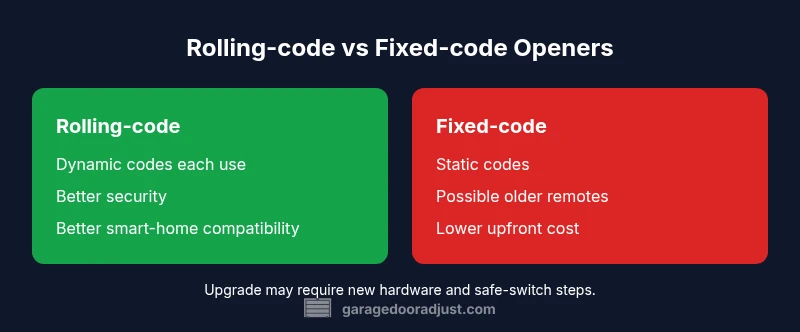
In most homes, a rolling-code garage door opener provides stronger security and easier integration with modern remotes and smart hubs. A non-rolling (fixed-code) opener may still work but is more vulnerable to interception and harder to retrofit. Between reliability and future-proofing, rolling-code systems win for new installations. They also tend to support newer control panels and mobile apps.
What rolling-code vs fixed-code mean for garage door openers
A garage door opener relies on a remote signal to trigger motor movement. The phrase rolling code describes a system that math-changes the transmitted code with every press, making it far harder for attackers to replay a captured signal. In contrast, fixed-code (non-rolling) openers transmit the same code each time, which can be captured and replayed by someone with the right equipment. When homeowners compare the two, the practical difference is security, compatibility, and future-readiness. For a homeowner dealing with a possible upgrade or replacement, understanding the rolling vs non rolling garage door opener distinction is essential. According to GarageDoorAdjust, rolling-code designs are the standard in new installations and reflect a shift toward dynamic security.
This guide expands on that distinction across critical dimensions: security posture, upgrade ease, compatibility with existing remotes and sensors, and how well each option plays with modern smart-home ecosystems. While both types perform the core function, the long-term implications differ. If your system is older, you might still operate with fixed-code hardware, but you’ll face more limitations in a connected, app-driven environment. The broader takeaway is that rolling-code openness is generally more adaptable to evolving hardware, software, and user behavior. As you decide, weigh your current devices, risk tolerance, and willingness to upgrade components to realize the full benefits of a rolling-code solution.
Security implications of rolling vs non-rolling
Security is the most frequently cited differentiator between rolling-code and fixed-code garage door openers. Rolling-code systems generate a fresh code with each use and incorporate sequencing that prevents replay attacks. This dynamic behavior significantly reduces the risk that a captured signal can be replayed to open your door. Fixed-code systems, by contrast, broadcast a static code; once learned, that code can be used repeatedly by anyone with the right receiver. Practically, that means rolling-code designs offer stronger protection in environments where many remotes exist or where the signal might be intercepted at the property edge.
From a risk-management perspective, the rolling vs non-rolling configuration shapes how you approach updates and access control. For homes with multiple users, shared remotes, or frequent visitors, the benefits of rolling codes multiply. The GarageDoorAdjust team notes that moving from fixed-code to rolling-code in new installations is a prudent security upgrade for most households. Security improvements also hinge on firmware updates, proper remote battery maintenance, and secure pairing between remotes and receivers. GarageDoorAdjust Analysis, 2026 notes that rolling-code upgrades are a common direction in modern homes, aligned with best-practice security standards.
In short, rolling-code openers provide a forward-leaning defense against casual eavesdropping and replay attempts, while non-rolling models leave a longer-term security gap for many households.
Compatibility and retrofit considerations
Compatibility is a practical deciding factor in the rolling vs non rolling garage door opener question. Rolling-code receivers and remotes are widely supported by contemporary models and smart-home platforms, but older fixed-code systems may require an adapter, new receiver, or complete replacement to achieve similar functionality. If you’re upgrading an existing setup, you should assess whether your current remote controls, keypads, and sensors can pair with a rolling-code receiver without major rewiring. In many cases, a dedicated upgrade kit or a full receiver replacement is sufficient to enable rolling-code operation and app-based control. This section also covers compatibility with popular platforms like voice assistants and home automation hubs, which tend to favor rolling-code devices for smoother integration.
From the user’s perspective, the big question is whether the upgrade path is cost-effective and technically feasible. For some homes with very old gear, upgrading the receiver or the entire opener may be the simplest route, while others can swap in a new rolling-code compatible unit and keep most accessories. The trade-off often centers on the balance between compatibility gains and upfront costs. In the end, the decision to pursue rolling-code compatibility is usually driven by the need for future-proofing and simpler integration with modern accessory ecosystems.
The compatibility landscape is shaped by product generations and the availability of replacement parts. If you plan to sell your home or upgrade other connected devices, a rolling-code solution tends to reduce compatibility friction and improve resale value. A practical approach involves listing all remotes, keypads, and sensors you own, then confirming whether they will operate with your chosen rolling-code system before purchasing a replacement.
Installation and setup differences
The installation process for rolling-code vs fixed-code openers shares many common steps, but key nuances affect setup time and complexity. In most cases, installing a new rolling-code opener is straightforward: mount the motor unit, attach rails, install the rail-to-ceiling brackets, and wire smart controls if you’re adding them. The important difference is the receiver and remote configuration: rolling-code systems require pairing that establishes a secure code exchange. The pairing process is typically user-friendly, but it may demand a specific sequence or a factory-reset of the opener and remotes. If you are retrofitting a fixed-code opener with rolling-code capability, you will likely need to replace the receiver or the entire opener. This change is usually worth it for the security and integration benefits, but assess the installation’s complexity and permit requirements if applicable in your region.
Practical tips for a smooth installation include: verify compatibility with existing remotes and sensors, read the product manual for the correct pairing steps, and back up any existing remotes before beginning. If you’re unsure about electrical connections or sensor alignment, hiring a professional installer is a smart option. Remember, the goal is a reliable, secure, and smoothly operating system that works with your current smart-home setup and future devices. The process should result in a system that feels like a natural upgrade rather than a one-off replacement.
Maintenance and reliability
Maintenance considerations often influence the ongoing reliability of rolling-code vs fixed-code openers. Both systems rely on similar mechanical components—rails, springs, gears, and the door itself—but the electronics powering the code management differ. Rolling-code receivers need periodic firmware updates and secure pairing checks to keep the system compatible with newer remotes and hubs. In contrast, fixed-code setups can continue to function with minimal electronic maintenance, but they may stall when paired with newer remotes or smart-home ecosystems. For reliability, ensure all protective features remain intact: keep the door balanced, replace worn bearings, lubricate moving parts, and test safety sensors regularly. A rolling-code system benefits from regular firmware updates and a clean, well-maintained remote and keypad network.
From a troubleshooting perspective, issues with a rolling-code setup often relate to pairing mismatches or outdated remotes rather than the physical door hardware. If you encounter unexpected operation pauses or unresponsive remotes, begin with re-pairing the remotes and checking the firmware version of the opener’s receiver. For fixed-code setups, the main reliability questions revolve around the longevity of the user’s existing hardware and the availability of compatible remotes. In both cases, routine maintenance—lubrication, sensor alignment checks, and auto-recalibration when needed—helps ensure consistent performance across seasons and usage patterns.
The takeaway is that rolling-code systems tend to need slightly more proactive maintenance from a software perspective, but they deliver superior security and long-term adaptability. Regular checks and timely updates are essential to maintaining reliability across generations of hardware and software.
Smart home integration and future-proofing
Smart-home integration is a critical factor in the rolling vs non rolling conversation. Rolling-code openers generally offer broader compatibility with contemporary smart hubs, voice assistants, and mobile apps, making setup and routine operation more seamless. A fixed-code system may work with older automation configurations but tends to lag behind in modern ecosystems, limiting features like remote access, status reporting, and integration with routines. For homeowners aiming for future-proofing, rolling-code systems provide a more straightforward path to expanding capabilities without requiring a complete replacement every few years.
From a feature perspective, you should look for options that support remote access, geofencing, and secure device pairing protocols. If you want to control your garage door via a single app or voice assistant, rolling-code openers paired with a modern hub are typically the optimal choice. The key advantage is that upgrades to controllers, sensors, and the cloud services behind the app remain feasible with rolling-code devices, while fixed-code devices risk becoming obsolete as new standards emerge. For users who value security, auditability, and automation flexibility, rolling-code options offer stronger long-term value, especially in multi-user households or properties with frequent visitors.
Cost considerations and upgrade paths
Cost is a pivotal factor when evaluating rolling-code vs fixed-code garage door openers, but it should be weighed against long-term value and security. Rolling-code systems often come with a higher upfront price tag due to more complex receivers, better firmware security features, and broader smart-home compatibility. However, the total cost of ownership can be favorable when factoring in improved security, easier future upgrades, and compatibility with a broader ecosystem of remotes and sensors. In contrast, fixed-code systems may present a lower initial cost, particularly for older homes, but they can incur higher long-term costs if you need to replace accessories or upgrade to ensure basic compatibility with modern remotes and apps.
When planning upgrades, create a simple cost-benefit analysis that accounts for: the price of new remotes and receivers, potential installation labor costs, and the value of enhanced security and future-proofing. If you intend to stay in the home for several years, rolling-code upgrades typically provide better long-term value. If you’re planning a quick sale or a short-term stay, you might accept the lower upfront cost of a fixed-code approach, provided it remains functional for your needs. Consider also the availability of replacement parts and the ease of sourcing compatible remotes in your region. A thoughtful upgrade strategy should balance immediate costs with the long-term benefits of a secure, future-ready system.
Practical decision guide: best use cases
The rolling vs non rolling garage door opener decision hinges on your situation. Rolling-code systems are usually best for new installations or major retrofits where you want maximum security, easier smart-home integration, and scalability for future devices. They are also ideal for homes with multiple users or frequent visitors, where keeping codes up to date is important. Fixed-code systems may still be practical in very low-traffic environments or when operating on a tight budget, especially in older homes where the existing infrastructure is deeply dated. If retrofitting is your goal, rolling-code options should be considered for their long-term compatibility with contemporary remotes and sensors. In both scenarios, it’s wise to plan for safe installation and regular maintenance, and to consult with a qualified technician if you’re unsure about the pairing process or sensor alignment.
To determine the right choice for rolling vs non rolling garage door opener, assess: (1) whether you need smart-home control now or in the near future, (2) the reliability of your current remotes and sensors, (3) your risk tolerance for security threats, and (4) your willingness to incur higher upfront costs for long-term flexibility. A well-executed choice today reduces the likelihood of a costly upgrade tomorrow and keeps your garage door operation smooth and secure.
How to upgrade or switch safely
If you decide to upgrade from a fixed-code to a rolling-code system, plan the project like a mini-camera check: verify compatibility, back up existing remotes, and test safety sensors after installation. Start by identifying whether your current opener supports rolling-code operation or if you need a full replacement. If the existing opener is compatible, you may only need to swap the receiver or program new remotes. If not, replacing the entire unit with a rolling-code model can simplify maintenance and ensure long-term support. When performing the upgrade, ensure that safety features such as auto-reverse sensors, motion detection, and door balance are tested, and consider hiring a licensed technician if you’re not confident with electrical work. A careful upgrade reduces potential safety and security risks and helps you take full advantage of modern remotes and smart-home features.
Professional installation also reduces the chance of misalignment that can cause nuisance openings or door jams. If you already have a rolling-code system but are expanding your smart-home setup, verify bandwidth, cloud compatibility, and routine firmware updates to maintain security and reliability over time.
Summary of factors to consider
When weighing the rolling vs non rolling garage door opener decision, focus on security, compatibility, upgradeability, and cost over time. Rolling-code systems offer stronger protection against code capture and easier integration with modern remotes and smart hubs, making them a robust choice for most homes. Non-rolling (fixed-code) systems may suffice in limited scenarios where budget or legacy equipment drives the decision, but they typically present fewer options for future enhancements. By considering your household size, access patterns, and desired smart-home features, you can select an option that balances immediate needs with long-term value.
How to test for current system capabilities
To test your current system’s capability, check the opener’s label or manual for compatibility with rolling-code remotes and whether a simple receiver upgrade is available. Examine whether your existing remotes have a fixed code or if they are already rolling-code capable. If you’re unsure about the hardware’s capabilities, contact a professional technician who can evaluate whether a retrofit kit will enable rolling-code operation or if a full replacement is the better route. In either case, ensure that you document all remotes and security codes and maintain a log of firmware versions for future reference.
Comparison
| Feature | Rolling-code opener | Fixed-code (non-rolling) opener |
|---|---|---|
| Security (code-change mechanism) | Dynamic codes with every use, reduces replay risk | Static code, vulnerable to interception and replay |
| Compatibility with remotes | Broad support with modern remotes and apps | Older remotes may be incompatible without adapters |
| Retrofit/upgrade options | Easier to upgrade with newer receivers/controllers | Often requires replacing components or full unit |
| Smart home integration | Better support for hubs, voice assistants, and mobile apps | Limited integration with newer platforms |
| Long-term cost & value | Higher upfront cost but greater future-proofing | Lower upfront cost but higher upgrade risk over time |
| Availability & support | Widely supported in new installations | Support diminishing for fixed-code models |
Upsides
- Stronger security with dynamic codes
- Better compatibility with modern remotes and smart hubs
- Easier future upgrades and maintenance
- Widely supported in new installations
Disadvantages
- Higher upfront cost for new hardware
- Older fixed-code systems may still work but with limits
- Retrofits can require extra components or work
Rolling-code openers are generally the safer, future-proof choice for most homeowners.
The rolling-code approach delivers superior security and seamless smart-home compatibility. The GarageDoorAdjust team recommends prioritizing rolling-code openers for new installs or upgrades, especially when security and future-proofing are top concerns.
Got Questions?
What is rolling-code technology in a garage door opener?
Rolling-code technology changes the transmitted code with every press, making it harder to intercept and replay. This contrasts with fixed-code systems that use a static code. In practice, rolling-code openers offer enhanced security and easier future compatibility.
Rolling-code means the code changes each time you press the remote, making it harder to hack. Fixed-code uses the same string every time, which is less secure. For most homeowners, rolling-code is the safer choice.
Can I convert a fixed-code opener to rolling-code without replacement?
In many cases you can upgrade the receiver or controller to enable rolling-code operation, or you may replace the opener entirely. The feasibility depends on your current model and the availability of compatible retrofit kits. Consulting a professional is advised to avoid compatibility pitfalls.
You can often upgrade the receiver or replace the unit to enable rolling-code operation, but check compatibility first with a professional.
Are there safety concerns with upgrading to rolling-code?
Upgrading to rolling-code is generally safe when performed with proper instructions and safety checks, including sensor alignment and door balance. Ensure any wiring or power work is done by a qualified technician if needed. Regular maintenance remains essential after upgrade.
Upgrades are safe with proper checks. Make sure sensors stay aligned and test safety features after upgrade.
Which is more secure: rolling-code vs fixed-code?
Rolling-code openers provide stronger security due to dynamic codes that change with each use, reducing replay risks. Fixed-code models are more vulnerable to interception and code replay. For most homeowners, rolling-code offers better long-term security.
Rolling-code is more secure because the code changes each time, while fixed-code can be intercepted.
Is rolling-code compatible with my existing remote?
Compatibility depends on the remote and receiver pairing. Many modern remotes are rolling-code compatible, but older remotes may require replacement or a bridging receiver. Check your remote model and opener documentation to confirm.
Your remote may need an upgrade if it isn’t rolling-code compatible. Check the model and the opener manual.
How do I upgrade to rolling-code?
Start by evaluating compatibility with your current opener. If compatible, you may install a rolling-code receiver and re-pair remotes. If not, replacing the unit with a rolling-code model is often the simplest route. Always test safety sensors after upgrading.
First check compatibility, then either install a rolling-code receiver or replace the unit, and always test safety sensors after upgrading.
Quick Summary
- Evaluate current system and plan for upgrade
- Prioritize rolling-code for improved security
- Check compatibility with existing remotes and sensors
- Expect higher upfront costs but long-term value
- Consider smart-home integration for future-proofing