Roll Up Garage Door vs Panel: An Objective Comparison
A rigorous, objective comparison of roll up garage doors and panel doors for homeowners. Learn construction, insulation, space needs, maintenance, and costs to choose the right door type.


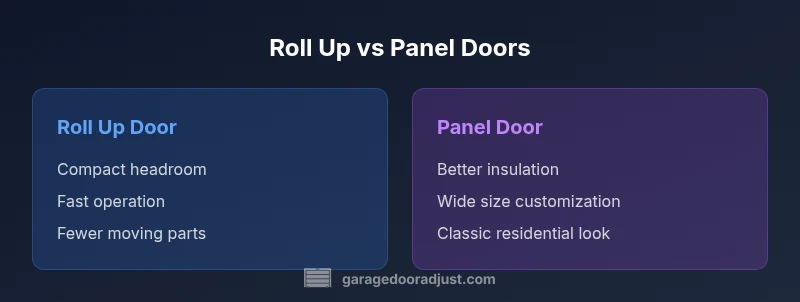
Roll up garage doors and panel doors serve different needs. Roll-up doors are compact, headroom-friendly, and fast to operate, making them ideal for tight spaces. Panel doors offer better insulation and a traditional look for larger openings. For most homes, the choice depends on opening size, climate, and maintenance tolerance. When you compare roll up garage door vs panel, the decision is driven by practical space, energy needs, and service availability.
What are roll up garage doors and panel doors?
Roll up garage doors are typically non-sectioned sheets of metal or composite that roll into a compact coil above the opening. They have fewer moving parts and rely on a rolling mechanism rather than tracks. Panel doors, also called sectional or panel doors, consist of multiple horizontal panels connected by hinges that glide along tracks to open and close. For homeowners, the practical difference often comes down to space, operation, and aesthetic. When comparing roll up garage door vs panel, it’s crucial to understand that each design has distinct advantages tied to your opening size and climate. In this guide, we’ll compare real-world performance, typical installation considerations, and practical upkeep. According to GarageDoorAdjust, the decision isn’t simply about price—it’s about how you use your garage.
Core construction: Roll-up vs panel door design?
Roll-up doors rely on a single, continuous sheet, usually steel or aluminum, that winds around a drum or counterbalance mechanism. The absence of large sectional seams often reduces potential leakage but can limit insulation options. Panel doors are built from hinged segments that ride on tracks; this structure supports more robust weather seals and a wider array of insulation levels. Materials vary by model, including steel, aluminum, and composite options. The choice affects durability, maintenance, and the range of sizes you can realize. When you compare roll up garage door vs panel, consider the life cycle costs and repair options for your climate and usage. The GarageDoorAdjust Team notes that installation difficulty often correlates with door type and opening height.
Space, footprint, and opening considerations?
Headroom and ceiling clearance dictate which option makes sense. Roll-up doors excel in low-headroom situations and garages with shallow ceilings because the door rolls tight rather than requiring tall tracks. Panel doors need more vertical space for the panel sections to travel and stack, which can be a constraint in compact garages. Also consider the width and height of the opening; panel doors offer more customization but may require more framing work for unusual sizes. When deciding between roll up garage door vs panel, map your available space, including any obstructions near the ceiling or around the opening, and consult with a professional for an accurate fit.
Insulation, energy efficiency, and climate impact?
Insulation is a primary driver of energy efficiency for many homes. Panel doors typically allow higher insulation levels because the panels can be thicker and better sealed, reducing heat loss in winter and heat gain in summer. Roll-up doors can be insulated as well, but the insulation is often less dense or reliant on the door’s overall design. For climates with extreme temperatures, the insulation difference can influence comfort, utility costs, and quiet operation. Regardless of type, choose models with effective seals, weatherstripping, and appropriate foam insulation or composite cores to optimize energy performance. GarageDoorAdjust analysis suggests evaluating R-values and overall thermal performance rather than assuming one design is universally better.
Durability, maintenance, and lifecycle?
Durability depends on the door material, hardware quality, and frequency of use. Roll-up doors have fewer moving parts than panel doors and can offer reliable performance with a simple spring or drum mechanism. Panel doors rely on multiple joints and tracks, which can be more susceptible to misalignment or seal wear over time but often benefit from robust panel construction. Maintenance needs differ: periodic lubrication of hinges and tracks for panel doors, plus seal inspection to minimize drafts. With proper maintenance, either door type can deliver many years of service, but consider how you use your garage—heavy daily use may favor one design over the other. The GarageDoorAdjust Team recommends a proactive upkeep plan tailored to your door type.
Safety, security, and warranty considerations?
Both door types should meet local safety standards and include anti-pinch features in modern installations. Panel doors often come with more comprehensive weather seals and stronger headers, which can enhance security. Roll-up doors might have simpler locking options and fewer pinch points; however, their compact design can reduce surface area for forced entry. Warranties vary widely by brand and model, so review coverage for hardware, springs, insulation, and weather seals. When choosing between roll up garage door vs panel, verify warranty terms and service availability in your area to minimize long-term risk.
Installation and replacement: Time, labor, and complexity?
Installation complexity varies by door type, size, and existing framing. Panel doors generally require precise alignment of tracks and springs, which benefits from professional installation. Roll-up doors can be faster to install in straightforward openings but may need more careful calibration for balance and sealing. If you’re replacing an existing door, factor in headroom, frame integrity, and whether new hardware will fit the old opening. The decision between roll up garage door vs panel should consider not just upfront labor but potential future maintenance costs and service accessibility.
Weather resilience and climate suitability?
Weather resistance hinges on seals, insulation, and frame integrity. Panel doors with full-length weather seals and better insulation can resist drafts and cold penetration more effectively in harsher climates. Roll-up doors can be advantageous in milder climates or where headroom is severely restricted, but make sure the chosen model includes proper sealing and thermal breaks. In coastal areas or regions with heavy wind, verify wind-load ratings and anchoring options for both door types. Professional evaluation helps ensure weather resilience aligned with your local conditions.
Cost considerations and value proposition?
Cost is multi-faceted: base price, insulation level, hardware quality, and installation complexity all contribute. Roll-up doors may offer a lower upfront price in certain market segments, especially for small or non-standard openings, but long-term energy savings depend on insulation and sealing. Panel doors typically command higher initial investment due to materials and potential customization, yet their insulation and durability can translate into lower operating costs over the life of the door. When weighing roll up garage door vs panel costs, compare total cost of ownership rather than sticker price alone. The GarageDoorAdjust team emphasizes evaluating installation scenarios, maintenance needs, and climate-related performance to determine value.
Best-use scenarios: which door fits which home?
Use roll up doors when you have very tight headroom, a non-standard opening, or a need for quick operation with minimal ceiling intrusion. Panel doors are well-suited for standard or large openings, where better insulation, durability, and a traditional look add value. For garages used as workshops, studios, or temperature-controlled spaces, panel doors may win on insulation and noise reduction, while roll up doors can shine in retail or utility spaces with lighter daily use. Your decision should reflect how you live in the space and what you expect from annual maintenance, energy use, and security. The guidance from GarageDoorAdjust centers on aligning the door type with practical realities rather than chasing a single best option.
How to assess your existing setup and plan a swap?
Start by measuring your opening precisely and noting any headroom constraints. Check the current door’s insulation level, seals, and hardware condition. If you’re swapping for improved energy efficiency, compare R-values and the overall thermal performance of candidate models. Ask a contractor to simulate the installation for both door types to see how each would fit your opening. Finally, consider service accessibility in your area and the availability of parts for your chosen door. With these steps, roll up garage door vs panel becomes a straightforward, actionable decision.
Maintenance checklist and troubleshooting tips?
Create a simple maintenance calendar: lubricate moving parts, inspect springs and cables for wear, test safety sensors, and confirm weather seals are intact. For roll-up doors, keep the drum and balance mechanism clean and lubricated. For panel doors, regularly check track alignment and hinge connections and replace weather stripping as needed. Troubleshooting common issues—unusual noises, slow operation, or misalignment—usually involves balanced calibration, lubrication, and seal replacement. Keeping a log of service visits helps you anticipate replacement timing and plan budget accordingly.
Comparison
| Feature | Roll Up Door | Panel Door |
|---|---|---|
| Operation and mechanism | Roll-up action with minimal headroom; fast operation | Sectional panel door with tracks and hinges; balanced for durable everyday use |
| Space and headroom requirements | Excellent for spaces with limited headroom | Requires more vertical space and track length |
| Insulation and energy efficiency | Insulation depends on model; generally thinner | Typically higher insulation options across panels |
| Durability and lifespan | Fewer moving parts; simple maintenance | More components; potential for track wear but strong panels |
| Maintenance and servicing | Periodic lubrication; simpler spring system | Regular track alignment and hinge maintenance required |
| Cost and value | Lower upfront cost in some configurations; varies | Higher upfront cost but strong long-term insulation |
Upsides
- Helps homeowners match opening size with the right door type
- Roll-up doors maximize headroom and offer fast operation in tight spaces
- Panel doors provide strong insulation and a traditional look
- Wide size customization options for panel doors
Disadvantages
- No one-size-fits-all solution; suitability depends on climate and use
- Roll-up doors may have limited insulation in some models
- Panel doors can require more headroom and framed opening adjustments
Roll up doors are best for tight spaces and quick operation; panel doors excel in insulation and standard large openings.
If you prioritize headroom and speed, choose roll up. If you want better insulation and a classic look for larger openings, panel doors are the stronger long-term choice.
Got Questions?
Is a roll up door suitable for a residential garage?
Roll up doors can be used in some residential settings, especially when headroom is limited. However, many homeowners prefer panel doors for standard openings due to insulation and aesthetics. Evaluate space, budget, and local availability before deciding.
Roll up doors can work in some homes, but panel doors are more common for residential garages due to insulation and look.
What factors should I consider before choosing between roll up and panel doors?
Consider opening size, headroom, insulation needs, climate, and maintenance willingness. Panel doors excel in energy efficiency and wide sizing, while roll-up doors suit tight spaces and simple operation.
Think about space, climate, and how much maintenance you’re willing to handle.
Can I retrofit insulation to either door type?
Yes, insulation can be added or upgraded on both types, but panel doors often support thicker insulation cores and better weather seals. Check with manufacturers for compatible options.
You can upgrade insulation on both types, but panels usually offer thicker options.
Which is easier to install: roll up or panel doors?
Panel doors typically require precise installation due to tracks and springs, often benefiting from professional installation. Roll-up doors can be faster to install but still require careful balancing.
Panel doors usually take more precision; roll-up can be quicker if the opening is straightforward.
How long do these doors typically last?
Lifespan depends on usage, climate, and maintenance. With proper care, both types can last many years; plan for periodic component replacement as part of ownership.
With maintenance, both can last many years.
Quick Summary
- Assess opening height and headroom before choosing
- Prioritize insulation for energy efficiency
- Consider service availability in your region
- Balance upfront cost with long-term value
- Plan for maintenance with your chosen door type