Polystyrene vs Polyurethane Garage Door: Insulation Showdown
An expert, objective comparison of polystyrene and polyurethane insulation in garage doors, covering energy efficiency, durability, cost, installation, and practical buying tips for homeowners.


Polyurethane insulated garage doors typically provide stronger, more consistent insulation than polystyrene cores, while polystyrene doors offer a budget-friendly option. According to GarageDoorAdjust, polyurethane cores usually deliver better overall energy performance, fewer thermal leaks, and greater long-term value in temperate and cold climates. If upfront cost is the primary concern, polystyrene can still be a reasonable choice in milder environments.
What polystyrene vs polyurethane mean in garage door insulation
Polystyrene and polyurethane refer to the core insulation used inside a sectional garage door. Polystyrene is a rigid foam material commonly used in mid-range doors and comes in two main forms: expanded (EPS) and extruded (XPS). Polyurethane insulation, often injected as foam during manufacturing, forms a continuous, seamless core inside the door panels. The choice affects heat transfer, sound attenuation, and door rigidity. Both options aim to minimize drafts at the door edges, reduce heat loss, and improve comfort in the garage. According to GarageDoorAdjust, polyurethane insulation typically yields better thermal performance per inch, while polystyrene remains a cost-effective alternative for budget-conscious homeowners.
Insulation performance and climate impact
Insulation performance hinges on how well the core resists heat flow, which is often discussed in terms of R-values. PU foam generally expands to fill irregularities and forms a uniform layer that reduces air gaps, translating to lower heat transfer across the door. Polystyrene, while effective, tends to have lower insulating density per inch and may exhibit more variability if the panel gaps are not perfectly sealed. For homeowners in areas with wide temperature swings, the higher insulating efficiency of polyurethane can lead to noticeable energy savings and more stable indoor garage temperatures. In milder climates, the gap in performance may be less pronounced, making polystyrene a practical choice when upfront cost is a priority.
Structural and installation considerations
The core material influences door thickness, weight, and how it interacts with hardware. Polyurethane foam expands to create a rigid, closed-cell core that improves panel rigidity and resistance to bowing. This can translate to better alignment with the frame and fewer air leaks at the joints. Polystyrene cores, while lighter and easier to manufacture, rely more on the surrounding panel structure for rigidity. Installation quality matters for both materials: improper sealing around the edges or insufficient foam density can undermine insulation gains. When evaluating options, request density specifications and confirm the foam process used for each door model.
Durability, moisture, and long-term reliability
Durability for insulation cores depends on how the foam resists moisture, compression, and temperature cycles. PU foam is typically water-resistant and adheres strongly to the panel surfaces, helping it maintain its R-value over time. Polystyrene cores can be less resistant to sustained compression and may experience micro-cracking or settling in some installations, particularly when subjected to heavy use or temperature variations. In practice, a well-foamed PU core tends to preserve structural integrity longer, while good-quality polystyrene cores can still perform well in moderate conditions. Warranty terms often reflect these reliability expectations, so review coverage carefully.
Cost vs value: upfront vs long-term considerations
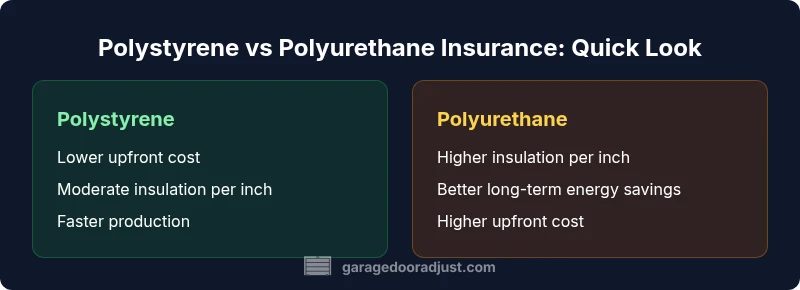
Polystyrene is generally the cheaper option upfront, which can be appealing for budget-oriented projects. Polyurethane cores, while more expensive at purchase, typically offer better insulation per inch and improved long-term energy savings, which can offset higher initial costs, especially in colder climates or homes with limited space for oversized doors. When evaluating value, consider the full lifecycle: maintenance needs, air leakage costs, and potential savings on heating and cooling. The long-term cost advantage of polyurethane often depends on climate, door size, and how well the installation minimizes gaps.
Environmental impact and health considerations
Foam choices impact the environmental footprint of a garage door. PU foam generally has higher blowing agent concerns during manufacturing, but modern formulations and responsible installers mitigate these impacts. Polystyrene uses different foam chemistries with their own environmental considerations, including potential off-gassing and end-of-life recycling challenges. For most homeowners, the practical takeaway is to choose from reputable manufacturers who disclose foam density and formulation details, and to look for doors with responsible manufacturing certifications. Proper disposal and recycling options at the end of the door’s life also matter for long-term environmental stewardship.
Maintenance, warranties, and quality signals
Maintenance needs for insulated doors are typically low, but the quality of the core can affect performance. Look for doors with clearly stated foam density (in pounds per cubic foot) and a durable skin construction. Warranties should cover core integrity, seals, and hardware for an extended period, with explicit language about foam adhesion and edge resistance. A good installer will explain expected performance, potential heat loss hot spots, and how seasonal changes may affect your specific garage usage. PU cores often come with longer warranties related to insulation performance, while polystyrene options may offer shorter terms but lower initial costs.
How to evaluate insulation quality when shopping
Start by asking for the door’s foam density, the type of foam (closed-cell for PU), and whether the foam is injected or sprayed. Inspect panel seams and edge seals for gaps or compression that could compromise insulation. Request a test where a representative measures the door’s air leakage or uses a thermal camera to identify heat loss hotspots. Compare door sizes, thickness, and hardware compatibility to ensure that the insulation is not compromised by frame or track design. A detailed comparison from the manufacturer, including illustrated cross-sections, can help you make an apples-to-apples assessment.
Real-world usage scenarios: cold climates vs temperate climates
In cold climates, the superior per-inch insulation of polyurethane often translates into tangible energy savings, more consistent garage temperatures, and less condensation on door components. In temperate climates, the difference may be less dramatic but still meaningful when doors are used frequently or exposed to wind-driven drafts. In mild climates, polystyrene can provide a comfortable balance of cost and performance, particularly for garages that are not climate-controlled. Always align material choice with local weather patterns and your heating and cooling strategy.
Common misconceptions and myths
A common myth is that door insulation alone determines comfort. In fact, door performance depends on proper installation, weather seals, insulation continuity, and how the door interacts with the garage wall. Another misconception is that a thinner door cannot provide good insulation; modern PU foams enable high R-values with thinner cores, but installation quality remains critical. Finally, some buyers assume that cheaper doors always perform poorly; a well-made polystyrene door with precise seals can outperform a poorly made polyurethane option.
Decision framework and quick-reference guide
Use a structured checklist: climate suitability, per-inch insulation efficiency, total door thickness, density specifications, warranty terms, and expected maintenance. Compare total cost of ownership over the door’s lifespan, not just upfront price. Consider the impact on your garage usability, such as reduced drafts, quieter operation, and long-term reliability. If you live in a region with harsh winters or hot summers, polyurethane insulation generally delivers better long-term value; in mild climates, polystyrene can be a reasonable cost-effective choice.
Comparison
| Feature | Polystyrene insulated door | Polyurethane insulated door |
|---|---|---|
| Core insulation material | Polystyrene core | Polyurethane foam core |
| Per-inch insulation efficiency | Lower per inch | Higher per inch |
| Door thickness for similar performance | Typically thicker to match insulation | Can be thinner due to efficient foam |
| Durability and long-term stability | Depends on core quality; solid but variable | Excellent rigidity and long-term stability |
| Upfront cost | Lower upfront cost | Higher upfront cost |
| Best climate | Budget-friendly in mild climates | Ideal for cold and variable climates |
Upsides
- Polystyrene doors are typically cheaper upfront, offering quick insulation improvements.
- Lighter weight can reduce wear on tracks and hardware.
- Better for budgets and faster lead times in standard climates.
- Simpler manufacturing process may lower availability barriers.
Disadvantages
- Polyurethane doors usually deliver stronger insulation per inch, with fewer air gaps.
- Higher upfront cost and heavier door mass can affect installation and hardware wear.
- Foam quality and density influence long-term performance more than panel skin.
- Moisture resistance depends on foam integrity and edge sealing.
PU insulation generally yields superior energy performance and long-term value; polystyrene remains a viable budget option in milder climates.
Choose polyurethane when climate and energy savings matter most. Opt for polystyrene if upfront cost is the primary constraint and your climate is mild; ensure proper installation and good edge sealing.
Got Questions?
What is the difference between polystyrene and polyurethane insulation in garage doors?
Polystyrene and polyurethane are two core insulation materials used in garage doors. Polyurethane foam tends to provide higher insulation density and a continuous core, reducing air gaps. Polystyrene is cheaper upfront but often offers lower insulation value per inch and may be more sensitive to installation quality.
Polystyrene and polyurethane are two types of foam used in doors. Polyurethane usually gives better insulation per inch, while polystyrene is cheaper but can be less effective if the installation isn’t tight.
Which insulation provides better energy efficiency for cold climates?
In cold climates, polyurethane insulation typically provides superior energy efficiency due to its higher density and ability to seal gaps more effectively. This reduces heat loss and minimizes drafts compared with polystyrene.
Polyurethane generally performs better in cold climates because it seals better and has higher insulating density.
Are polyurethane insulated doors heavier than polystyrene ones?
Yes, polyurethane insulated doors are usually heavier due to the denser foam core. The extra weight can affect hinge and track wear, so proper hardware and installation are important.
Polyurethane doors are typically heavier because of the denser foam.
Do polyurethane doors require more maintenance?
Maintenance needs aren’t drastically different by insulation type. The key is quality installation and regular inspection of seals and joints to prevent air leaks and moisture ingress.
Maintenance is similar; focus on seals and proper installation.
What is the typical cost delta between polystyrene and polyurethane insulated doors?
The cost delta varies by brand and project scope, but polyurethane doors generally come with a higher upfront price. Weigh this against potential energy savings and climate needs to determine value.
PU doors usually cost more up front, but may save more on energy over time.
How should I evaluate insulation quality when shopping for a new door?
Ask for foam density, the type of foam, edge sealing quality, and cross-sectional drawings. Look for independent quality certifications and compare energy performance claims against actual install conditions.
Check density, edge seals, and certified performance to compare options.
Quick Summary
- Compare door foam density and installation quality, not just advertised R-values.
- Factor climate and seasonal use into the insulation choice.
- Assess total cost of ownership, including potential energy savings.
- Ask for exact foam type, density, and warranty terms.
- Prioritize professional installation to maximize insulation performance.