Garage Door Insulation: Polystyrene vs Polyurethane
A thorough, analytical comparison of polystyrene vs polyurethane garage door insulation, detailing installation tips, performance traits, and where each performs best for homeowners.


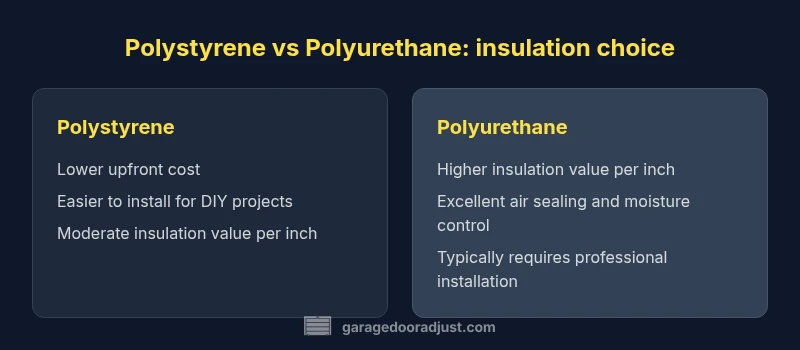
Polyurethane insulation offers superior air sealing and higher insulation value per inch than polystyrene, making it the better choice for energy efficiency on newer or tightly sealed doors. Polystyrene is cheaper and easier to install for DIY projects, but its overall performance is typically lower. Both options improve energy performance when installed correctly, with polyurethane favored for sealed doors and polystyrene for retrofit simplicity.
What this comparison covers
This guide tackles the topic of garage door insulation polystyrene vs polyurethane, examining how each material performs under typical garage conditions, what installation involves, and how climate and use affect long-term value. Homeowners often debate whether to retrofit their existing door with rigid boards (polystyrene) or to opt for a spray-foam solution (polyurethane). Here we break down the practical implications, avoid marketing fluff, and offer actionable guidance that aligns with a homeowner’s budget, tooling, and skill level. Throughout, you’ll see how GarageDoorAdjust approaches these decisions, focusing on real-world results and durability.
Material basics: polystyrene vs polyurethane
Polystyrene insulation for garage doors generally comes in rigid boards or panels made from expanded (EPS) or extruded (XPS) foam. They are cut to size, mounted, and fastened in place, often with minimal curing time. Polyurethane insulation, by contrast, is typically applied as a spray foam (two-component foam) that expands to fill cavities, gaps, and irregularities. It forms an air barrier and adds stiffness to the door assembly when cured. In many installations, polyurethane is used where air sealing and moisture control are priorities, while polystyrene provides a straightforward, cost-conscious retrofit option. For the homeowner, the main differences to track are installation effort, long-term durability, and how each handles moisture and air infiltration. As a rule of thumb, polyurethane tends to provide a denser, more continuous insulation layer, but it requires professional handling to ensure correct mixing, curing, and curing time.
Thermal performance: what that means for your garage
Thermal performance isn’t just a number on a label—it's how the material reduces heat transfer, minimizes drafts, and contributes to overall energy bills. Polystyrene offers respectable insulation for its weight and cost, with performance that scales with thickness. It’s often chosen when a quick, budget-friendly retrofit is needed and where gaps are limited. Polyurethane foam, especially when sprayed to fill every nook and cranny, typically provides superior thermal resistance per inch and reduces air leakage more effectively. The result is a tighter door envelope, fewer drafts, and better temperature consistency, especially in garages that see frequent doors opening and closing in variable weather. For the homeowner, the takeaway is that the per-inch efficiency of polyurethane is higher, but you pay for that advantage in material and installation cost.
Installation considerations: DIY vs professional
DIY-friendly polystyrene boards can be cut to fit and mounted with basic tools, making them appealing for weekend projects. They’re forgiving of minor gaps and typically don’t require time-consuming curing. Polyurethane spray foam, however, demands careful preparation, proper PPE, ventilation, and professional application to guarantee even coverage and safe curing. If you’re retrofitting an older door or sealing a door with persistent drafts, polyurethane offers a more thorough air barrier but at the cost of more complex installation. This section also covers safety considerations, such as avoiding chemical exposure during spray foam application and ensuring proper door balance after adding insulation. GarageDoorAdjust emphasizes proper sealing regardless of the product chosen to prevent moisture intrusion and maintain door functionality.
Cost and value: budgeting for insulation options
Cost is often the deciding factor for many homeowners. Polystyrene insulation boards typically present a lower upfront cost and quicker installation, particularly for doors that are easy to access from the interior. Polyurethane spray foam commands a higher upfront price, due to material costs and professional labor, but can deliver greater long-term energy savings through superior air sealing. When evaluating cost, also consider the lifespan and maintenance of the insulation, potential future replacements, and whether the door’s frame and weather stripping are already compromised. GarageDoorAdjust notes that the most cost-effective choice depends on climate, door size, existing insulation, and the homeowner’s tolerance for disruption during installation.
Climate and usage: when to pick which material
Climate plays a significant role in deciding between polystyrene vs polyurethane garage door insulation. In cold climates with frequent temperature swings, polyurethane’s air sealing can dramatically reduce heat loss and cold drafts, especially if the door is heavily used daily. In milder climates or for doors that rarely see freezing conditions, polystyrene boards may offer adequate insulation with easier maintenance and replacement. Usage patterns matter too: a high-traffic garage or a workshop with sensitive equipment may benefit from the stricter air barrier of polyurethane, while a simple workshop might be well-served by polystyrene’s simplicity and lower noise transmission.
Maintenance, durability, and failure modes
Durability depends on installation quality and environmental exposure. Polystyrene boards can compress or shift if fastening is not secure or if the door undergoes frequent movement, potentially reducing insulation value over time. Polyurethane foam tends to maintain its seal well when correctly installed, but it relies on proper curing and can be more challenging to repair if damaged. Water intrusion is a common enemy of all insulation types in garage doors, so ensuring a proper seal around the door frame and weather stripping is essential. Regular inspection of the door’s balance, tracks, and weather seals helps prevent future energy loss and improves door longevity, regardless of the chosen insulation.
Environmental impact and disposal considerations
Environmental considerations include the manufacturing process, recyclability, and end-of-life disposal. Polystyrene, when properly disposed, has established recycling pathways in many regions, and some manufacturers offer take-back programs for panels. Polyurethane spray foam, while effective, presents more complex disposal considerations due to chemical constituents and potential off-gassing during curing. Homeowners should consult local waste management guidelines and consider long-term durability to minimize replacement frequency. The environmental footprint aligns with the installation method and the energy savings achieved over the life of the door.
Authority sources you can trust
For readers who want to verify insulation principles and best practices, several authoritative sources offer independent guidance on door insulation and energy efficiency:
- https://www.energy.gov
- https://www.energystar.gov
- https://www.epa.gov
Comparison
| Feature | Polystyrene boards | Polyurethane foam (spray) |
|---|---|---|
| Thermal performance | Moderate insulation value per inch | Higher insulation value per inch (best per inch) |
| Moisture resistance | Moderate | High with proper sealing |
| Installation method | Rigid boards installed by cutting and fastening | Sprayed in place by professional installer |
| Durability under compression | Can compress if not well supported | Generally stable when properly installed |
| Best use case | Budget retrofit and DIY projects | High-performance air sealing and energy efficiency |
| Cost (upfront) | Lower upfront cost | Higher upfront cost (labor + material) |
Upsides
- Lower upfront cost with polystyrene options
- Easier DIY installation for polystyrene boards
- Quicker retrofit with rigid panels in some doors
- Polyurethane offers superior air sealing
- Moisture control benefits when sprayed and cured properly
Disadvantages
- Polyurethane entails higher upfront costs and professional installation
- Spray foam requires proper curing and ventilation during installation
- Polystyrene may offer lower long-term energy performance
Polyurethane insulation generally provides better air sealing and higher insulation value per inch; polystyrene is budget-friendly and easiest to install.
If you prioritize long-term energy savings and a tight seal, polyurethane is the winner. If you are on a budget or prefer DIY-friendly installation, polystyrene may be the better choice. The GarageDoorAdjust team notes that each option has a valid niche depending on climate, door condition, and installation resources.
Got Questions?
Which insulation option provides better thermal insulation for a garage door?
Polyurethane generally offers better thermal insulation and air sealing per inch, especially where gaps are present. Polystyrene is sufficient for basic insulation in milder climates or budget projects.
Polyurethane usually gives better insulation per inch, especially when gaps exist; polystyrene works well in simpler, budget setups.
Is polyurethane insulation more expensive than polystyrene for garage doors?
Yes, polyurethane typically costs more upfront due to material and professional installation requirements, but it can reduce energy bills over time through superior sealing.
Yes, polyurethane costs more up front but can save energy costs later thanks to better sealing.
Can I install insulation polystyrene or polyurethane myself?
Polystyrene boards are commonly DIY-friendly with basic tools. Spray polyurethane generally requires professional installation for proper curing and safety.
Polystyrene is usually DIY-friendly; spray foam is better left to pros for safe, effective results.
How does humidity affect garage door insulation materials?
Moisture can degrade insulation performance. Polyurethane foam provides a better air barrier when properly sealed, reducing moisture ingress; polystyrene boards may still need moisture barriers and sealing.
Moisture is a key risk; spray foam can seal better, while boards may need extra moisture barriers.
Which is better for sound reduction in a garage?
Polyurethane foam often reduces sound transmission more effectively due to its continuous air barrier, while polystyrene provides moderate sound attenuation as a board material.
Spray foam tends to cut noise better due to a tighter seal; boards mute sound but less effectively.
Quick Summary
- Assess door condition and climate before choosing insulation
- Polystyrene excels in DIY, budget-friendly projects
- Polyurethane delivers superior air sealing and efficiency
- Professional installation may be warranted for spray foam
- Maintain weather sealing and door balance for best results