Garage Door Insulation Comparison: Choosing the Right Option for 2026
A comprehensive garage door insulation comparison of EPS panels, polyurethane foam, reflective kits, and more. Learn how each choice affects heat transfer, cost, and installation effort for homeowners in 2026.


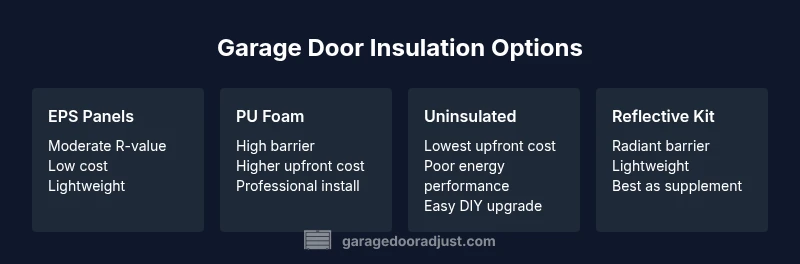
Across a garage door insulation comparison, four main options dominate: EPS polystyrene panel doors, polyurethane foam insulation, uninsulated doors, and reflective insulation kits. Each option changes heat transfer, installation effort, and long-term value. Foam insulation generally offers the strongest barrier, while uninsulated doors keep upfront costs down. Consider climate, budget, and whether you prefer DIY installation or professional service for optimal comfort and year-round efficiency.
Why insulation matters for garage doors
Across a garage door insulation comparison, the role of insulation goes beyond winter warmth or summer coolness. A well-insulated door reduces heat flow between the garage and living space, helping to stabilize interior temperatures and cut energy use. For many homes, the garage is a doorway to the home, and heat or cold can infiltrate through the door when it is thin or poorly sealed. When performing a garage door insulation comparison, homeowners should consider how the door interacts with other building components like the ceiling and walls. According to GarageDoorAdjust, the overall energy impact depends on climate, door orientation, and how often the door moves. A door that reduces drafts can make adjacent rooms feel more comfortable and can reduce HVAC systems, especially in attached garages. The goal is not just warmth, but consistent temperature control with predictable performance across seasons.
Feature Comparison
| Feature | EPS Panels | PU Foam | Uninsulated Doors | Reflective Kits |
|---|---|---|---|---|
| R-value/thermal performance | medium | high | low | low-to-medium |
| Upfront cost | low-to-medium | high | low | low |
| Weight added to door | low | medium | low | low |
| Installation effort | moderate | high | low | moderate |
| Best climate fit | mixed climates | very cold or extreme | not insulated | hot climates with radiant barriers |
Upsides
- Improved thermal comfort and reduced drafts
- Lower energy bills over time through better insulation
- Increased door rigidity and sound dampening
- Variety of options to fit budget and climate
Disadvantages
- Higher upfront cost for better insulation
- Professional installation may be required for polyurethane foam
- Weighs more, affecting door balance if not upgraded properly
PU foam insulation delivers the best overall thermal performance; EPS panels balance cost and performance; uninsulated doors are cheapest but least efficient.
PU foam is typically the top performer for energy savings, especially in climate extremes. EPS panels deliver solid value for mid-range budgets, while uninsulated doors offer the lowest upfront price with the largest energy tradeoffs.
Got Questions?
What is the best insulation for a garage door?
Polyurethane foam insulation often provides the strongest thermal barrier, but EPS panels offer solid performance at a lower price. Your choice should reflect climate, usage, and budget.
Polyurethane foam usually offers the best energy savings, with EPS as a strong budget option.
Does insulation affect garage door weight?
Yes. Adding insulation increases the door weight, which can affect opener strain and balance. Heavier doors may require torque adjustments and hardware checks.
Yes, insulation adds weight and can strain the opener if not accounted for.
Can I install insulation myself?
Some insulation options, like EPS panels and reflective kits, are DIY-friendly. Retrofit polyurethane foam is best left to professionals for even coverage and safety.
DIY is doable for some kits, but PU foam needs a pro.
How much does upgrading insulation cost?
Costs vary widely by material and scope. Expect moderate to higher upfront costs for better insulation, with long-term energy savings echoing the choice.
Cost varies; better insulation costs more upfront but can save energy over time.
What is R-value and why does it matter for garage doors?
R-value measures resistance to heat flow; higher values indicate better insulation. For garage doors, the overall performance depends on the door, seals, and climate rather than a single number.
Higher R-value means better insulation, but door performance also depends on sealing and climate.
Quick Summary
- Assess climate and budget before choosing insulation type.
- PU foam offers strongest thermal performance.
- EPS panels provide good value for mid-range budgets.
- Reflective insulation can augment other options in hot climates.
- Ensure compatibility with door structure and opener.