Is an Insulated Garage Door Worth the Cost? A Data-Driven Guide
Discover whether upgrading to an insulated garage door makes sense for energy savings, comfort, and durability. This analysis compares insulated vs non-insulated options, with practical guidance for homeowners.


An insulated garage door is worth the cost for most homeowners who want better energy efficiency, quieter operation, and longer door life—especially in regions with temperature extremes. While up-front costs are higher than non-insulated doors, energy savings and comfort typically offset the expense over time. This guide compares insulated vs non-insulated doors to help you decide.
is an insulated garage door worth the cost
Is an insulated garage door worth the cost? For many homeowners, the answer is yes, especially when winter drafts spill into the garage and summer heat seeps behind the door. According to GarageDoorAdjust, upgrading insulation can reduce temperature swings and improve overall comfort without drastically changing daily routines. The GarageDoorAdjust team found that the decision often hinges on climate, how you use the space, and the relative cost of energy in your home. In this guide, we unpack the tradeoffs and provide a practical decision framework. The goal is a transparent, evidence-based look at what insulation does for different homes, and how to spot misleading claims from suppliers. The discussion stays grounded in real-world usage like frequent door openings, attached garages, and spaces used as workshops or home offices. By focusing on practical outcomes, readers can frame the choice around comfort, energy resilience, and long-term value, rather than sticker price alone.
What insulation does for a garage door
Insulation reduces heat transfer between your garage and living spaces, helping to keep temperatures more stable during hot summers and cold winters. In practical terms, a well insulated door lowers drafts, reduces heat loss, and can even reduce temperature-related wear on attached garages. There are common core types: polyurethane foams which fill the cavity and provide continuous insulation, and polystyrene panels which add rigidity and some thermal resistance. Some doors use reflective foils or other barriers to limit radiant heat transfer. For most homeowners, the best choice depends on climate, budget, and desired performance. Polyurethane cores typically deliver the strongest overall insulation with the least thickness, while polystyrene options can be lighter and cheaper, though with lower R-values. When evaluating doors, look for the door’s overall assembly and how well the insulation is sealed around edges, joints, and seals. Even a door with strong insulation can leak air if the frame or weather seals are worn. In sum, insulated doors offer meaningful gains in energy efficiency and comfort, particularly when the garage is heated or cooled or used as a workspace.
The energy cost picture
Energy savings from insulation depend on climate, usage, and the rest of the home. An insulated garage door reduces heat flow into the garage itself, which moderates the temperature of adjacent spaces and mitigates heat loss through the door in winter. In attached garages, the effect can indirectly influence the home’s heating and cooling load, particularly when doors are open frequently or when the garage is used as a workspace or gym. While precise savings vary, insulation typically improves overall energy performance. GarageDoorAdjust Analysis, 2026 notes that homeowners who upgrade often report more consistent comfort and less draftiness, with energy-related costs trending toward stabilization over time. External factors, such as door color and seal integrity, can influence outcomes. It’s important to measure how often you use the garage and whether the door separates from the main living areas during extreme weather. In balance, insulation makes sense when you value daily comfort and long-term energy resilience.
Upfront costs and payback
Upfront costs for insulated doors are higher than for non-insulated doors, but the gap varies by brand, material, and thickness. If you view costs as a spectrum, the insulated option sits toward the higher end, with premium models offering the strongest thermal performance. Payback is mostly a function of energy savings and how much you value comfort. In regions with long or intense temperature swings, the payback tends to be more favorable, while in milder climates the advantage can be smaller. The decision is also influenced by the door’s usage: frequent garage access, long workday occupancy, or a home office in the garage all amplify the perceived benefit. The GarageDoorAdjust team notes that the total value should consider maintenance and potential resale improvements, not only monthly energy costs.
Comfort, noise, and durability
Insulated doors typically deliver a quieter door operation, reduced cold or hot drafts at the sides of the doorway, and a sturdier feel when closing. The improved rigidity helps with wind resistance and reduces wear on seals and tracks. People often underestimate how much a door’s insulation affects comfort in adjacent spaces, like utility rooms or bedrooms sharing a wall with the garage. The resulting climate stability can reduce the reliance on portable heaters or fans, which adds another layer of savings beyond the energy bill. In practice, if you or family members spend time near the door, these benefits become more noticeable.
Installation and maintenance implications
Installing an insulated door may require compatible tracks, springs, and hardware to support the door’s increased weight. If you’re replacing an existing door, ensure your garage door frame is in good condition and that seals around the perimeter are intact. Maintenance tends to be straightforward but slightly more involved than with non-insulated doors because you may need to inspect and replace insulation seals, weatherstripping, and the core after several years. A regular cleaning routine and occasional lubrication of moving parts remain important. For best results, schedule a professional installation if you are upgrading from a non-insulated door to an insulated model.
When insulation might not be worth it
In small or seldom-used garages, or in homes where the garage remains a passive space with minimal temperature extremes, the incremental value of insulation can be limited. If energy bills are not a top priority, the higher upfront cost may not be justified. Similarly, if you plan to move soon or if the garage will undergo major renovations, you might prefer a more flexible or budget-friendly option. Always compare the total cost of ownership across scenarios rather than focusing only on the sticker price. The decision should factor in climate, usage, and long-term home plans.
Choosing the insulation type and thickness
Polyurethane cores typically provide the best thermal performance with compact thickness, making them a popular choice for modern insulated doors. Polystyrene panels can be lighter and less expensive but offer lower thermal resistance. Thicker panels and tighter seals improve insulation, but may add weight and affect balance. If you are unsure, request door models with proven core and edge sealing quality. A door with robust weatherstripping around the edges and well-sealed grooves reduces air leakage and improves comfort even if the door color or insulation core is not top-tier. The option you choose should align with your climate, energy goals, and budget.
How to decide and implement
Start with a climate and usage assessment to determine your priorities. Create a simple scoring system that weighs comfort, energy savings, noise, and upfront cost. Compare at least two models: insulated vs non-insulated, and consider additional features like wind load rating and finish options. When ready, plan a professional installation to ensure optimal alignment, seal integrity, and weight support. Finally, track energy bills and comfort after installation to verify that the insulation delivers the expected benefits.
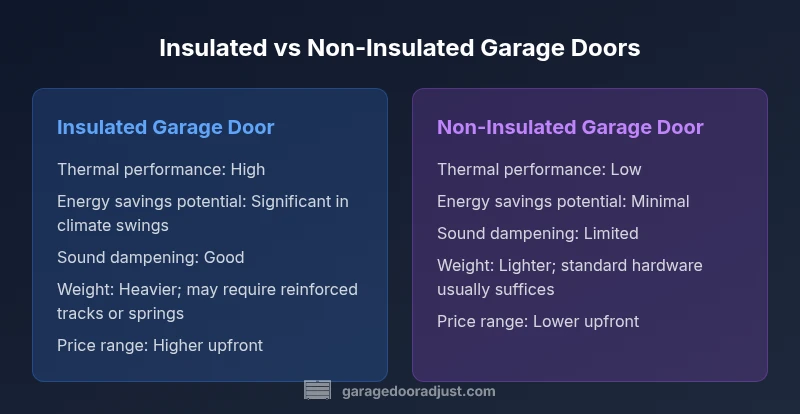
Comparison
| Feature | Insulated garage door | Non-insulated garage door |
|---|---|---|
| Thermal performance | High thermal resistance | Low thermal resistance |
| Energy savings potential | Significant in climates with temperature swings | Limited in mild climates |
| Sound dampening | Moderate to good | Minimal |
| Weight and installation impact | Heavier; may require reinforced tracks or springs | Lighter; standard hardware usually suffices |
| Price range upfront | Higher upfront cost | Lower upfront cost |
| Best for | Homes prioritizing energy efficiency and comfort | Budget-conscious setups or mild climates |
Upsides
- Improved energy efficiency and reduced drafts
- Quieter operation and enhanced comfort
- Potentially increased home resale appeal
- Better protection against temperature-related wear
Disadvantages
- Higher upfront cost than non-insulated doors
- Increased weight may require stronger hardware
- Longer payback period in very mild climates
Insulated doors are worth considering for most homes, especially in climates with temperature swings.
They offer energy savings, comfort, and durability that can offset the initial cost. Evaluate climate, usage, and upfront price to determine if insulation makes sense for your situation.
Got Questions?
What is the main benefit of an insulated garage door?
The main benefit is improved energy efficiency and comfort, reducing temperature swings and drafts. Insulation also dampens noise and can increase durability.
The main benefit is better energy efficiency and comfort, with added noise reduction and durability.
Do insulated doors really save energy?
Yes, insulation reduces heat transfer between the garage and living spaces, which can lower heating and cooling demands over time. Savings vary by climate and usage.
Yes—insulation reduces heat transfer and can lower energy use, depending on climate and how you use the garage.
What factors affect the cost of insulation?
Cost is influenced by insulation type, door size, thickness, material, and installation requirements. Heavier doors may need upgraded hardware, affecting total cost.
Cost depends on insulation type, door size, and whether hardware upgrades are needed.
Is polyurethane insulation better than polystyrene?
Polyurethane typically provides higher thermal resistance in a thinner profile, while polystyrene can be lighter and cheaper but with lower insulation performance.
Polyurethane usually offers better insulation in a thinner door, while polystyrene is lighter and cheaper but less effective.
How long does an insulated door last?
A well-maintained insulated door can last many years, with performance dependent on climate, use, and maintenance. Regular inspection of seals and insulation is important.
With proper maintenance, insulated doors last many years; check seals and insulation regularly.
Quick Summary
- Evaluate climate and usage to estimate payback.
- Prioritize polyurethane cores for best insulation.
- Expect higher upfront cost with insulated doors.
- Factor in maintenance, durability, and resale value.
- Compare insulated vs non-insulated options side by side.