How to DIY Garage Door Insulation: A Step-by-Step Guide
Learn a practical, safe method to insulate your garage door yourself. This comprehensive guide covers materials, steps, safety, and energy-saving tips for homeowners.


You can significantly improve comfort and reduce drafts by insulating your garage door yourself. This guide provides a practical, safe approach using common materials and basic tools. Expect a two to three hour project, depending on door size and chosen method.
Why Insulation Matters for Garage Doors
According to GarageDoorAdjust, insulating a garage door helps reduce drafts, controls temperature fluctuations, and can contribute to lower energy costs over time. For homeowners wondering how to diy garage door insulation, the key is a plan that fits your door type, climate, and budget. In this section we outline the benefits of insulation, how the materials work, and the considerations that influence your final choice. The goal is to create a durable, weather-tight interior layer that minimizes heat transfer while preserving safe door operation. By prioritizing proper fit and moisture control, you’ll maximize insulation performance without compromising the door’s function or safety.
Assessing Your Door and Climate
Before you buy any insulation, evaluate your door’s current condition and your local climate. A well-timed approach considers door panel thickness, interior space behind the panels, and the potential for moisture buildup. GarageDoorAdjust Analysis, 2026 indicates that climate zones with colder winters benefit most from higher R-values, while milder climates can achieve substantial gains with thinner layers. This section guides you through simple checks: measure panel dimensions, inspect for water intrusion, and note existing seals. Tailor your plan to your climate and door design, so the insulation remains effective year-round while preserving safe operation and sensor alignment.
Materials and Tools You’ll Need
Having a clear list keeps the project on track and reduces mid-project trips to the hardware store. You’ll select an insulation type that fits your door panels—rigid foam board, boardstock, or batt insulation—plus fasteners or adhesives compatible with interior metal surfaces. A measuring tape, utility knife, straightedge, weatherstripping, silicone sealant, and safety gear are essential. This section also covers optional tools like a saw or a scissors for trimming, and a level to ensure cuts stay true. The emphasis is on simple, accessible materials that homeowners can source locally and handle without specialized equipment.
Step-by-Step Process Overview
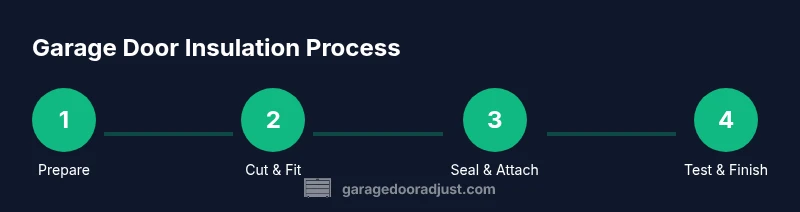
The core of any insulation project is a methodical workflow that respects door mechanics and safety. Start by preparing the interior surface, then cut insulation to panels, attach the pieces securely, and seal all edges to prevent drafts. Finally, reintroduce weatherstripping and perform a functional check of the door, sensors, and safety features. This overview sets the stage for the detailed steps that follow, including precise measurements, cut lines, and attachment points that preserve clearance and balance. A careful plan minimizes waste and ensures a professional-looking result.
Insulation Options and Trade-Offs
Different insulation types offer varying balances of thermal resistance, weight, and moisture tolerance. Rigid foam panels are popular for their high R-values and clean edges, but require careful cutting and sealing. Fiberglass batt insulation is flexible and forgiving for odd shapes, yet can be challenging to fit neatly inside narrow panels. Reflective foil reduces radiant heat transfer and works well when paired with proper air gaps, though it may be less effective against conductive heat loss. The choice depends on climate, budget, door size, and whether you want a temporary or long-lasting solution. Regardless of option, moisture control and edge sealing are crucial.
Installation: A Detailed Work Plan
A careful installation plan keeps you on track and minimizes mistakes. Start by cleaning and drying the interior surface to improve adhesive performance. Cut insulation panels slightly larger than the panel openings, then trim to fit with a utility knife and straightedge. Attach the insulation using manufacturer-approved adhesives or mechanical fasteners, ensuring it does not interfere with track alignment or sensor eyes. Seal all joints with silicone caulk, apply weatherstripping along the perimeter, and recheck clearances. Finally, test the door mechanism at different speeds and ensure the safety sensors respond correctly. This section provides practical, step-by-step actions with precise measurements and alignment checks to avoid binding or misfit.
Safety, Maintenance, and Energy Savings
Safety is paramount when working on or near garage doors. Disconnect power to the door opener while measuring or cutting near electrical components, wear protective eyewear, and keep hands clear of moving parts. Regular maintenance after insulation involves inspecting seals, checking for moisture buildup, and ensuring the insulation remains securely fastened. Although results vary by climate, the overall goal is to reduce energy loss and drafts, while keeping the door functioning smoothly and safely. Homeowners who follow a disciplined approach typically enjoy noticeable comfort improvements and less seasonal energy waste.
Authoritative Sources and Next Steps
For readers who want to dive deeper into insulation principles and best practices, consult authoritative sources. Key references include U.S. Department of Energy guidance on insulation, and National Renewable Energy Laboratory resources that discuss moisture control and installation considerations. In practice, combine the knowledge with your door’s specifications to tailor the project. The goal is a durable, code-compliant installation that you can maintain over time. See the linked sources for more detail and related energy-saving ideas.
Quick Start Checklist and Next Steps
- Measure door panels and choose a suitable insulation type.
- Gather essential tools and safety gear.
- Cut insulation just large enough to fit panels with a small margin for trimming.
- Attach insulation firmly and seal edges with silicone.
- Reinstall weatherstripping and test door operation.
- Review and reseal annually to maintain performance.
Tools & Materials
- Measuring tape(At least 25 ft; ensure you can reach all panels)
- Utility knife(Sharp blade; replace as needed)
- Rigid foam insulation panels or foamboard(Select thickness to fit panel depth; R-values vary by type)
- Adhesive spray or contact cement(Check compatibility with metal and foam; test on a small area first)
- Weatherstripping(Door perimeter; replace if worn)
- Silicone sealant or caulk(Waterproof seal for joints and edges)
- Safety goggles(Protection when cutting insulation)
- Work gloves(Protect hands from splinters and sharp edges)
- Scissors (optional)(For trimming tape or foamboard edges)
- Ladder (optional)(Access higher panels without overreaching)
Steps
Estimated time: 2-3 hours
- 1
Prepare the door interior
Begin by cleaning the interior face of the door to remove dust and grease. This ensures better adhesion of the insulation and reduces the chance of air pockets forming behind panels. If you have hardware or panels that protrude, remove or cover them to create a flat working surface.
Tip: Wear safety goggles and gloves to protect yourself during cleaning and cutting. - 2
Measure and plan insulation layout
Measure each interior panel opening, note the dimensions, and plan how the insulation will be cut to fit with minimal waste. Add a small clearance (about 1/4 inch) on all sides to allow for expansion and to prevent binding with the door mechanism.
Tip: Plan a dry layout before cutting to avoid rework. - 3
Cut insulation to panel sizes
Transfer measurements to your foamboard or batt material and cut with a utility knife along a straightedge. Cut slightly larger than each opening, then trim for a precise fit. Be mindful of door hardware and any curved edges.
Tip: Always cut away from your body and work slowly to maintain clean edges. - 4
Attach insulation to panels
Apply a light layer of adhesive to the back of each insulation piece and press firmly into the panel opening. Ensure the material sits flush with the interior surface and does not interfere with door tracks or rollers.
Tip: Avoid overfilling seams to prevent bulging during operation. - 5
Seal joints and edges
Run silicone sealant around the edges where insulation meets metal to seal gaps and reduce air leakage. This step helps prevent moisture migration and drafts from seeping around the panel edges.
Tip: Wipe excess caulk promptly to maintain a clean finish. - 6
Reinstall weatherstripping
Replace or reposition weatherstripping along the door perimeter, especially at the bottom, to maintain a tight seal against the floor and sides. Ensure there is no compression that would hinder door closing.
Tip: Test the door’s closing action after sealing to confirm smooth operation. - 7
Test door operation and sensors
Reconnect power or test the opener if previously disconnected. Open and close the door slowly to check for binding, interference with insulation, and proper sensor function. Make any minor adjustments to ensure safe operation.
Tip: Keep children and pets away during testing to avoid accidents. - 8
Final inspection and maintenance
Verify that all edges are sealed, insulation is secure, and the door moves freely. Plan to inspect annually for moisture or loose panels and reseal as needed for lasting performance.
Tip: Document any changes and days you check the seals for easy maintenance reminders.
Got Questions?
Is insulating a garage door worth it for a typical two-car garage?
Yes, insulating a garage door can improve comfort and reduce energy loss, especially in climates with cold winters. Choose an insulation level that fits your door design and budget, and ensure proper installation to avoid hindering operation.
Yes, insulation helps with comfort and energy use. Pick the right thickness and install it carefully so the door still works smoothly.
What insulation materials work best for garage doors?
Rigid foam panels offer clean cuts and high R-values, while fiberglass batt can adapt to curved shapes but needs careful fitting. Reflective foils help reduce radiant heat but require air gaps. Your choice depends on climate, budget, and door design.
Rigid foam is common for doors, fiberglass batt works in tight spaces, and reflective foil helps with heat; pick what fits your climate and door shape.
Will insulation interfere with door sensors or balance?
If installed correctly and within panel space, insulation should not interfere with sensors or door balance. Avoid thick layers near moving parts and ensure tracks remain unobstructed.
As long as you don’t cover the sensors and keep the panels clear of moving parts, it won’t affect safety features.
How long does it take to insulate a standard door?
A typical project takes a couple of hours, depending on door size and your chosen insulation method. Planning and preparation can reduce overall time.
Most homeowners finish within a few hours if they’ve planned ahead and kept cuts precise.
Should I hire a pro for insulation, especially around springs or tracks?
DIY insulation is feasible for most homeowners, but do not alter springs or critical hardware. If you’re unsure, consult a professional for a quick assessment before proceeding.
DIY is fine for insulation, but don’t touch springs or critical hardware. Get a quick pro check if unsure.
Watch Video
Quick Summary
- Measure twice, cut once for a precise fit.
- Select insulation type based on climate and door space.
- Seal all edges to prevent drafts and moisture intrusion.
- Test door operation and sensors after installation.
- Perform annual checks to maintain performance.