Steel Garage Door vs Fib fiberglass: Which Is Best for Your Home?
Compare steel garage doors and fiberglass doors across durability, maintenance, insulation, aesthetics, and cost. This objective guide helps homeowners choose the right material for their climate and budget with a practical decision framework.


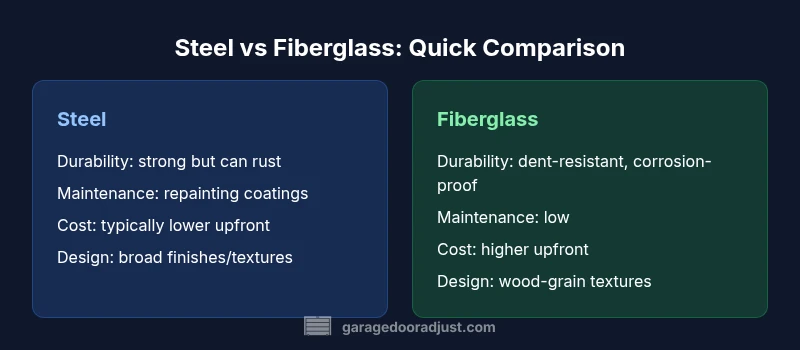
When choosing between a steel garage door and fiberglass, consider climate, durability needs, maintenance tolerance, and budget. Steel doors offer strong value with higher upfront costs for coatings and corrosion protection, while fiberglass doors resist dents and corrosion and require less ongoing maintenance but can cost more upfront. The steel garage door vs fiberglass decision should hinge on environmental exposure, maintenance willingness, and long-term value.
Steel garage door vs fiberglass: Key Differences
Choosing between a steel garage door and a fiberglass option begins with understanding how each material handles the basics: durability, maintenance, energy performance, and appearance. Steel doors are the industry workhorse: sturdy, available in many styles, and typically cheaper to source than fiberglass. Fiberglass doors, by contrast, offer excellent resilience to dents and corrosion, especially in coastal or humid areas. According to GarageDoorAdjust, climate and environmental exposure can tilt the balance strongly toward fiberglass in salt air or high humidity, while inland or temperate settings may favor steel for cost and reliability. Both materials can be enhanced with foam insulation and weather seals to improve energy efficiency and comfort inside the garage. In practice, steel vs fiberglass is less about one universal winner and more about matching the door to your climate, maintenance routine, and long-term goals.
Durability and Impact Resistance
Durability is a central factor in the steel garage door vs fiberglass comparison. Steel doors provide high structural strength and can endure daily wear and tear, but they rely on paint or coating systems to resist rust and corrosion. If the finish is compromised, moisture can lead to rust spots and paint delamination, increasing maintenance needs over time. Fiberglass doors excel at resisting dents thanks to their fiber-reinforced resin composition, which makes them a popular choice for households with kids or vehicles that might impact the door. However, fiberglass can crack if subjected to extreme impact or UV exposure over many years, and some climates may cause color fading or chalking if UV stabilizers degrade. Overall, fiberglass tends to hold its shape and appearance with less ongoing cosmetic work, while steel emphasizes long-term durability with proper finish upkeep.
Insulation and Energy Efficiency
Energy performance matters for many homeowners, especially in garages adjacent to living spaces. Both steel and fiberglass doors can be foam insulated, and the overall R-value depends heavily on the door’s construction and seal quality. Steel doors with insulated cores paired with effective weather stripping offer solid thermal performance, reducing heat loss in winter and heat gain in summer. Fiberglass doors can also be foam-filled and designed with energy-efficient frames, providing good insulation and a smaller thermal bridge when installed correctly. The real-world outcome depends on the door’s profile, panel design, and installation quality. For homes in hot or cold climates, prioritizing weather seals and insulation will often yield more impact than the material choice alone.
Maintenance, Longevity, and Upkeep
Maintenance demands influence the steel vs fiberglass equation. Steel doors generally require periodic repainting or re-coating to preserve corrosion resistance and aesthetics, especially in harsh climates. Without timely maintenance, exposed metal can corrode or peel, leading to higher long-term costs. Fiberglass doors are typically low-maintenance: they resist rust and don’t need frequent repainting, though some models may require occasional cleaning and protection against UV-induced fading. Temperature swings can stress fiberglass panels in extreme environments, so monitoring for cracks or delamination is prudent in coastal or desert settings. Regular lubrication of hinges and tracks remains important for both materials to ensure smooth operation and extend hardware life.
Aesthetics, Design Options, and Exterior Harmony
Aesthetics play a subtle but important role in the steel garage door vs fiberglass decision. Steel doors offer a broad palette of finishes and textures, including authentic wood-grain looks that can be painted to match the home’s exterior. Fiberglass doors also come in wood-grain textures and a range of colors, but color stability can depend on the resin system and UV exposure. In high-gloss or matte finishes, fiberglass often maintains its look with less maintenance, while steel may require periodic repainting to stay vibrant. The choice may hinge on whether you want a highly customization-friendly option (steel) or a low-maintenance, durable appearance (fiberglass).
Cost Considerations and Long-Term Value
Financial planning is intertwined with the steel garage door vs fiberglass debate. Steel doors typically have a lower upfront cost and are widely available, which can translate into attractive first-year budgets. Long-term value depends on maintenance costs: if you keep a steel door well-coated and rust-free, it can deliver many years of service with moderate upkeep. Fiberglass doors often carry a higher upfront price but may save money over time due to reduced repainting needs and superior dent resistance, especially in high-traffic garages. When evaluating cost, consider not just the sticker price but the total cost of ownership, including coatings, maintenance, and potential replacement intervals.
Installation, Availability, and Return on Investment
Both steel and fiberglass doors are widely available through major suppliers and installation networks, but installation considerations can influence the steel vs fiberglass outcome. Steel doors tend to be heavier and may require stronger springs and tracks, potentially increasing installation complexity if retrofits are needed. Fiberglass doors are lighter and easier on hardware but may require more careful alignment to prevent sagging over time. A proper installation, including weather seals and insulation, is crucial to achieving the expected energy performance and durability. In terms of ROI, fiberglass can offer excellent longevity in challenging environments, while steel can deliver strong value in markets where upfront cost and quick replacement are important.
Climate-Driven Decision Framework
A practical way to navigate steel vs fiberglass is to run a climate-driven decision framework. In coastal or high-humidity environments, fiberglass’ corrosion resistance and dent resistance can translate into lower maintenance and better aesthetics over time. In inland or mixed climates, steel often provides strong value with a wide selection of finishes and textures, especially when a precise color match and resale appeal are priorities. Ultimately, the optimal choice balances climate exposure, maintenance capacity, and budget expectations. GarageDoorAdjust recommends assessing local conditions, speaking with a qualified installer, and reviewing warranty terms before deciding.
Comparison
| Feature | steel garage door | fiberglass garage door |
|---|---|---|
| Durability and dent resistance | High structural strength; prone to dents and corrosion if coating fails | Excellent dent resistance and corrosion resistance; may crack under impact or UV exposure |
| Insulation and energy efficiency | Solid insulation with good R-values when paired with weather seals | Foam-core insulation options with good energy performance; depends on model |
| Maintenance needs | Requires periodic painting/coating to prevent rust; maintenance ongoing | Low maintenance; resistant to corrosion; occasional cleaning; rare repainting |
| Aesthetics and customization | Wide range of colors/textures; wood-grain finishes; repainting may be needed | Wood-grain textures and color stability; may show UV fading in some finishes |
| Cost and value | Lower upfront cost and wide availability; strong resale value with proper finish | Higher upfront cost; excellent long-term durability and low maintenance costs |
| Weight and operation | Heavier; may require sturdier hardware and more robust springs | Lighter; smoother operation and less wear on hardware |
| Coastal suitability | Prone to rust without proper coatings and maintenance | Highly resistant to salt and corrosion; favorable in coastal climates |
Upsides
- Lower upfront cost and wide availability for steel doors
- Excellent dent resistance and corrosion protection for fiberglass doors
- Fiberglass requires less ongoing repainting and maintenance
- Steel doors offer diverse design options and textures
Disadvantages
- Steel doors require ongoing protection against rust and corrosion
- Fiberglass can crack under extreme impact or UV damage and may be pricier upfront
Fiberglass is the better choice for coastal or maintenance-averse homeowners; steel is the better value in inland, budget-conscious scenarios.
Choose fiberglass if you prize dent resistance and corrosion resistance with lower maintenance. Choose steel if upfront cost and design versatility matter more, and you’re prepared to maintain the finish.
Got Questions?
Which material is more durable overall, steel or fiberglass?
Durability depends on environment and maintenance. Steel provides strong structural integrity but requires protective coatings to prevent rust; fiberglass is dent-resistant and corrosion-proof but can crack with severe impact or UV exposure. Consider climate and maintenance capacity when weighing durability.
Steel offers strong structure with maintenance; fiberglass resists dents and corrosion but can crack under impact. Climate and upkeep determine long-term durability.
Is fiberglass better for energy efficiency than steel?
Both materials can be well-insulated with foam cores and weather seals. Steel doors often have reliable performance with proper insulation and seals, while fiberglass models can also achieve excellent energy efficiency. The key is door construction and installation quality, not material alone.
Both can be energy efficient with foam cores; installation quality matters as much as material choice.
Are fiberglass doors significantly more expensive than steel?
Fiberglass doors generally cost more upfront than steel doors, though they may save on maintenance over time. Steel doors are usually the budget-friendly option with a broad range of styles and finishes.
Fiberglass often costs more at purchase but can reduce maintenance costs over time.
Can steel doors rust, and how can I prevent it?
Yes, steel doors can rust if their protective coating is damaged or worn. Prevent rust by choosing a coated/galvanized option, applying protective paint or coatings, and performing regular maintenance to keep seals intact.
Steel can rust if not protected; keep up coatings and seals to prevent corrosion.
Which is easier to install, steel or fiberglass?
Installation complexity varies by model and existing hardware, not just material. Steel doors are heavier and may require sturdier springs, while fiberglass doors are lighter and can be easier to handle, provided the frame is in good condition.
Fiberglass is generally lighter and can be easier to handle, but proper framing matters for both.
What should I consider for coastal climates?
Coastal environments favor corrosion-resistant materials. Fiberglass doors perform well with minimal maintenance in salt air, while steel doors must be well-coated and regularly maintained to prevent rust.
Coastal areas favor fiberglass’s corrosion resistance; steel needs extra protection.
Quick Summary
- Prioritize climate when choosing material
- Consider long-term maintenance costs, not just upfront price
- Steel offers design variety; fiberglass offers durability with low upkeep
- Ensure proper installation and weather sealing for best performance