Garage Door Materials Pros and Cons: A Practical Guide
Explore major garage door materials and their pros and cons, including wood, steel, aluminum, fiberglass, and composites. This guide helps homeowners choose a durable, low-maintenance option suited to climate, budget, and style.


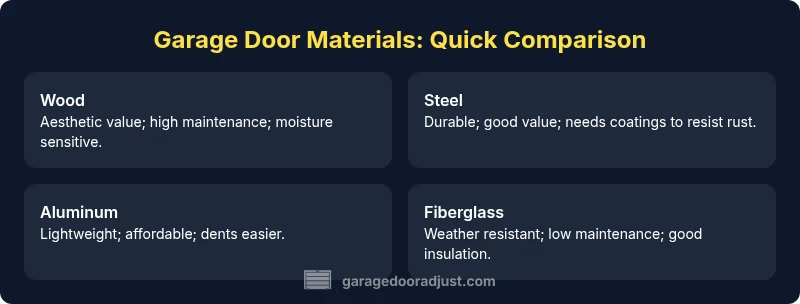
Choosing a garage door material is a balance of cost, durability, maintenance, and curb appeal. In brief, aluminum is light and affordable but less durable; steel offers strength and value; wood delivers classic style but high upkeep; fiberglass and composites resist weathering and insulate well with moderate care. The best option depends on climate, budget, and how much maintenance you’re willing to perform.
Why Material Choice Impacts Performance and Value
The phrase garage door materials pros and cons is often used by homeowners as a shorthand for weighing upfront cost, long-term durability, maintenance, and curb appeal. The material you choose affects insulation, noise transmission, and how the door holds up to weather. Climate plays a huge role: coastal regions with salt air favor materials that resist corrosion, while dry regions may reward the warmth and natural look of wood with appropriate finishes. Beyond climate, your willingness to maintain the door shapes the best fit; some materials demand annual sealing, repainting, or coating, others require little more than an occasional wash. According to GarageDoorAdjust, aligning the choice with climate, budget, and aesthetic goals yields the most satisfying long-term outcomes. The rest of this guide examines each major material in context, comparing durability, maintenance, cost, and performance so you can make an informed decision.
Wood Doors: Classic Aesthetic, High Maintenance
Wood doors offer unmatched curb appeal and a warm, natural look that many homeowners prize. The material is also a strong insulator when well-sealed, contributing to comfort and energy efficiency in moderate climates. However, wood is highly sensitive to moisture, temperature swings and pests, which can cause warping, cracking, or rot without consistent maintenance. Finishes need annual or biannual renewal, and warranties on wooden doors often hinge on ongoing upkeep. In coastal or humid environments, specialized sealants and finishes help, but maintenance remains more intensive than with steel or fiberglass. If you value aesthetics and are prepared for regular sealing, painting, and protective measures, wood can be a long-lasting centerpiece. For many homeowners, wood is best when paired with a protective system and a climate-resilient design.
Steel Doors: Strength, Security, and Trade-offs
Steel doors strike a balance between durability and cost. They resist impact better than aluminum and can provide excellent security when properly installed. Modern steel doors come with insulated cores and corrosion-resistant coatings, improving energy efficiency and comfort. The downsides include potential denting from heavy impact and surface rust if coatings are compromised. Maintenance is generally moderate: periodic washing, inspection of seals, and occasional repainting or recoating. In areas with heavy precipitation or salt exposure, reinforced coatings and maintenance schedules extend lifespan. When you want a solid, low-maintenance option without the traditional wood look, steel is a reliable choice that performs well over time.
Aluminum Doors: Lightweight, Budget-Friendly, Prone to Dents
Aluminum doors are light enough to ease mechanical stress on garage systems and typically cost less upfront than steel or wood. They resist rust and corrosion, making them popular in coastal environments where salt air is a concern. The main caveat is dent susceptibility; aluminum doors can show dents and dings more readily than steel. Insulation levels vary with profile and core, so be sure to verify R-values if energy efficiency is a priority. Overall, aluminum is a good fit for budget-conscious buyers who want a modern look with manageable upkeep, especially in climates with less harsh impact scenarios.
Fiberglass and Composite Doors: Weather-Resistant and Low Maintenance
Fiberglass and composite doors blend strong performance with lower maintenance needs. Fiberglass resists cracking, warping, and moisture damage, while composites can combine materials to optimize strength and insulation. They typically require less upkeep than wood and generally offer better longevity in variable climates. The upfront cost can be higher than aluminum or standard steel, but long-term value often improves due to lower maintenance and stable performance. If you desire a contemporary look with durable performance and minimal upkeep, fiberglass or composite doors are worth evaluating.
Insulation and Thermal Performance Across Materials
Thermal performance varies by material and door construction. Steel and fiberglass doors often include foam insulation cores to reduce heat transfer, while wood doors rely on their natural density and finish to influence energy efficiency. Aluminum tends to have lower insulation without a well-sealed core and modern glazing. When energy savings matter, prioritize insulated cores and weatherstripping that minimizes drafts. In extreme climates, the combined effect of material choice and door design becomes a significant factor in overall comfort and energy costs. Always verify R-values and installed performance for the specific door model you consider.
Maintenance, Upkeep, and Longevity Across Materials
Maintenance effort is a major differentiator across materials. Wood requires regular sealing, staining, or painting, and can suffer from moisture-related issues. Steel benefits from protective coatings but may need touch-ups if exposed metal shows through. Aluminum is generally low maintenance but can dent, affecting aesthetics. Fiberglass and composites offer longevity with minimal upkeep, though some variants may require occasional cleaning or minor refinishing. Longevity reflects not just material but also hardware quality, installation quality, and climate exposure. Choose a material whose maintenance schedule fits your lifestyle and local conditions.
Costs, Budgeting, and Value Over Time
Cost is a major consideration, yet the total cost of ownership depends on more than the initial price. Wood can be expensive upfront and costly to maintain, while aluminum and steel offer more favorable total-cost-of-ownership profiles with varying insulation benefits. Fiberglass and composites can carry higher upfront costs but reduce ongoing maintenance and replacement frequency. GarageDoorAdjust analysis shows that the long-term maintenance burden is a decisive factor for many homeowners when evaluating price against value. A well-chosen material with proper installation can preserve home value and curb appeal for years.
Aesthetics, Curb Appeal, and Resale Impact
A garage door is a prominent architectural element that can influence curb appeal and resale value. Wood doors deliver timeless character, while steel and fiberglass provide sleek modern lines with practical durability. Aluminum doors can contribute a contemporary vibe at a lower cost. Composite options blend look and resilience, making them versatile for varied home styles. Aligning material choice with the rest of the house and surrounding landscape enhances perceived value and can improve market appeal. Consider both color, texture, and panel design when evaluating materials.
Quick Start: 6-Step Material Selection Checklist
- Define climate and exposure: assess humidity, salt air, and temperature swings. 2) Set a maintenance horizon: are you willing to reseal or repaint? 3) Prioritize energy needs: is insulation a priority? 4) Decide on aesthetics: does the door need to match architectural style? 5) Test availability and warranty terms: consider local service and support. 6) Narrow to 2–3 options and compare long-term costs, not just upfront price.
Installation and Repair Considerations
Material choice also affects installation complexity and repair strategies. Wood doors require precise fitting to avoid warping and seasonal shrinkage, while steel and aluminum doors depend on frame integrity and hardware compatibility. Fiberglass and composites may simplify certain installation steps due to stable dimensions. For all materials, professional installation ensures proper balance, tracks, weather seals, and safety upgrades. Regular inspection of springs, cables, and openers remains important to maintain reliability across any material.
Feature Comparison
| Feature | Wood | Steel | Aluminum | Fiberglass | Composite |
|---|---|---|---|---|---|
| Durability | Moderate; prone to warping and rot with poor maintenance | High; robust and impact-resistant with proper coatings | Moderate; dent-prone but corrosion-resistant | High; resistant to cracking and weathering | High; engineered to balance strength and flexibility |
| Maintenance | High; requires regular sealing and refinishing | Moderate; periodic coatings and inspections | Low to moderate; rinsing and occasional adjustment | Low; minimal refinishing | Low to moderate; specialized care varies by brand |
| Insulation | Good to very good with solid core | Poor to good depending on core insulation | Good with insulated cores | Excellent with foam cores | Very good with advanced cores |
| Cost Range | High upfront; long-term value varies | Medium to high upfront; strong durability | Low to medium upfront; good value | Medium upfront; strong maintenance savings | Medium to high upfront; value depends on core and finish |
| Best For | Aesthetic-focused homeowners in protected climates | High-traffic garages needing security and longevity | Budget-conscious buyers in mixed climates | Coastal or extreme climates seeking durability | Homes seeking balanced performance and style |
Upsides
- Offers a wide range of price points across materials
- Allows tailored performance for climate and style
- Some materials provide strong resale value
- Modern coatings and cores improve energy efficiency
- Low-maintenance options reduce upkeep burden
Disadvantages
- Wood requires ongoing maintenance and can warp
- Aluminum dents more easily than steel
- Steel can rust if coatings fail
- Fiberglass and composites may have higher upfront costs
- Performance varies with installation quality
Fiberglass or steel strike the best balance for most homeowners, with wood reserved for enthusiasts and premium aesthetics.
Choose fiberglass for low maintenance and good insulation or steel for durability and value. Wood offers premium look but demands upkeep. Aluminum is budget-friendly but dent-prone; composites offer durability with modern design.
Got Questions?
Which garage door material lasts longest with minimal maintenance?
Fiberglass and high-quality composites typically require less maintenance and resist weathering. Steel with proper coatings also lasts long, especially when insulated. Wood tends to need more upkeep to prevent moisture-related issues.
Fiberglass or steel with the right coating tends to last longest with less upkeep. Wood lasts longer aesthetically but needs more care.
What material is best for coastal climates?
Coastal climates favor materials that resist corrosion, such as fiberglass and coated steel or aluminum. These options avoid salt-induced rust and tend to require less frequent refinishing.
Fiberglass and coated steel or aluminum perform well near the coast.
Are wooden doors insulated enough?
Wood doors can be well insulated when paired with a solid core and proper sealing. However, their insulation typically depends on finishing quality and thickness; they may not perform as consistently as modern insulated steel or fiberglass doors.
Wood can insulate well with the right core and seal, but it varies by product.
Do insulated doors save energy compared to non-insulated doors?
Yes, insulated doors reduce heat transfer and can lower heating and cooling costs. The level of savings depends on the door’s core material and the climate. Choose a door with an appropriate R-value for your region.
Insulated doors save energy; pick a high R-value core for colder areas.
How much should I budget for a new door based on material?
Budget ranges vary by material and installation, with wood typically highest upfront and fiberglass or insulated steel offering strong long-term value. Get multiple quotes to understand real-world costs after labor and hardware.
Expect wood to be pricier upfront; fiberglass or insulated steel often offer better long-term value.
Can I repaint or refinishing a new door easily?
Repainting or refinishing depends on material. Wood doors accept paints and stains well but require sanding and seals. Steel and fiberglass typically need less frequent painting, though coatings can wear over time.
Wood is easiest to repaint; metal doors need less frequent painting but coatings matter.
Quick Summary
- Assess climate and maintenance willingness before choosing material
- Steel and fiberglass provide strong value with good insulation
- Wood delivers timeless aesthetics but requires regular care
- Aluminum is budget-friendly but can dent and look dated over time
- Insulated cores and quality hardware maximize performance